
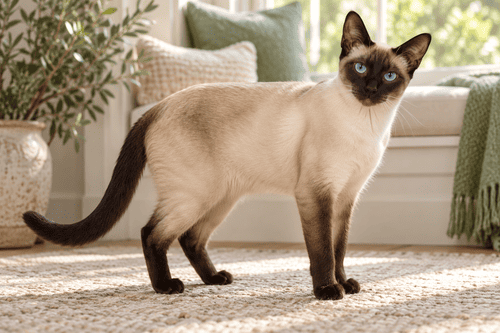
Siamese
Chatty, curious and utterly devoted — the cat that thinks it's a person.
The Siamese is one of the oldest and most recognisable cat breeds in the world. Highly vocal, intensely social and endlessly curious, Siamese cats form deep bonds with their owners and will follow them from room to room. Their striking blue eyes, sleek pointed coat and extroverted personality make them unforgettable.
At a glance
- Origin
- Thailand (formerly Siam)
- Size
- Medium
- Weight
- 8–12 lb (3.5–5.5 kg)
- Lifespan
- 12–20 years
- Coat
- Short, fine, silky
- Colours
- Seal Point, Blue Point, Chocolate Point, Lilac Point and more
Breed ratings
Rated 1–5 on the same scale as every other entry, so scores are comparable between breeds. Amber stars mark things that cost you effort rather than things that benefit you.
Diet & Feeding
Feed a high-protein diet — Siamese are muscular and active. Wet food twice daily with free-access dry kibble works well. They can be prone to obesity in middle age if activity drops; adjust portions accordingly. Ensure fresh water is always available; a fountain often encourages better hydration.
Exercise & Play
Siamese are highly active cats needing 30–45 minutes of interactive play daily. They excel at fetch, puzzle toys and learning tricks. Without stimulation they become bored and vocal. Provide tall cat trees, window perches and interactive toys. A feline companion can help when you're away.
Grooming
The short, close-lying coat is very low maintenance. A weekly brush with a soft rubber grooming mitt removes dead hair and keeps the coat gleaming. Bathe rarely — only when dirty. Trim nails every 2–3 weeks and clean ears monthly. Check teeth regularly as they can be prone to dental disease.
Health & Vet Care
Siamese are generally robust but can be prone to respiratory infections, dental disease, progressive retinal atrophy and certain cancers (mediastinal lymphoma). Regular annual vet checks and keeping vaccinations current are important. They are sensitive to anaesthesia — inform your vet before any procedure.
Living with a Siamese
Siamese are not for owners who want a quiet, independent cat. They will demand conversation, involvement and affection throughout the day. They can be taught to walk on a harness, play fetch and respond to their name. They do poorly when left alone for long periods and thrive with feline or canine company.
Read next
 How to Help a Shy or Fearful Cat Gain ConfidenceA cat that hides when anyone comes in is not unfriendly — it is frightened. Here is how to build a shy cat's confidence with safe spaces, predictable routines and letting the cat set the pace.
 How Lost Pets Actually Get Home — and How to Make Yours Easier to ReturnMost lost pets are found close to home by an ordinary person with a phone. What happens in the next few minutes decides how fast they get back. Here is how reunions really happen, and how to prepare.
 Pet Chores for Kids by Age: A Family Guide That Actually WorksChildren can genuinely help look after a family pet — with the right jobs for their age and adult supervision. Here are age-appropriate pet chores, safety rules and a simple chart to keep it on track.