
Pet Chores for Kids by Age: A Family Guide That Actually Works
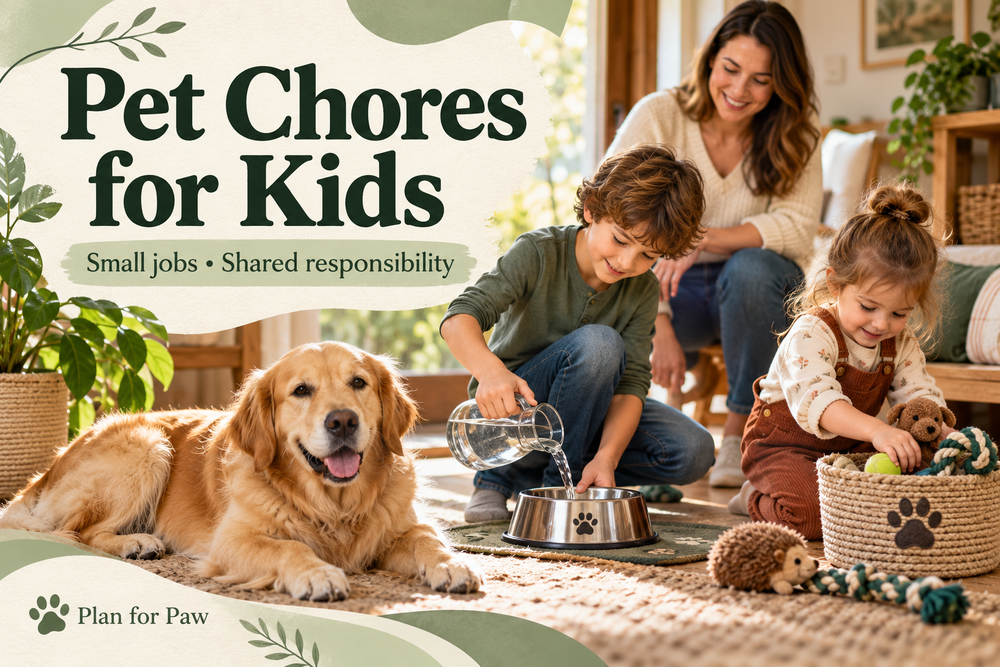
Children can genuinely help look after a family pet — with the right jobs for their age and adult supervision. Here are age-appropriate pet chores, safety rules and a simple chart to keep it on track.
In short
Children can genuinely help look after a family pet — with the right jobs for their age and adult supervision. Here are age-appropriate pet chores, safety rules and a simple chart to keep it on track.
Looking after a pet can teach children responsibility, empathy and routine. But a pet's welfare can never depend entirely on a child. The best family arrangement gives children real, age-appropriate jobs while an adult remains responsible for making sure everything gets done.
Safety Rules for Every Child
- Leave pets alone when they are eating, sleeping or in their bed
- Never hug, kiss or lean over a dog
- Let the pet come to you
- Gentle strokes on the side of the body, not pats on the head
- Never chase, tease or pull tails or ears
- Tell an adult if a pet seems hurt, unwell or grumpy
- Young children should always be supervised with pets
Ages 3–5
- Help fill the water bowl with an adult
- Put toys back in the toy box
- Choose which toy to play with
- Help measure food with an adult
- Give a treat from a flat hand, with an adult
Ages 6–8
- Fill water bowls
- Measure and serve meals with an adult checking
- Gentle brushing
- Wand toy play with a cat
- Simple training games like "sit" for a treat, supervised
- Tick the family care chart
Ages 9–12
- Feed meals, with an adult checking amounts
- Short training sessions
- Brushing and helping with bathing
- Scooping the litter tray, with good hand washing
- Garden poo pick-up
- Accompanying an adult on walks and holding the lead in safe places
Daily Dog Care Tracker
A chart the whole family can see is what makes chores stick — and what stops the dog being fed twice. The Daily Dog Care Tracker has printable daily sheets with tick boxes for meals, water, walks and grooming.
Get the Daily Dog Care Tracker →Teens
- Independent walks, if the dog is well behaved on a lead and the teen is strong enough
- Full feeding routine
- Training practice
- Cleaning bowls, beds and toys
- Noting anything unusual in the care log
Medication should stay with an adult unless the vet has said otherwise and the household is confident in the routine.
Making It Stick
- Use a visible family chart with names and tick boxes
- Pair new jobs with an adult until they are confident
- Praise effort, not just results
- Rotate jobs so nobody gets stuck with the worst one
- An adult always checks that the essentials — food, water, toilet, medication — have been done
When a Pet Needs Space
Every pet needs a retreat children are not allowed to disturb — a crate, a bed in a quiet room, or a high shelf for a cat. Teach children that the retreat is off limits.
Two ways to organise family care
For dogs, the Complete Dog Owner Binder covers daily care, health and training. For cats, the Complete Cat Owner Binder includes feeding, litter and health logs.
Get the Complete Cat Owner Binder →Frequently Asked Questions
At what age can a child walk a dog alone?
It depends on the child, the dog and the area. A strong, sensible teenager with a well-behaved dog may be fine; younger children should walk with an adult.
Should children clean the litter tray?
Older children can, with gloves or a scoop and thorough hand washing. Pregnant women should ask their doctor about litter tray hygiene.
What if my child loses interest in the pet?
That is common. The adults remain responsible, so plan for it from the start.
Printable and fillable PDF templates for pet owners — feeding schedules, health records, training trackers and more.