
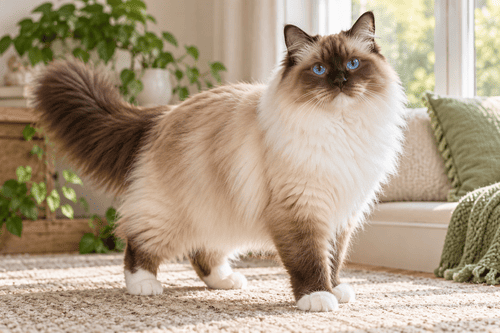
Ragdoll
The cat that goes limp in your arms — and steals your heart.
The Ragdoll is one of the largest and most docile domestic cat breeds. Named for their tendency to go completely relaxed when picked up, Ragdolls are gentle, affectionate and people-oriented. They follow their owners from room to room like devoted dogs and are among the best breeds for families with children or other pets.
At a glance
- Origin
- California, USA
- Size
- Large
- Weight
- 10–20 lb (4.5–9 kg)
- Lifespan
- 12–17 years
- Coat
- Semi-long, silky, minimal undercoat
- Colours
- Colourpoint, Mitted, Bi-colour in Seal, Blue, Chocolate, Lilac, Red, Cream and Tortie patterns
Breed ratings
Rated 1–5 on the same scale as every other entry, so scores are comparable between breeds. Amber stars mark things that cost you effort rather than things that benefit you.
Diet & Feeding
Ragdolls are slow to mature (fully grown at 4 years) and need a diet that supports gradual development. Feed a high-protein wet food twice daily with measured dry food. Males can reach 9 kg — monitor weight carefully as they can become obese. Slow-feeder bowls help prevent gulping. Ensure fresh water is always available; a fountain encourages drinking.
Exercise & Play
Ragdolls are moderately active — they enjoy play but will not demand it. Two interactive play sessions of 10–15 minutes daily keeps them stimulated. Wand toys, feather teasers and puzzle feeders suit them well. They are strictly indoor cats and should never be allowed to roam — their trusting, docile nature makes them vulnerable outdoors.
Grooming
Despite their semi-long coat, Ragdolls have minimal undercoat and mat less than other long-haired breeds. Brush twice a week with a wide-tooth comb, increasing to daily during seasonal shedding. Pay attention to the ruff (chest fur) and hindquarters. Bathe every 4–6 weeks. Clean ears monthly and trim nails every 2–3 weeks.
Health & Vet Care
Ragdolls are prone to hypertrophic cardiomyopathy (HCM) — always ask breeders for cardiac screening certificates. They can also develop polycystic kidney disease (PKD) and bladder stones. Annual cardiac screening from age 2 is recommended. Ensure your vet is familiar with the breed's sensitivity to stress.
Living with a Ragdoll
Ragdolls are ideal for first-time cat owners, families and multi-pet households. They are quiet, rarely scratch furniture and adjust well to changes in routine. They dislike being left alone for long periods — a feline companion is beneficial if you work full-time. Their gentle nature means they do not defend themselves well; keep them strictly indoors.
Read next
 How to Help a Shy or Fearful Cat Gain ConfidenceA cat that hides when anyone comes in is not unfriendly — it is frightened. Here is how to build a shy cat's confidence with safe spaces, predictable routines and letting the cat set the pace.
 How Lost Pets Actually Get Home — and How to Make Yours Easier to ReturnMost lost pets are found close to home by an ordinary person with a phone. What happens in the next few minutes decides how fast they get back. Here is how reunions really happen, and how to prepare.
 Pet Chores for Kids by Age: A Family Guide That Actually WorksChildren can genuinely help look after a family pet — with the right jobs for their age and adult supervision. Here are age-appropriate pet chores, safety rules and a simple chart to keep it on track.