
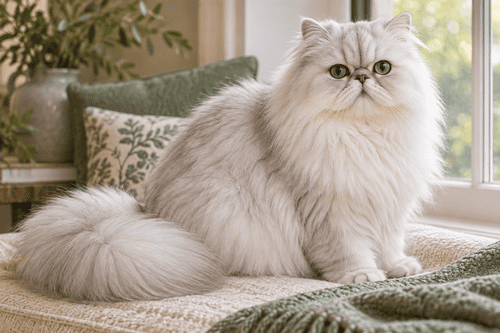
Persian
The original lap cat — serene, silky and impossibly beautiful.
With their long flowing coats and calm, gentle personalities, Persians are the quintessential indoor cat. They prefer quiet homes and devoted owners who enjoy daily grooming and unhurried companionship. Their pansy-flat faces and large copper or blue eyes give them an unmistakably regal look.
At a glance
- Origin
- Persia (Iran)
- Size
- Large
- Weight
- 7–15 lb (3.2–6.8 kg)
- Lifespan
- 12–17 years
- Coat
- Long, dense, silky double coat
- Colours
- White, Black, Blue, Cream, Red, Chinchilla, Tabby, Bi-colour and more
Breed ratings
Rated 1–5 on the same scale as every other entry, so scores are comparable between breeds. Amber stars mark things that cost you effort rather than things that benefit you.
Diet & Feeding
Persians do well on high-quality wet food as their primary diet — it supports hydration and kidney health. Supplement with dry kibble designed for long-haired or indoor cats. Their flat faces can make eating from deep bowls uncomfortable; use shallow, wide dishes. Feed twice daily and monitor weight — Persians can become sedentary and overweight.
Exercise & Play
Persians are low-energy cats content with short, gentle play sessions (two 10-minute sessions daily). Feather wands and slow-moving toys suit their relaxed style. They will not demand exercise, so it's important to actively encourage movement to maintain a healthy weight. They are strictly indoor cats.
Grooming
Daily grooming is non-negotiable for a Persian. Their long coat mats rapidly without daily combing with a wide-tooth comb and slicker brush. Many owners opt for a professional 'lion cut' every few months. Wipe the face and eye folds daily with a damp cloth to prevent tear-stain build-up and skin infections. Bathe monthly.
Health & Vet Care
The Persian's flat face causes brachycephalic obstructive airway syndrome (BOAS), eye conditions (cherry eye, entropion) and dental crowding. They are also prone to polycystic kidney disease (PKD) — always ask breeders for a DNA-negative PKD certificate. Annual dental check-ups and vet visits are essential.
Living with a Persian
Persians are quiet and undemanding but need consistent attention and gentle handling. They do best in calm households without boisterous children or dogs. They form deep bonds with their people but are not typically lap-chasers — they prefer to be near you rather than on you. Keep their environment predictable and stress-free.
Read next
 How to Help a Shy or Fearful Cat Gain ConfidenceA cat that hides when anyone comes in is not unfriendly — it is frightened. Here is how to build a shy cat's confidence with safe spaces, predictable routines and letting the cat set the pace.
 How Lost Pets Actually Get Home — and How to Make Yours Easier to ReturnMost lost pets are found close to home by an ordinary person with a phone. What happens in the next few minutes decides how fast they get back. Here is how reunions really happen, and how to prepare.
 Pet Chores for Kids by Age: A Family Guide That Actually WorksChildren can genuinely help look after a family pet — with the right jobs for their age and adult supervision. Here are age-appropriate pet chores, safety rules and a simple chart to keep it on track.