
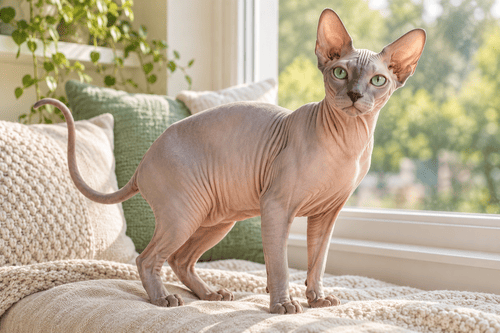
Sphynx
Naked, warm and impossible to ignore — the cat that runs on love.
The Sphynx appears hairless but is actually covered in a fine peach-fuzz down that makes their skin feel like warm suede. Extroverted, acrobatic and attention-hungry, Sphynx cats are the clowns of the cat world. They demand constant company and are better described as part dog, part toddler and entirely loveable.
At a glance
- Origin
- Toronto, Canada
- Size
- Large
- Weight
- 8–15 lb (3.5–7 kg)
- Lifespan
- 12–15 years
- Coat
- Hairless (fine peach-fuzz down on skin)
- Colours
- All colours and patterns visible in skin pigmentation
Breed ratings
Rated 1–5 on the same scale as every other entry, so scores are comparable between breeds. Amber stars mark things that cost you effort rather than things that benefit you.
Diet & Feeding
Sphynx cats have a higher metabolic rate than coated breeds — they burn more calories maintaining body temperature. Feed a high-protein, calorie-dense diet twice daily. They often eat more than similarly sized coated cats. Monitor body condition to avoid obesity; despite their higher calorie needs, overfeeding still occurs. Wet food as the primary diet supports kidney health.
Exercise & Play
Sphynx are highly active and playful, needing 30–45 minutes of interactive play daily. They love climbing, leaping and showing off. Provide tall cat trees, interactive wand toys and puzzle feeders. They will actively seek out play with their owners — if you ignore them, they will escalate. A feline companion of similar energy is highly recommended.
Grooming
Despite having no fur, Sphynx require more grooming than most coated cats. Their skin produces sebum (natural oil) that normally gets absorbed by fur — without it, the oil builds up on skin and in wrinkles. Wipe the body with a warm damp cloth weekly or bathe every 1–2 weeks. Clean ear canals weekly (they accumulate dark wax rapidly). Trim nails every 10 days.
Health & Vet Care
Sphynx are prone to hypertrophic cardiomyopathy (HCM) — the most important health concern. Ask breeders for HCM-negative cardiac certificates and rescreen annually. They can also develop skin conditions, respiratory infections (due to no nasal hair filter) and dental disease. They are sensitive to cold — indoor heating and cat sweaters in winter are practical, not indulgent.
Living with a Sphynx
Sphynx are not for owners who want a low-maintenance, independent cat. They follow you everywhere, sleep under covers, sit on laptops and insert themselves into every activity. They do not tolerate solitude well and become anxious when left alone. They bond intensely with their families and are exceptionally warm to the touch — like a living hot water bottle. A feline or canine companion is almost essential if you work outside the home.
Read next
 How to Help a Shy or Fearful Cat Gain ConfidenceA cat that hides when anyone comes in is not unfriendly — it is frightened. Here is how to build a shy cat's confidence with safe spaces, predictable routines and letting the cat set the pace.
 How Lost Pets Actually Get Home — and How to Make Yours Easier to ReturnMost lost pets are found close to home by an ordinary person with a phone. What happens in the next few minutes decides how fast they get back. Here is how reunions really happen, and how to prepare.
 Pet Chores for Kids by Age: A Family Guide That Actually WorksChildren can genuinely help look after a family pet — with the right jobs for their age and adult supervision. Here are age-appropriate pet chores, safety rules and a simple chart to keep it on track.