
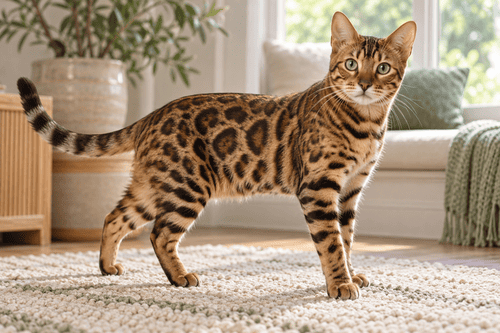
Bengal
Wild at heart, tame in your home — the leopard you can actually live with.
The Bengal is a hybrid breed developed from crosses with the Asian Leopard Cat, resulting in a strikingly spotted or marbled coat that resembles a miniature wild cat. Bengals are highly energetic, intelligent and athletic, demanding active owners who can match their intensity. They reward that investment with an unmatched level of engagement and personality.
At a glance
- Origin
- USA (hybrid with Asian Leopard Cat)
- Size
- Large
- Weight
- 8–15 lb (3.6–7 kg)
- Lifespan
- 12–16 years
- Coat
- Short, dense, incredibly soft pelt-like coat
- Colours
- Brown Spotted, Marbled Tabby, Silver, Snow (Lynx, Mink, Sepia)
Breed ratings
Rated 1–5 on the same scale as every other entry, so scores are comparable between breeds. Amber stars mark things that cost you effort rather than things that benefit you.
Diet & Feeding
Bengals do best on a high-protein, high-moisture diet that mirrors what their wild ancestors ate. Wet food twice daily is ideal; raw or freeze-dried diets are popular with Bengal owners. Avoid grain-heavy dry-only diets. Bengals are active and burn more calories than sedentary breeds — monitor weight and adjust portions to maintain a lean, athletic build.
Exercise & Play
Bengals need at least 60 minutes of active play and stimulation daily — this is non-negotiable. They climb, run, jump and fetch with dog-like enthusiasm. Provide tall cat trees, shelves at different heights, puzzle feeders and rotating toys. Many Bengals walk on a leash and enjoy supervised outdoor access in a secure garden or catio.
Grooming
The Bengal's short, pelt-like coat is exceptionally low maintenance. A weekly wipe with a damp chamois or rubber mitt keeps it gleaming. They rarely need bathing — interestingly, many Bengals actually enjoy water. Trim nails every 2–3 weeks and clean ears monthly.
Health & Vet Care
Bengals can be prone to progressive retinal atrophy (PRA-b), hypertrophic cardiomyopathy (HCM) and tritrichomonas foetus (a gastrointestinal parasite). Ask breeders for PRA and HCM screening certificates. Annual vet visits and regular faecal checks are recommended. Pet insurance is strongly advised.
Living with a Bengal
Bengals are not suitable for owners wanting a quiet, low-maintenance cat. They are loud, mischievous and will open cupboards, turn on taps and seek out any water they can find. They form intense bonds with their people and can become anxious if under-stimulated. They thrive best with a feline companion of similar energy and an owner willing to invest daily time in interaction.
Read next
 How to Help a Shy or Fearful Cat Gain ConfidenceA cat that hides when anyone comes in is not unfriendly — it is frightened. Here is how to build a shy cat's confidence with safe spaces, predictable routines and letting the cat set the pace.
 How Lost Pets Actually Get Home — and How to Make Yours Easier to ReturnMost lost pets are found close to home by an ordinary person with a phone. What happens in the next few minutes decides how fast they get back. Here is how reunions really happen, and how to prepare.
 Pet Chores for Kids by Age: A Family Guide That Actually WorksChildren can genuinely help look after a family pet — with the right jobs for their age and adult supervision. Here are age-appropriate pet chores, safety rules and a simple chart to keep it on track.