
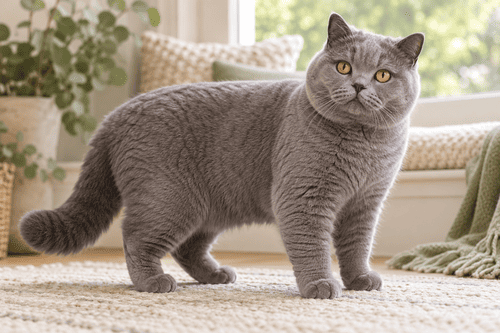
British Shorthair
Calm, round and deeply dignified — the teddy bear of the cat world.
The British Shorthair is Britain's oldest pedigree cat breed, known for its round face, plush coat and unflappable calm. They are easygoing, affectionate without being clingy, and adapt well to all households. Their solid, chunky build and variety of coat colours make them one of the most popular breeds in Europe.
At a glance
- Origin
- United Kingdom
- Size
- Large
- Weight
- 9–18 lb (4–8 kg)
- Lifespan
- 12–20 years
- Coat
- Short, dense, plush double coat
- Colours
- Blue most common, also Black, White, Cream, Tabby, Bi-colour, Colourpoint and more
Breed ratings
Rated 1–5 on the same scale as every other entry, so scores are comparable between breeds. Amber stars mark things that cost you effort rather than things that benefit you.
Diet & Feeding
British Shorthairs are prone to obesity as they mature and become less active. Feed a measured, high-protein wet diet twice daily. Avoid free-feeding dry food. Males especially gain weight easily — weigh food portions and adjust if the waist disappears. Annual weight checks at the vet help catch creep early.
Exercise & Play
British Shorthairs are moderately active, preferring short, focused play sessions (two 10-15 minute sessions daily) over marathon activity. They enjoy wand toys, puzzle feeders and batting toys. As they age they become increasingly sedentary — actively encourage movement. They are content as indoor-only cats.
Grooming
The dense plush coat needs brushing once or twice a week to remove dead hair and prevent the occasional mat. During spring and autumn shedding seasons increase to daily. Bathe every 6–8 weeks. They are relatively clean cats but benefit from monthly ear cleaning and fortnightly nail trims.
Health & Vet Care
British Shorthairs are a robust breed but can be prone to hypertrophic cardiomyopathy (HCM) and polycystic kidney disease (PKD). Ask breeders for cardiac and PKD screening results. Their calm temperament can mask pain — watch for subtle behaviour changes and schedule annual vet check-ups.
Living with a British Shorthair
British Shorthairs are not lap cats — they prefer to sit beside you rather than on you, and dislike being picked up. They are loyal but self-sufficient, comfortable spending time alone. They get on well with calm children and other pets and are rarely destructive. Their even temperament makes them ideal for first-time cat owners.
Read next
 How to Help a Shy or Fearful Cat Gain ConfidenceA cat that hides when anyone comes in is not unfriendly — it is frightened. Here is how to build a shy cat's confidence with safe spaces, predictable routines and letting the cat set the pace.
 How Lost Pets Actually Get Home — and How to Make Yours Easier to ReturnMost lost pets are found close to home by an ordinary person with a phone. What happens in the next few minutes decides how fast they get back. Here is how reunions really happen, and how to prepare.
 Pet Chores for Kids by Age: A Family Guide That Actually WorksChildren can genuinely help look after a family pet — with the right jobs for their age and adult supervision. Here are age-appropriate pet chores, safety rules and a simple chart to keep it on track.