
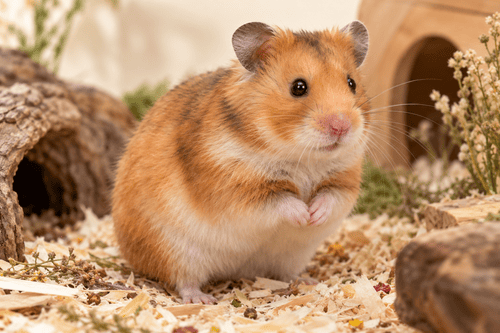
Syrian Hamster
Solitary, nocturnal and surprisingly complex — the hamster that deserves better than a small cage.
The Syrian hamster, also known as the golden hamster, is the most commonly kept hamster species and one of the most misunderstood. Often marketed as an easy starter pet, Syrians are actually complex animals with specific welfare needs that most standard hamster setups fail to meet. Kept correctly — with a large enclosure, deep substrate and respect for their nocturnal nature — they are fascinating and rewarding companions.
At a glance
- Origin
- Syria, Turkey
- Size
- Small
- Weight
- 3.5–7.1 oz (100–200 g)
- Lifespan
- 2–3 years
- Coat
- Short (most common) or long (Teddy Bear)
- Colours
- Golden, Cream, White, Sable, Banded, Spotted and many more
Breed ratings
Rated 1–5 on the same scale as every other entry, so scores are comparable between breeds. Amber stars mark things that cost you effort rather than things that benefit you.
Diet & Feeding
Feed a species-appropriate seed and grain mix — not a sugar-heavy treat mix. Look for mixes with sunflower seeds as a minority ingredient, not the majority. Supplement with small amounts of fresh vegetables (broccoli, carrot, cucumber, cooked chicken as protein), mealworms and hard-boiled egg. Avoid citrus, grapes, onions and anything sugary. Always provide fresh water. A foraging-style feeding approach — scattering food in the substrate — is more enriching than a bowl.
Exercise & Enrichment
Syrians can run 8–12 km per night in the wild. A wheel is essential — minimum 28 cm diameter (a smaller wheel causes spinal damage from the unnatural running curve). The enclosure should be at least 100 x 50 cm floor space with 30–40 cm deep substrate for burrowing — burrowing is a critical natural behaviour. Provide a sand bath, wooden chews, paper-based bedding and a hide. A hamster kept in a small cage with a tiny wheel will develop bar-chewing and stereotypic behaviours.
Grooming
Syrian hamsters are fastidious self-groomers and require no bathing — water causes severe stress and removes natural oils. Provide a chinchilla sand bath 2–3 times a week (not dust — use sand specifically for hamsters). Long-haired Syrians benefit from a gentle brush once a week to prevent tangles. Check the cheek pouches periodically — food can occasionally become impacted. Nails rarely need trimming if the substrate and surfaces are appropriate.
Health & Vet Care
Find a small animal or exotic vet experienced with rodents. Syrians are prone to wet tail (proliferative ileitis) — a severe, rapidly fatal bacterial condition; any hamster with a wet, soiled bottom needs emergency vet care within hours. Other concerns: diabetes (dwarf species are particularly susceptible), dental overgrowth, cheek pouch impaction, tumours (common in older animals) and respiratory infections. Syrians have a short lifespan — most signs of illness require prompt attention.
Living with a Syrian Hamster
Syrians are solitary animals and must be housed alone — two Syrians housed together will fight, potentially fatally. They are nocturnal, most active from around 9pm onwards. Forcing activity during the day causes chronic stress. They can become very tame with patient, gentle handling from a young age. They are better suited to older children and adults than to young children who may expect a more interactive daytime companion. Despite their short lifespan, they are engaging and worthwhile to keep well.