
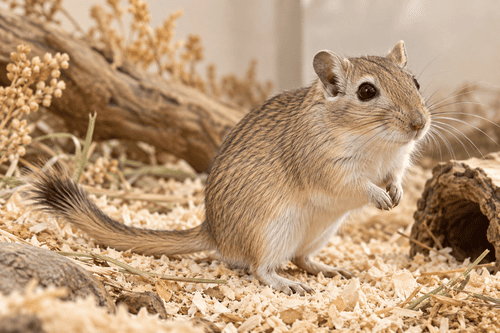
Mongolian Gerbil
Also known as: Mongolian gerbil, Meriones unguiculatus, Desert rat
A desert burrower that is awake when you are — social, tidy and endlessly busy.
- Curious
- Active
- Social
- Tidy
- Busy
The Mongolian gerbil is a small desert rodent that has become one of the better small pets for families, largely because it is **diurnal** — active during the day rather than the middle of the night. They are clean, produce very little odour, and are compulsive burrowers. Their defining requirement is a deep substrate and a same-sex companion; neither is optional.
At a glance
- Origin
- Mongolia and northern China
- Size
- Small
- Weight
- 2.1–4.6 oz (60–130 g)
- Lifespan
- 3–5 years
- Coat
- Short, dense fur with a tufted tail
- Colours
- Agouti (wild type), Black, Argente, Nutmeg, Lilac, Pied
- Average cost
- $20–$45 / month
Breed ratings
Rated 1–5 on the same scale as every other entry, so scores are comparable between breeds. Amber stars mark things that cost you effort rather than things that benefit you.
Temperament
Gerbils are sociable, inquisitive and tolerate handling well once accustomed. They are diurnal, which makes them far more compatible with family routines than hamsters, and they are compulsive chewers and burrowers.
Care & upkeep
Exercise
Substrate depth is the key requirement — 20–30 cm minimum for burrowing, in a tank rather than a barred cage. Floor area at least 75 x 40 cm for a pair.
Grooming
No grooming needed and never bathe. Provide a sand bath two or three times a week. Never lift a gerbil by the tail — the skin can strip away permanently.
Training
Habituate readily to handling and will take food from the hand within days. They are not trick-trainable in the way rats are, but they become genuinely tame and easy to interact with.
Feeding & diet
- Typical diet
- Seed and grain mix with fresh supplements
- Daily amount
- 10–15 g gerbil mix per gerbil, scattered
- Meals per day
- Once daily, scattered
Choose a mix low in sunflower seed, because gerbils will selectively eat the fatty seeds and leave the rest. Scatter food through the substrate to encourage foraging.
Foods to avoid
- Sunflower-heavy mixes
- Citrus
- Onion and garlic
- Chocolate
- Sugary treats
Who this breed suits
A good match for
- Families with older children
- Apartments
- Daytime households
- First-time small pet keepers
Probably not for
- Owners intending to keep one alone
- Barred cages without deep substrate
- Homes wanting a nocturnal pet
Common health problems
This section describes conditions the breed is known to be predisposed to, so you know what to ask about. It is not veterinary advice and is not a diagnosis — always speak to a vet about your own animal.
- Tail deglovingThe tail skin can strip away if a gerbil is held by it — a permanent injury. Never handle by the tail.
- SeizuresOccur in some genetic lines, usually brief and self-limiting. Reduce sudden stress and handling roughness.
- Tyzzer's diseaseA bacterial infection causing sudden lethargy and diarrhoea, particularly in young or stressed animals.
- Scent gland tumoursCommon in older gerbils, appearing as a lump on the belly.
- Dental overgrowthTeeth grow continuously and need constant gnawing material.
Gerbils must be kept in same-sex pairs or groups. Introducing unfamiliar adults requires the split-cage method and frequently fails, so buying littermates is far simpler.
Interesting facts
- Gerbils produce very little urine as a desert adaptation, which is why their enclosures smell so little.
- They drum their hind feet to signal alarm or excitement.
- Diurnal rather than nocturnal, which makes them one of the better rodent choices for families.
Diet & Feeding
Feed a quality gerbil-specific mix — around 10–15 g per gerbil daily — chosen for a low sunflower seed content, since gerbils will selectively eat the fatty seeds and leave the rest. Supplement with small amounts of fresh vegetables and occasional mealworms for protein. Scatter the food through the substrate rather than using a bowl; foraging occupies a large part of the day and prevents boredom. Provide water in a bottle and change it daily.
Exercise & Enrichment
Gerbils are obligate burrowers, and the single most important housing decision is substrate depth: a minimum of 20–30 cm of paper-based bedding mixed with hay, in a tank or converted enclosure rather than a barred cage. Floor area should be at least 75 x 40 cm for a pair. Add cardboard tubes, wooden chews and a sand bath. A wheel is optional but should be solid-surfaced and at least 20 cm if provided, as tails can be injured in spoked wheels.
Grooming
No grooming required. Never bathe a gerbil — provide a sand bath two or three times a week, which they use enthusiastically and which keeps the coat clean and free of excess oil. Never handle a gerbil by the tail: the skin can deglove, a permanent and painful injury unique to this group of rodents. Scoop them up in cupped hands instead, and teach children this rule before they ever touch the animal.
Health & Vet Care
Gerbils are hardy but watch for seizures, which occur in some genetic lines and are usually brief and self-limiting, Tyzzer's disease, tail degloving from incorrect handling, dental overgrowth and tumours in older animals, particularly scent gland tumours on the belly. Respiratory problems are less common than in rats and hamsters because gerbils produce so little urine. Find a small-mammal vet before you need one.
Living with Gerbils
Gerbils must be kept in same-sex pairs or small groups — a solitary gerbil is genuinely stressed. Introductions between adults require the split-cage method and are not always successful, so buying littermates is far simpler. They are curious, tolerate handling well with patience and, crucially for families, are active during the day. They are also relentless chewers, so plastic accessories and thin cage bars do not survive long.