
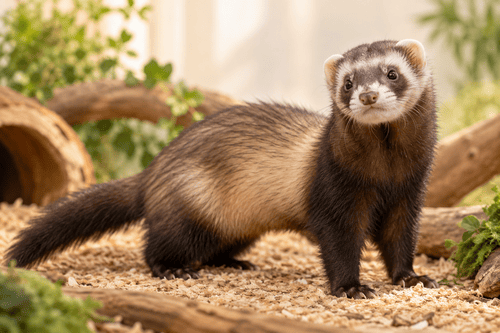
Ferret
Mischievous, energetic and endlessly entertaining — the pet that will never let you be bored.
Ferrets are domesticated mustelids with boundless energy, sharp intelligence and a relentless curiosity that makes them simultaneously delightful and exhausting to own. They bond strongly with their humans, play enthusiastically and sleep deeply — spending up to 18 hours a day asleep then waking with explosive enthusiasm. They are social, carnivorous and require far more space and interaction than most people anticipate.
At a glance
- Origin
- Europe (domesticated from European polecat)
- Size
- Large
- Weight
- 2–4 lb (0.7–2 kg)
- Lifespan
- 6–10 years
- Coat
- Short, dense — multiple colours
- Colours
- Sable, Albino, Silver, Chocolate, Champagne, Panda, Roan and more
Breed ratings
Rated 1–5 on the same scale as every other entry, so scores are comparable between breeds. Amber stars mark things that cost you effort rather than things that benefit you.
Diet & Feeding
Ferrets are obligate carnivores — they must eat animal protein and cannot digest plant matter. The best diets are: high-quality raw prey model raw (PMR) (whole prey or raw meaty bones) or a high-quality dry ferret kibble with meat as the first ingredient (minimum 30–35% protein, 15–20% fat, very low carbohydrate). Avoid cat food as a long-term diet — it is not ideal — and never feed dog food, which is too low in protein. Ferrets have fast metabolisms and need access to food throughout the day.
Exercise & Enrichment
Ferrets need a minimum of 4 hours of free-roaming, supervised time daily outside their enclosure. They run, climb, dig, explore and steal small objects. Ferret-proof any room they access: block gaps behind appliances, secure cables, remove rubber objects (they eat rubber obsessively) and ensure there is no access to the outside or under floors. Provide tunnels, hammocks, dig boxes and rotating toys in the enclosure. A bored ferret will escape, destroy things and develop stereotypic behaviours.
Grooming
Ferrets have a natural musky odour — bathing too frequently (more than monthly) removes natural oils and actually increases odour as the glands compensate. A monthly bath with ferret-specific shampoo and weekly ear cleaning (brown waxy build-up is normal — excessive dark discharge is not) is usually sufficient. Trim nails every 2–4 weeks. Dental care is important — raw diets help naturally; brushing teeth or providing dental chews reduces tartar build-up.
Health & Vet Care
Find a ferret-experienced exotic vet. Ferrets are prone to specific diseases: adrenal gland disease (extremely common, especially in neutered ferrets), insulinoma (pancreatic tumour causing low blood sugar), lymphoma and Aleutian Disease Virus (ADV). Annual vet checks from age 3 onwards are strongly recommended. Vaccinate against distemper (fatal in ferrets). Signs of illness: lethargy, hind leg weakness, hair loss on the tail and back, vomiting, and hypersalivation.
Living with Ferrets
Ferrets should be kept in pairs or groups (same-sex or neutered mixed) — lone ferrets are lonely ferrets. A pair of ferrets is much easier to keep happy than a single one. They are not suitable for households with free-roaming small animals (rabbits, guinea pigs) as prey drive is strong. They are not a children's-only pet — young children and ferrets should be supervised carefully, as ferrets nip when startled. With patient handling and early socialisation, most ferrets become very affectionate and interactive companions.