Guinea Pig
Gentle, vocal and sociable — the small pet that genuinely needs your company.
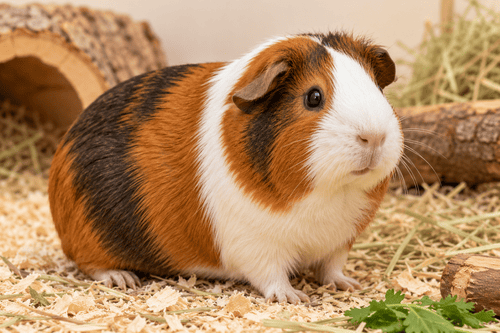
Guinea pigs are among the most rewarding small pets for owners who take the time to understand their real needs. Social, communicative and gentle, they form recognisable bonds with their keepers and express themselves with an impressive repertoire of sounds. They are not low-maintenance — they need space, companionship and a carefully managed diet — but in the right hands, they are delightful.
At a glance
- Origin
- Andes, South America
- Size
- Medium
- Weight
- 2–3 lb (0.7–1.2 kg)
- Lifespan
- 4–8 years
- Coat
- Short (American), long (Peruvian), curly (Texel) and many more breed varieties
- Colours
- Almost all colours and patterns
Breed ratings
Rated 1–5 on the same scale as every other entry, so scores are comparable between breeds. Amber stars mark things that cost you effort rather than things that benefit you.
Diet & Feeding
Guinea pigs cannot synthesise Vitamin C and must get it through their diet daily — deficiency (scurvy) is common and serious. Feed unlimited timothy hay (the diet foundation), a daily portion of fresh Vitamin C-rich vegetables (bell peppers are ideal — one of the best sources), leafy greens and a small amount of high-quality pellets. Avoid iceberg lettuce, potato, rhubarb, onion and most fruit in large quantities. Fresh water daily.
Exercise & Space
Guinea pigs need a minimum of 1 hour of floor time daily outside their enclosure in a safe area. They are fast movers and benefit from obstacle courses, tunnels and hideouts to explore. The minimum enclosure size recommended by welfare organisations is far larger than what most pet shops sell — aim for at least 120 x 60 cm per pair as the absolute minimum, larger if possible. Indoor keeping is strongly preferred over outdoor hutches in variable climates.
Grooming
Short-coated breeds need weekly brushing to remove loose hair. Long-coated varieties (Peruvian, Silkie) need daily grooming and regular trimming to prevent matting and soiling around the bottom. All guinea pigs need their nails trimmed every 4–6 weeks (overgrown nails cause pain and postural problems). Bathing is rarely necessary — use a damp cloth for spot cleaning and a specialist small-animal shampoo if a full bath is genuinely needed.
Health & Vet Care
Find a small animal specialist vet with guinea pig experience. Common health concerns include Vitamin C deficiency (scurvy), dental malocclusion (teeth grow continuously and can overgrow, causing inability to eat), upper respiratory infections, mites and lice and bladder stones. Guinea pigs are prey animals and hide illness — subtle signs include reduced appetite, hunching, tooth grinding and reluctance to move. Annual vet checks minimum.
Living with Guinea Pigs
Guinea pigs must be kept in pairs or groups — a lone guinea pig is a stressed guinea pig. Pair same-sex animals or a neutered male with females. They are vocal and will wheek (a high-pitched whistle) loudly when they hear the fridge open or rustling of food bags — which is entirely charming. They do not bite without significant provocation and are generally excellent with gentle children. They are not nocturnal, making them well-suited to family life.