
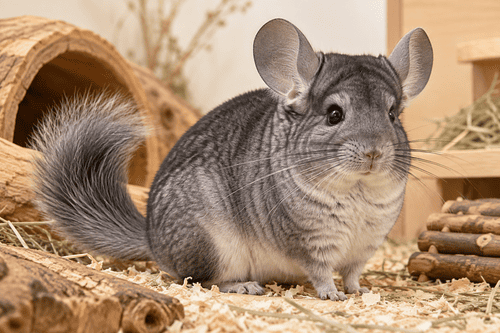
Chinchilla
Also known as: Chin, Long-tailed chinchilla
The softest fur on earth, attached to an animal that must never get warm.
- Curious
- Athletic
- Skittish
- Clean
- Nocturnal
Chinchillas have the densest fur of any land mammal — around sixty hairs from every follicle — which is exactly what makes them so demanding to keep. They are crepuscular, athletic, long-lived rodents from the high Andes, adapted to cold, dry air and completely unable to cope with heat. Kept properly, they are clean, curious, near-odourless companions for twenty years.
At a glance
- Origin
- Andes, Chile
- Size
- Small
- Weight
- 1–2 lb (0.4–0.8 kg)
- Lifespan
- 10–20 years
- Coat
- Extremely dense soft fur — up to 60 hairs per follicle
- Colours
- Standard Grey, Beige, White, Ebony, Violet, Sapphire
- Average cost
- $40–$80 / month
Breed ratings
Rated 1–5 on the same scale as every other entry, so scores are comparable between breeds. Amber stars mark things that cost you effort rather than things that benefit you.
Temperament
Chinchillas are naturally wary and rarely enjoy being held, though many become affectionate on their own terms — sitting beside you, taking food from your hand. They are crepuscular and become active in the evening, which suits some households and not others.
Care & upkeep
Exercise
Several hours of evening out-of-cage time in a chinchilla-proofed room, plus a large multi-level cage. A solid-surface wheel of at least 38 cm is essential; smaller wheels damage the spine.
Grooming
Never bathe a chinchilla in water — the dense fur cannot dry and will develop fungal infection. Provide a dust bath with chinchilla-grade dust 2–3 times a week for 10–15 minutes.
Training
They learn routines and their names, and can be taught to come for a treat, but they are not biddable in the way a rat or ferret is. Patience and hand-feeding build trust far better than restraint.
Feeding & diet
- Typical diet
- High-fibre hay-based diet
- Daily amount
- Unlimited timothy hay plus 1–2 tbsp pellets
- Meals per day
- Hay always available; pellets once daily
Chinchillas have exceptionally sensitive digestive systems. Fresh vegetables and fruit cause diarrhoea and should be avoided almost entirely — this is the opposite of rabbit and guinea pig care and catches many owners out.
Foods to avoid
- Fresh fruit and vegetables
- Nuts and seeds
- Sugary treats
- Anything moist
- Sudden diet changes
Who this breed suits
A good match for
- Adults and older teenagers
- Cool homes with air conditioning
- Evening-active households
- Owners wanting a very long-lived small pet
Probably not for
- Young children
- Warm climates without climate control
- Owners wanting a cuddly handleable pet
- Anyone unable to commit for 20 years
Common health problems
This section describes conditions the breed is known to be predisposed to, so you know what to ask about. It is not veterinary advice and is not a diagnosis — always speak to a vet about your own animal.
- Heat strokeThe defining risk. Above about 25°C a chinchilla is in danger, and above 28°C it is an emergency. Air conditioning is not optional in warm climates.
- Dental malocclusionTeeth grow continuously; without constant hay, roots overgrow into the jaw and skull. Signs are drooling, weight loss and pawing at the mouth.
- GI stasis and bloatOften triggered by inappropriate food. A chinchilla not eating or passing droppings needs urgent veterinary care.
- Fur ringIn males, fur can wrap around the penis and cause constriction. Check periodically.
- Fur slipA defensive mechanism where a patch of fur releases when grabbed. It regrows, but it signals rough handling.
Temperature is the whole game with chinchillas. They evolved at high altitude in cold, dry air and cannot pant or sweat effectively. A room that feels merely warm to you can be lethal to them.
Interesting facts
- Their fur is so dense that fleas cannot survive in it.
- Hunted almost to extinction for the fur trade; wild populations remain critically endangered.
- They can jump over 1.5 metres vertically from a standing start.
Diet & Feeding
Chinchilla diets run counter to almost every other small pet, and getting it wrong causes real harm. Feed unlimited high-quality timothy hay plus one to two tablespoons of chinchilla-specific pellets daily — and essentially nothing else. Fresh fruit and vegetables cause diarrhoea in a species adapted to dry, high-fibre Andean vegetation; the moist greens that are essential for a rabbit or guinea pig are harmful here. Treats should be a few oats or a single dried rosehip, not daily. Change diets slowly.
Temperature & Housing
This is the section that matters most. Chinchillas evolved in cold, dry air at high altitude and cannot cool themselves effectively — they neither pant nor sweat well, and that famous fur traps heat. Above 25°C a chinchilla is at risk; above 28°C is an emergency. In warm climates, air conditioning is a requirement, not a luxury. Housing should be a tall, multi-level wire cage with solid shelves, at minimum 1 x 0.6 x 1.2 m, kept out of direct sun and away from radiators.
Exercise & Enrichment
Chinchillas are athletic — they jump over 1.5 m vertically — and need both a tall cage and several hours of evening out-of-cage time in a chinchilla-proofed room. Bear in mind they chew everything, so cables must be inaccessible. Provide a solid-surface running wheel of at least 38 cm; smaller wheels force an unnatural spinal curve and cause injury. Wooden chews, tunnels and ledges at varied heights complete the setup. They are crepuscular, so expect activity in the evening.
Grooming
The rule that surprises new owners: never bathe a chinchilla in water. The fur is so dense it cannot dry through, and trapped moisture causes fungal infection down to the skin. Instead, provide a dust bath with chinchilla-grade dust (not sand) for 10–15 minutes, 2–3 times a week — they roll enthusiastically and it is how they keep the coat conditioned. Remove the bath afterwards to prevent eye irritation. Check males periodically for fur ring.
Health & Vet Care
Find an exotics vet with genuine chinchilla experience before you need one. The dominant risk is heat stroke. After that: dental malocclusion — teeth grow continuously and, without constant hay, roots overgrow into the jaw, showing as drooling, weight loss and pawing at the mouth — plus GI stasis and bloat, usually triggered by inappropriate food. A chinchilla that stops eating or passing droppings is an emergency. With good care they live 10–20 years, so this is a genuinely long commitment.