
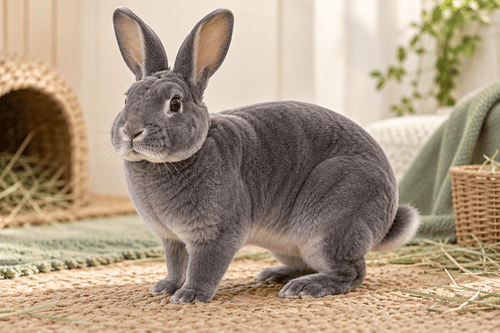
Rex Rabbit
Velvety, calm and quietly charming — the rabbit built for companionship.
The Rex is a medium-to-large rabbit breed with an extraordinarily soft, plush coat that feels like crushed velvet. Calm, intelligent and gentle, Rex rabbits are one of the best breeds for families with older children and for owners who want a rabbit that genuinely enjoys human interaction. Their laid-back temperament and striking appearance make them one of the most rewarding rabbit breeds to keep.
At a glance
- Origin
- France
- Size
- Large
- Weight
- 8–11 lb (3.5–4.8 kg)
- Lifespan
- 5–6 years
- Coat
- Short, dense, rex (upright rather than flat-lying) fur — velvety texture
- Colours
- Black, Blue, Castor, Chinchilla, Lilac, Opal, Red, White and more
Breed ratings
Rated 1–5 on the same scale as every other entry, so scores are comparable between breeds. Amber stars mark things that cost you effort rather than things that benefit you.
Diet & Feeding
Like all rabbits, the Rex requires unlimited timothy hay as the foundation of its diet — minimum 80% of total intake. This is critical for dental wear and gut motility. Supplement with fresh leafy greens (around one packed cup per 2 kg of bodyweight daily) and a small measured amount of quality pellets. Avoid sugary treats, muesli mixes and too much fruit. Water must always be fresh and available.
Exercise & Enrichment
Rex rabbits need 3–4 hours of free time daily outside their enclosure to run, explore and express natural behaviours. They are calmer than some breeds but still need space. Provide a large pen or bunny-proofed room with foraging toys, tunnels, wooden chews and platforms to hop onto. Rex rabbits can be litter trained, which makes free-roaming easier to manage indoors.
Grooming
The Rex's short, upright coat is very low-maintenance — a weekly wipe with a damp hand or soft brush is usually sufficient. During moulting, gentle daily brushing prevents ingestion of excess fur (hairballs in rabbits do not pass as easily as in cats). Their feet need particular attention — the Rex's thinner fur on the hocks makes them prone to sore hocks (ulcerative pododermatitis) on hard or wire floors. Soft bedding is essential.
Health & Vet Care
Rex rabbits are generally hardy. Main health concerns include sore hocks (provide deep bedding and solid flooring), GI stasis, dental malocclusion and encephalitozoon cuniculi (E. cuniculi) — a parasitic infection causing neurological signs that can be screened for. Spaying females dramatically reduces uterine cancer risk. Vaccinate against myxomatosis and RHD (RHD1 and RHD2) annually in the UK.
Living with a Rex
Rex rabbits are sociable, gentle and generally tolerant of handling — making them one of the better breeds for families with responsible older children. They do best in pairs or small groups of bonded, neutered rabbits. A Rex kept alone without sufficient human interaction or a companion will become withdrawn. Their calm temperament and litter-training aptitude make them excellent house rabbits.