
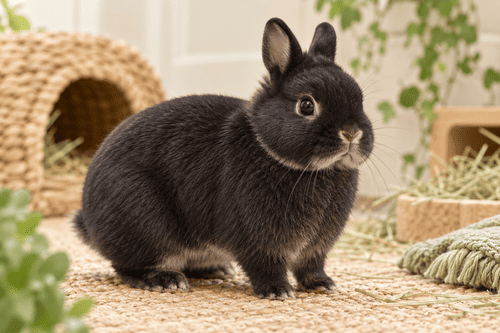
Netherland Dwarf
Also known as: ND, Dwarf rabbit
The smallest rabbit breed — compact, energetic and far more work than its size suggests.
- Energetic
- Alert
- Skittish
- Curious
- Territorial
The Netherland Dwarf is the smallest recognised rabbit breed, with a round head, tiny ears and a body that rarely exceeds a kilogram. Their appearance makes them enormously popular, and their temperament makes them a poor match for the households that usually buy them. Dwarfs are energetic, easily startled and require the same space, diet and veterinary care as any rabbit — plus a higher rate of dental disease.
At a glance
- Origin
- Netherlands
- Size
- Small
- Weight
- 1–2 lb (0.5–1.1 kg)
- Lifespan
- 10–12 years
- Coat
- Short, dense, rollback fur
- Colours
- Black, Blue, Chocolate, Chestnut, Otter, Himalayan, Broken, and many more
- Average cost
- $50–$90 / month
Breed ratings
Rated 1–5 on the same scale as every other entry, so scores are comparable between breeds. Amber stars mark things that cost you effort rather than things that benefit you.
Temperament
Netherland Dwarfs are more highly strung than larger rabbit breeds — quick to startle and slower to settle into handling. With patient work they become affectionate, but they are a poor choice for young children who want a rabbit to carry around.
Care & upkeep
Exercise
A minimum of 3–4 hours daily outside the enclosure in a rabbit-proofed space. Dwarfs are fast and athletic and need genuine running room, not a hutch.
Grooming
Brush weekly, daily during the seasonal moult — rabbits cannot vomit, so swallowed fur is a genuine blockage risk. Never bathe a rabbit; it causes shock. Nails every 6–8 weeks.
Training
Litter training works well and makes free-roaming practical. Handling needs patient daily work from a young age, always supporting the hindquarters — a struggling rabbit can break its own spine.
Feeding & diet
- Typical diet
- Hay-based herbivore diet
- Daily amount
- Unlimited timothy hay, 1 cup greens, 1 tbsp pellets
- Meals per day
- Hay always available; greens and pellets once daily
Hay must make up 80–85% of intake — it is what keeps continuously growing teeth worn down. In a breed already predisposed to dental disease, skimping on hay is the single most damaging thing an owner can do.
Foods to avoid
- Iceberg lettuce
- Muesli-style rabbit mixes
- Large amounts of fruit
- Bread and cereal
- Anything from the onion family
Who this breed suits
A good match for
- Adults and teenagers
- Indoor homes with rabbit-proofed space
- Owners wanting a bonded pair
- Apartment living
Probably not for
- Young children
- Hutch-only housing
- Owners expecting a low-maintenance starter pet
- Homes without access to a rabbit vet
Common health problems
This section describes conditions the breed is known to be predisposed to, so you know what to ask about. It is not veterinary advice and is not a diagnosis — always speak to a vet about your own animal.
- Dental malocclusionThe shortened skull frequently misaligns the teeth. This is the breed's defining health problem and often needs lifelong veterinary burring.
- GI stasisThe gut slows or stops — a life-threatening emergency. Any rabbit not eating or passing droppings for 12 hours needs a vet immediately.
- E. cuniculiA parasite causing head tilt, hind-limb weakness and eye problems. Testable and treatable.
- Uterine cancerVery high risk in unspayed females — spaying is strongly recommended.
- FlystrikeA summer emergency where flies lay eggs on a soiled rear. Check the bottom daily in warm weather.
Find a rabbit-savvy vet before you need one — not every small animal practice has genuine rabbit expertise, and rabbit emergencies move in hours.
Interesting facts
- Developed in the Netherlands in the early 20th century from small Polish rabbits.
- The dwarfing gene is lethal when doubled — pairing two dwarfs produces non-viable "peanut" kits.
- Adults keep the rounded head and short ears of a juvenile rabbit for life.
Diet & Feeding
Diet is not a detail for this breed, it is the health plan. Unlimited high-quality timothy hay must make up 80–85% of intake — rabbit teeth grow continuously and hay is what wears them down. In a breed already predisposed to malocclusion, a low-hay diet is the fastest route to lifelong dental treatment. Add roughly one packed cup of fresh leafy greens daily and a tablespoon of quality pellets — not muesli mixes, which let rabbits selectively eat the sugary bits. Fresh water always available.
Exercise & Enrichment
A hutch is housing, not enrichment. Netherland Dwarfs need 3–4 hours minimum outside the enclosure daily in a rabbit-proofed space — they are small but genuinely fast and athletic, and they need room to run and binky. Provide tunnels, cardboard boxes to destroy, hay racks to forage from and platforms to hop onto. Rabbits are crepuscular, most active at dawn and dusk, so schedule free time to match rather than fighting their clock.
Grooming
Brush weekly with a soft brush, moving to daily during the seasonal moult. This matters more than it does for a cat: rabbits cannot vomit, so swallowed fur cannot come back up and instead contributes to gut blockages. Never bathe a rabbit — immersion causes severe stress and can trigger fatal shock; spot-clean with a damp cloth instead. Trim nails every 6–8 weeks, and in warm weather check the rear daily for soiling, because flystrike kills quickly.
Health & Vet Care
The defining problem is dental malocclusion — the shortened dwarf skull frequently misaligns the teeth, and affected rabbits need lifelong veterinary burring. Also critical: GI stasis, where the gut slows or stops. A rabbit that has not eaten or passed droppings in 12 hours is an emergency, not a wait-and-see. Add E. cuniculi, uterine cancer in unspayed females (spaying is strongly advised) and flystrike in summer. Find a genuinely rabbit-experienced vet before you need one.
Living with a Netherland Dwarf
These are not starter pets, and the mismatch between how they are marketed and what they need causes real welfare problems. Dwarfs are more highly strung than larger breeds — quick to startle, slower to accept handling — which makes them a poor fit for young children who want a rabbit to carry. They live 10–12 years, need a bonded companion, daily free-roaming time and a specialist vet. For patient adult owners willing to meet that, they are engaging, characterful animals.