
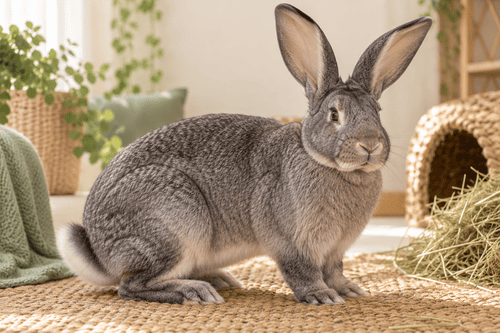
Flemish Giant
Also known as: Gentle Giant, Patagonian rabbit (historical)
The largest rabbit breed in the world — placid, enormous and frequently underestimated.
- Placid
- Gentle
- Tolerant
- Docile
- Sociable
The Flemish Giant is the largest domestic rabbit breed, regularly exceeding six kilograms and occasionally reaching nine. Originally bred in Belgium for meat and fur, they are now kept as companions and are famously placid — often described as the gentle giants of the rabbit world. Their size changes everything about their care: housing, food volume, handling and veterinary cost all scale up substantially.
At a glance
- Origin
- Belgium
- Size
- Giant
- Weight
- 13–20 lb (6–9 kg)
- Lifespan
- 5–8 years
- Coat
- Short, dense, glossy rollback fur
- Colours
- Steel Grey, Light Grey, Sandy, Fawn, Black, Blue, White
- Average cost
- $70–$130 / month
Breed ratings
Rated 1–5 on the same scale as every other entry, so scores are comparable between breeds. Amber stars mark things that cost you effort rather than things that benefit you.
Temperament
Flemish Giants are famously calm and tolerant, which makes them popular family rabbits. Size is the caveat: a kicking six-kilogram rabbit can injure a child or damage its own spine, so handling must always fully support the hindquarters.
Care & upkeep
Exercise
A minimum enclosure of around 2.5 x 1.2 m plus four hours or more of daily free-roaming. Everything — tunnels, platforms, bowls — must be sized for a six-kilogram animal.
Grooming
Brush weekly and more during the moult — rabbits cannot vomit, so swallowed fur is a genuine blockage risk. Never bathe. Check the rear daily in warm weather.
Training
Litter train readily and learn their names. Handling needs patient daily work from a young age, and everyone in the household must know how to support the hindquarters properly.
Feeding & diet
- Typical diet
- Hay-based herbivore diet
- Daily amount
- Unlimited hay, 3 cups greens, 1/4 cup pellets
- Meals per day
- Hay always available; greens and pellets once daily
Hay must be 80–85% of intake. Pellets are proportionally lower than for a small rabbit because obesity in a giant breed loads joints that are already vulnerable.
Foods to avoid
- Iceberg lettuce
- Muesli-style rabbit mixes
- Large amounts of fruit
- Bread and cereal
- Onion family vegetables
Who this breed suits
A good match for
- Adults and older teenagers
- Homes with substantial floor space
- House-rabbit keepers
- Owners wanting a calm rabbit
Probably not for
- Small homes
- Hutch-only housing
- Young children
- Owners unable to lift a heavy rabbit safely
Common health problems
This section describes conditions the breed is known to be predisposed to, so you know what to ask about. It is not veterinary advice and is not a diagnosis — always speak to a vet about your own animal.
- Sore hocks (pododermatitis)Heavy rabbits on hard or wire flooring develop pressure sores. Deep soft bedding and solid floors are essential.
- GI stasisA life-threatening gut slowdown. No eating or droppings for 12 hours is an emergency.
- Arthritis and spinal problemsAppear earlier in giant breeds than in small rabbits, particularly if overweight.
- Dental malocclusionTeeth grow continuously. A hay-heavy diet is the main prevention.
- FlystrikeFlies lay eggs on a soiled rear. Check daily in warm weather — this kills within hours.
Shorter-lived than small rabbit breeds at 5–8 years, and everything from medication dosing to carrier size scales up. Confirm your vet is comfortable treating a rabbit this size.
Interesting facts
- The largest domestic rabbit breed, with record individuals exceeding 1.3 metres in length.
- Developed in 16th-century Flanders, originally for meat and fur.
- Often described as the gentle giant of the rabbit world for its placid temperament.
Diet & Feeding
The rabbit rule applies at scale: unlimited high-quality timothy hay as 80–85% of intake, which is what keeps continuously growing teeth worn and the gut moving. Add roughly three packed cups of fresh leafy greens daily and a measured quarter cup of quality pellets — proportionally less pellet than a small rabbit, because obesity in a giant breed is dangerous for the joints. Avoid muesli mixes entirely. Water intake is high; use a heavy bowl rather than a bottle.
Exercise & Enrichment
A hutch is not housing for this breed. Flemish Giants need a minimum enclosure of around 2.5 x 1.2 m plus 4 hours or more of free-roaming daily in a rabbit-proofed space. They are less frantic than smaller breeds but still need room to stretch out fully, stand up and move properly. Provide large tunnels, sturdy platforms at low height, cardboard to destroy and hay racks to forage from. Everything must be sized for a six-kilogram animal.
Grooming
The short dense coat needs brushing weekly, rising to two or three times a week during the seasonal moult. Rabbits cannot vomit, so swallowed fur cannot come back up and contributes to gut blockages — grooming is preventive medicine rather than cosmetics. Never bathe a rabbit; spot-clean with a damp cloth. Check the rear daily in warm weather for soiling, because flystrike is fatal and moves in hours. Nails every 6–8 weeks.
Health & Vet Care
Size drives the risks. Sore hocks (pododermatitis) are common because heavy rabbits on hard or wire flooring develop pressure sores — deep soft bedding and solid floors are essential. Arthritis and spinal problems appear earlier than in small breeds. Add the standard rabbit list: GI stasis (no eating or droppings for 12 hours is an emergency), dental malocclusion, flystrike and uterine cancer in unspayed females. Vaccinate against myxomatosis and RHD.
Living with a Flemish Giant
They are genuinely placid and tolerant, which is why they have a reputation as good family rabbits — but a six-kilogram rabbit that kicks can injure a child or itself, and handling must always support the hindquarters fully. They litter train well and make excellent house rabbits given the floor space. Expect a shorter life than small breeds, typically 5–8 years, and budget for a vet who is comfortable treating a rabbit the size of a small dog.