
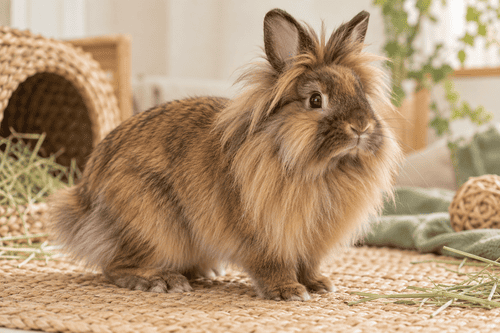
Lionhead
Also known as: Lionhead dwarf
A woolly mane and a friendly disposition — the rabbit that actually enjoys company.
- Friendly
- Outgoing
- Gentle
- Curious
- Sociable
The Lionhead is a small rabbit distinguished by the wool mane encircling its head, produced by a single dominant gene. They are among the more sociable and outgoing rabbit breeds, generally calmer to handle than other dwarfs, and are popular as house rabbits. The mane is the catch: it needs real grooming, and neglected wool causes serious digestive problems.
At a glance
- Origin
- Belgium
- Size
- Small
- Weight
- 2–4 lb (1.1–1.8 kg)
- Lifespan
- 7–10 years
- Coat
- Short body coat with a long wool mane; some have wool "skirts" on the flanks
- Colours
- Ruby-Eyed White, Black, Chocolate, Tortoise, Sable, Chestnut, Broken patterns
- Average cost
- $50–$95 / month
Breed ratings
Rated 1–5 on the same scale as every other entry, so scores are comparable between breeds. Amber stars mark things that cost you effort rather than things that benefit you.
Temperament
Lionheads are generally more people-oriented than other dwarf breeds and settle into handling faster. They still need patient socialisation, and like all rabbits they dislike being picked up even when they enjoy human company at floor level.
Care & upkeep
Exercise
3–4 hours daily outside the enclosure. Lionheads are moderately active and enjoy foraging and exploring more than sprinting.
Grooming
The mane needs brushing 2–3 times weekly, daily during moult. Double-maned rabbits with wool skirts need more. Trim wool around the rear to prevent soiling.
Training
Litter train readily and are among the easier rabbits to teach to come when called. Handle daily from a young age to build tolerance for the grooming they will need for life.
Feeding & diet
- Typical diet
- Hay-based herbivore diet
- Daily amount
- Unlimited timothy hay, 1–1.5 cups greens, 1–2 tbsp pellets
- Meals per day
- Hay always available; greens and pellets once daily
The same 80–85% hay rule applies, with an extra reason: fibre keeps the gut moving, which matters more in a wooled breed that inevitably swallows some of its own coat.
Foods to avoid
- Iceberg lettuce
- Muesli-style rabbit mixes
- Excess fruit
- Bread and cereal
- Onion family vegetables
Who this breed suits
A good match for
- Families with older children
- House-rabbit owners
- Apartments
- Owners willing to groom regularly
Probably not for
- Owners wanting a low-grooming rabbit
- Hutch-only housing
- Young children
- Households without a rabbit-savvy vet
Common health problems
This section describes conditions the breed is known to be predisposed to, so you know what to ask about. It is not veterinary advice and is not a diagnosis — always speak to a vet about your own animal.
- Wool blockSwallowed mane wool contributes to gut blockage. Rabbits cannot vomit, so prevention through grooming is the only defence.
- GI stasisA life-threatening slowdown of the gut. No eating or droppings for 12 hours is an emergency.
- Dental malocclusionCommon across dwarf breeds. Hay-heavy feeding is the main prevention.
- FlystrikeWool around the rear traps soiling, raising risk. Check daily in warm weather and keep the area trimmed.
- E. cuniculiA parasite causing head tilt and hind-limb weakness; testable and treatable.
The mane gene comes in single and double forms. Double-maned Lionheads have far more wool, including flank skirts, and need substantially more grooming — worth knowing before choosing a rabbit.
Interesting facts
- Created in Belgium, reportedly from a Swiss Fox and Netherland Dwarf cross.
- The mane is caused by a single dominant gene; two copies produce dramatically more wool.
- One of the newest rabbit breeds, only recognised in the US in 2014.
Diet & Feeding
The standard rabbit rule applies with extra force here: unlimited timothy hay as 80–85% of the diet, plus around a cup of fresh leafy greens and a measured tablespoon or two of quality pellets daily. Hay does two jobs — it wears down continuously growing teeth, and it keeps the gut moving. That second job matters more in a wooled breed, because a Lionhead inevitably swallows some of its own mane while grooming and needs the fibre to carry it through. Avoid muesli mixes entirely.
Exercise & Enrichment
Lionheads need 3–4 hours daily outside their enclosure in a rabbit-proofed space. They are moderately active and lean more toward foraging and exploring than sprinting — scatter-feeding hay, cardboard castles, tunnels, willow balls and dig boxes suit them well. Being crepuscular, they are liveliest at dawn and dusk; a Lionhead that seems dull at midday is simply asleep at the right time for a rabbit.
Grooming
This is the breed's real commitment. The mane needs brushing 2–3 times a week, daily during moult, and double-maned rabbits — which also carry wool skirts on the flanks — need considerably more. Neglected wool mats to the skin and is painful to remove. Keep the wool around the rear trimmed short: it traps soiling, which in warm weather invites flystrike. Never bathe a rabbit. Nails every 6–8 weeks.
Health & Vet Care
The breed-specific risk is wool block — swallowed mane fur contributing to gut obstruction, which cannot be vomited back up. Grooming is the only real prevention. Beyond that, the standard rabbit list applies: GI stasis (no eating or droppings for 12 hours is an emergency), dental malocclusion, flystrike and E. cuniculi. Spay females to remove a very high uterine cancer risk, vaccinate against myxomatosis and RHD, and register with a rabbit-experienced vet in advance.
Living with a Lionhead
Lionheads are among the more sociable rabbit breeds — outgoing, curious and quicker to accept handling than most dwarfs, which is why they have become popular house rabbits. They still want interaction at floor level; almost no rabbit enjoys being picked up, however friendly. Keep them in bonded pairs where possible, litter train them (they take to it readily) and give them run of a rabbit-proofed room. Expect 7–10 years, and budget the grooming time honestly before committing.