
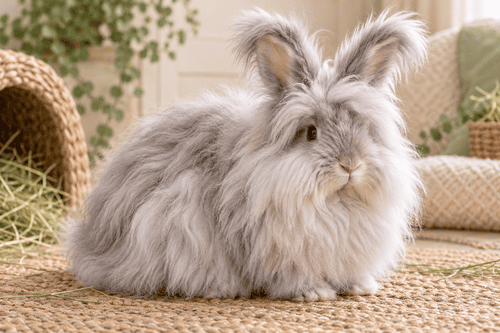
English Angora
Also known as: Angora, English Angora
A rabbit made almost entirely of wool — beautiful, gentle and the highest-maintenance rabbit there is.
- Docile
- Gentle
- Calm
- Tolerant
- Quiet
The English Angora is the smallest of the angora rabbit breeds and the woolliest, with dense fibre covering the entire body including the face, ears and feet. They are gentle, docile animals with a genuinely appealing temperament. They are also, without qualification, the most demanding rabbit to keep well — the coat requires near-daily work and neglect causes real suffering.
At a glance
- Origin
- Turkey / England
- Size
- Small
- Weight
- 4–8 lb (2–3.5 kg)
- Lifespan
- 7–12 years
- Coat
- Very long dense wool covering the whole body including face and feet
- Colours
- White, Chestnut, Chocolate, Lilac, Blue, Tortoiseshell and more
- Average cost
- $65–$120 / month
Breed ratings
Rated 1–5 on the same scale as every other entry, so scores are comparable between breeds. Amber stars mark things that cost you effort rather than things that benefit you.
Temperament
Angoras are calm and generally tolerant of handling, which is essential given how much of it their coat demands. They are gentle rabbits that suit patient adults rather than children, and like all rabbits they benefit from a bonded companion.
Care & upkeep
Exercise
3–4 hours daily outside the enclosure. Less athletic than most breeds, and a long coat genuinely restricts movement — another reason to keep it clipped.
Grooming
Groom every one to two days without exception, and clip or shear every 90 days. Matted wool cannot be brushed out and must be shorn, sometimes under sedation. Never bathe.
Training
Litter train readily. The training that matters most is habituating the rabbit to daily handling and grooming from a young age, because that routine will continue for its entire life.
Feeding & diet
- Typical diet
- Hay-based herbivore diet
- Daily amount
- Unlimited hay, 1.5 cups greens, 1–2 tbsp pellets
- Meals per day
- Hay always available; greens and pellets once daily
Fibre is what carries swallowed wool through the gut, and an Angora ingests wool constantly while self-grooming. Hay at 80–85% of intake is medically important in this breed rather than merely advisable.
Foods to avoid
- Iceberg lettuce
- Muesli-style rabbit mixes
- Excess fruit
- Bread and cereal
- Onion family vegetables
Who this breed suits
A good match for
- Patient adult owners
- People who enjoy grooming
- Cool homes
- Experienced rabbit keepers
Probably not for
- Anyone unable to groom every other day
- Young children
- Warm homes without climate control
- First-time rabbit owners
Common health problems
This section describes conditions the breed is known to be predisposed to, so you know what to ask about. It is not veterinary advice and is not a diagnosis — always speak to a vet about your own animal.
- Wool blockIngested wool contributing to gut obstruction. Rabbits cannot vomit, so grooming and fibre are the only prevention.
- GI stasisA life-threatening gut slowdown. No eating or droppings for 12 hours is an emergency.
- FlystrikeDramatically higher risk in a wooled rear. Keep the area clipped short and check daily in warm weather.
- Heat strokeA full wool coat in warm weather is dangerous. Clipping is a welfare measure, not a style choice.
- Dental malocclusionCommon in small rabbit breeds. A hay-heavy diet is the main prevention.
Clipping is welfare rather than aesthetics. A full coat in warm weather risks heat stroke, and a wooled rear dramatically raises flystrike risk in summer.
Interesting facts
- One of the oldest domestic rabbit breeds, recorded in France in the 18th century.
- Angora wool is spun into yarn and is warmer and lighter than sheep wool.
- The English variety is the only angora with wool covering the face and ears as well as the body.
Diet & Feeding
The standard rabbit rule applies with an added imperative: unlimited timothy hay as 80–85% of intake, because fibre is what carries swallowed wool through the gut. An Angora ingests wool constantly while grooming itself, and cannot vomit it back up. Add around one and a half cups of leafy greens daily and one to two tablespoons of pellets. Some keepers use papaya or pineapple enzyme supplements — discuss with a rabbit vet rather than assuming they replace fibre.
Exercise & Enrichment
Angoras need 3–4 hours daily outside the enclosure in a rabbit-proofed space. They are less athletic than most breeds and the coat genuinely restricts movement when long, which is one more reason to keep it trimmed. Provide tunnels, dig boxes and forage opportunities at floor level rather than height. Bedding must be kept scrupulously clean, because anything that sticks to wool becomes a matting and hygiene problem quickly.
Grooming
This is the entire commitment in one section. Angoras need grooming every one to two days without exception — a blow-through with a pet dryer plus combing to the skin — and clipping or shearing every 90 days. Wool that mats cannot be brushed out and must be shorn off, sometimes under sedation. Trim the wool around the rear permanently short for hygiene. Never bathe. Anyone unwilling to commit this time should choose a different breed.
Health & Vet Care
Wool block is the defining risk — ingested wool contributing to a gut blockage that cannot be vomited up, presenting as reduced appetite and smaller droppings before it becomes an emergency. Add GI stasis, dental malocclusion, flystrike (dramatically higher risk in a wooled rear), heat stroke, because a full coat in warm weather is dangerous, and uterine cancer in unspayed females. Register with a rabbit-experienced vet before you need one.
Living with an English Angora
Temperamentally they are lovely — calm, gentle and generally tolerant of the extensive handling their coat requires, which is fortunate. They suit patient adult owners rather than children, and they need a bonded companion like any rabbit. The honest summary is that the coat dictates the relationship: if you enjoy grooming and can commit to it every other day for a decade, an Angora is rewarding. If not, it is a welfare problem waiting to happen.