Holland Lop
Floppy-eared, palm-sized and endlessly endearing — the rabbit that acts like a companion.
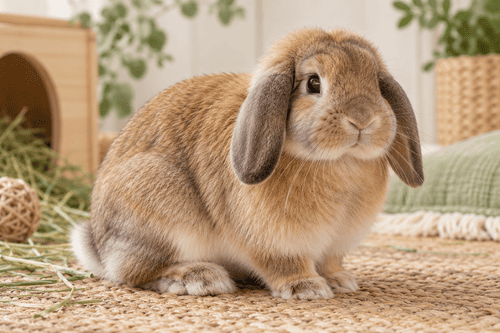
The Holland Lop is one of the most popular rabbit breeds in the world, beloved for its compact, rounded body and distinctively drooping ears. Despite their small size, Holland Lops have bold personalities and form strong bonds with their owners. They are curious, playful and surprisingly demanding of attention — much more so than most people expect from a rabbit.
At a glance
- Origin
- Netherlands
- Size
- Small
- Weight
- 2–4 lb (0.9–1.8 kg)
- Lifespan
- 7–14 years
- Coat
- Short to medium, dense and rollback
- Colours
- Broken, Solid, Shaded, Agouti, Pointed — wide colour variety
Breed ratings
Rated 1–5 on the same scale as every other entry, so scores are comparable between breeds. Amber stars mark things that cost you effort rather than things that benefit you.
Diet & Feeding
A Holland Lop's diet should be 80–85% high-quality timothy hay — this is non-negotiable. Hay keeps teeth worn (rabbit teeth grow continuously) and the digestive system healthy. Supplement with a small amount of fresh leafy greens daily (romaine lettuce, kale, parsley) and a tablespoon of pellets. Avoid muesli-style mixes, fruit in large quantities and iceberg lettuce. Fresh water must always be available.
Exercise & Enrichment
Rabbits need a minimum of 3–4 hours free-roaming time daily outside their enclosure. A cage alone is not enrichment. Provide tunnels, cardboard boxes to chew, hay racks to forage from and safe chew toys. Rabbits are crepuscular (most active at dawn and dusk) — schedule playtime accordingly. A rabbit kept in a small hutch without exercise will develop skeletal problems and destructive behaviours.
Grooming
Holland Lops are relatively low-maintenance groomers. Brush weekly with a soft slicker brush; increase to daily during moulting season (spring and autumn) when they shed heavily. Never bathe a rabbit — it causes extreme stress and can trigger shock. Spot-clean only if necessary. Check the bottom weekly for soiling (fly strike risk in summer). Nails need trimming every 6–8 weeks.
Health & Vet Care
Find a rabbit-savvy vet — not all small animal vets have strong rabbit expertise. Key health concerns include GI stasis (a life-threatening digestive slowdown — always take seriously), dental disease (malocclusion is common in lops due to their shorter face), ear infections (the folded ears trap debris), and uterine cancer in unspayed females (very high risk). Spay/neuter is strongly recommended. Annual vet checks minimum.
Living with a Holland Lop
Holland Lops are not starter pets or children's toys. They are long-lived, social animals who need daily handling, free-roaming time, a rabbit-proofed space and a vet who knows them. They thrive in pairs (bonded rabbits of compatible sex/neuter status). A bored, lonely rabbit will become destructive and withdrawn. With the right setup, they are extraordinarily rewarding companions.