
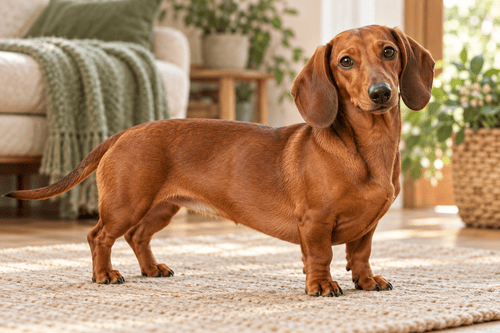
Dachshund
Long on personality, short on legs — the bold little badger dog.
The Dachshund, affectionately known as the sausage dog, was bred to hunt badgers underground and still carries that fearless, tenacious spirit in a tiny body. Available in two sizes (standard and miniature) and three coat types (smooth, long and wire), Dachshunds are lively, clever and fiercely devoted to their people — with a bark that belies their size.
At a glance
- Origin
- Germany
- Size
- Medium
- Weight
- 9–33 lb (4–15 kg)
- Lifespan
- 12–16 years
- Coat
- Smooth, Long-haired or Wire-haired
- Colours
- Red, Black & Tan, Chocolate & Tan, Cream, Dapple, Brindle
Breed ratings
Rated 1–5 on the same scale as every other entry, so scores are comparable between breeds. Amber stars mark things that cost you effort rather than things that benefit you.
Diet & Feeding
Weight management is critical for Dachshunds — excess weight puts enormous strain on their long spines and dramatically increases the risk of IVDD. Feed twice daily with measured portions (roughly 150–200 g dry kibble for a standard adult). Use a raised bowl to ease their low-to-ground posture. Treats must be factored into total daily calories.
Exercise Needs
Dachshunds need 45–60 minutes of moderate exercise daily, split into two walks. Avoid high-impact activities — jumping on/off furniture, steep stairs and rough play — as these stress the spine. Ramps to furniture and beds are a wise investment. Despite their size, they love to dig and explore, so sniff walks in parks are ideal.
Grooming
Smooth-coated Dachshunds need only a weekly wipe with a damp cloth. Long-haired varieties need brushing 2–3 times a week to prevent tangles, especially behind the ears. Wire-haired coats need hand-stripping twice a year. All varieties benefit from monthly nail trims and weekly ear checks — their long, floppy ears are prone to infections.
Health & Vet Care
The defining health concern is Intervertebral Disc Disease (IVDD) — a spinal condition that can cause pain or paralysis. Learn the warning signs: reluctance to move, crying when touched, dragging of hindlegs. Prevent falls and jumps with ramps and baby gates. Other concerns include obesity, dental disease and epilepsy. CT or MRI screening is available for high-risk dogs.
Training Tips
Dachshunds are clever but have strong independent opinions. Positive reinforcement with small, tasty treats works well. Recall is notoriously poor — a scent or prey animal will override all training, so a secure garden is essential. Housetraining can be slow; consistency and a strict schedule are key. Socialise early to prevent excessive barking at strangers.
Read next
 How to Set Up a Dog-Friendly GardenA garden can be a safe, interesting space for your dog — or a source of escapes, toxic plants and dug-up borders. Here is how to set one up for safety, comfort and enrichment.
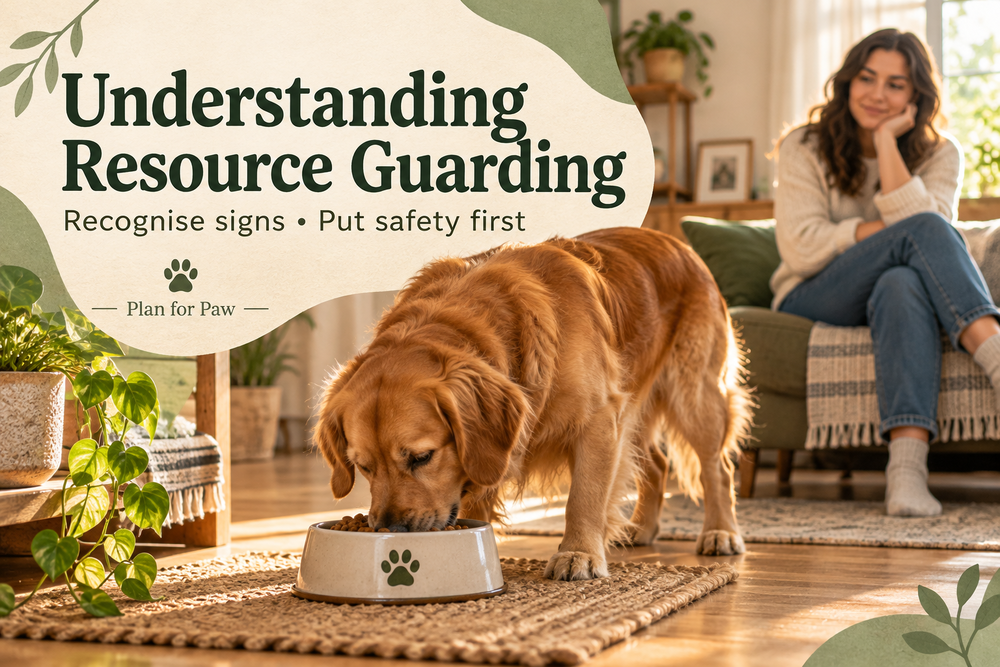 Resource Guarding in Dogs: Signs, Safety and What HelpsA dog that stiffens over the food bowl or growls when you approach a chew is guarding something it values. Here is how to recognise it early, keep everyone safe and what helps.
 How Lost Pets Actually Get Home — and How to Make Yours Easier to ReturnMost lost pets are found close to home by an ordinary person with a phone. What happens in the next few minutes decides how fast they get back. Here is how reunions really happen, and how to prepare.