Resource Guarding in Dogs: Signs, Safety and What Helps
A dog that stiffens over the food bowl or growls when you approach a chew is guarding something it values. Here is how to recognise it early, keep everyone safe and what helps.
In short
A dog that stiffens over the food bowl or growls when you approach a chew is guarding something it values. Here is how to recognise it early, keep everyone safe and what helps.
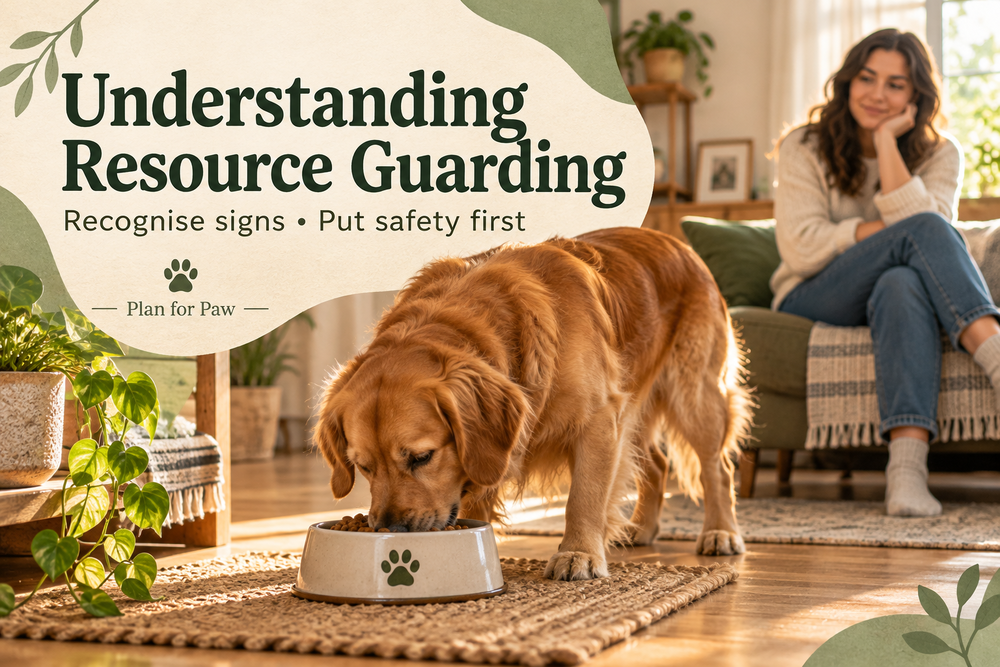
Resource guarding is when a dog tries to keep something it values — food, a chew, a toy, a resting spot or even a person — away from others. It is a natural behaviour, but it can become dangerous if it escalates, particularly in homes with children. Recognising it early and handling it the right way makes a big difference.
Early Signs
Guarding usually starts quietly. Watch for:
- Eating faster when someone approaches
- Freezing or going stiff over a bowl, chew or toy
- Hunching over an item, or turning their back
- A hard stare or whale eye — showing the whites of the eyes
- Lip curling or a low growl
- Snapping or biting
These are warnings. Respect them. A growl tells you your dog is uncomfortable before things go further.
Why Taking Things Away Makes It Worse
A common piece of old advice is to take the food bowl away so the dog "learns who is boss". In practice, it proves to the dog that people approaching really do mean losing the thing, so the guarding often gets stronger. Punishing a growl can remove the warning while leaving the worry — which is how dogs end up biting "without warning".
Safety First
- Feed your dog somewhere quiet, away from people and other pets
- Use baby gates at mealtimes, especially with children in the house
- Give long-lasting chews only in a crate or behind a gate
- Teach children never to approach a dog that is eating or has a chew
- If your dog has something dangerous, trade it for something better rather than grabbing it
Puppy Training Tracker
Note what your dog guards, from whom and how strongly, and how each practice session goes. A clear record helps you and any behaviourist see progress. Printable and fillable.
Get the Puppy Training Tracker →What Helps
Approach and Add
While your dog eats, walk past at a distance where they stay relaxed and toss a really tasty treat towards the bowl, then walk away. Over many sessions, your approach comes to mean something good is being added. Only reduce distance when your dog is completely relaxed.
Teach "Trade"
Practise with low-value items: offer a treat, say "trade", and when your dog drops the toy, give the treat and then give the toy back. Your dog learns that giving things up is rewarded, and often returned.
Teach "Drop" and "Leave It"
Both are valuable for safety and are best taught with rewards when things are calm.
Get Professional Help
If your dog has growled at children, snapped or bitten, or if the guarding is intense, work with a qualified, reward-based behaviourist. Speak to your vet too, as pain can make guarding worse.
Two ways to keep notes
Focused on training sessions? Choose the Puppy Training Tracker. Want behaviour notes alongside health and household routines? Choose the Complete Dog Owner Binder.
Get the Complete Dog Owner Binder →Frequently Asked Questions
Is resource guarding normal in puppies?
Some guarding is common in puppies. Starting approach-and-add and trade games early helps prevent it growing.
Should I punish my dog for growling?
No. The growl is a warning. Punishing it can lead to a dog that bites without warning.
My dog only guards from the other dog. What should I do?
Feed separately and give chews apart. If it causes fights, seek help from a behaviourist.
Printable and fillable PDF templates for pet owners — feeding schedules, health records, training trackers and more.