
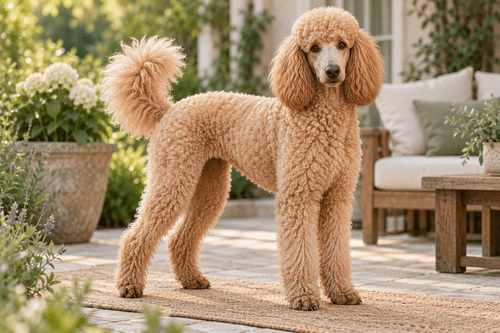
Poodle
Brilliant, elegant and hypoallergenic — the dog that surprises everyone.
Often misjudged as merely a show dog, the Poodle is one of the most intelligent breeds in the world. Athletic, trainable and virtually non-shedding, Poodles come in three sizes (Standard, Miniature, Toy) and thrive wherever they are given mental challenges and human connection.
At a glance
- Origin
- Germany / France
- Size
- Large
- Weight
- 7–71 lb (3–32 kg)
- Lifespan
- 12–15 years
- Coat
- Dense, curly, low-shedding
- Colours
- Black, White, Apricot, Red, Silver, Brown, Parti
Breed ratings
Rated 1–5 on the same scale as every other entry, so scores are comparable between breeds. Amber stars mark things that cost you effort rather than things that benefit you.
Diet & Feeding
Feed a high-quality diet appropriate to size — Standard Poodles need a large-breed formula, while Toys need a small-breed one. Split meals into twice daily. Poodles can be prone to bloat (Standards), so avoid vigorous exercise within an hour of meals. Omega-3 supplementation supports their skin and curly coat.
Exercise Needs
Standard Poodles need 60–90 minutes of daily exercise; Miniatures need 45–60 minutes; Toys 30–45 minutes. They love swimming, fetch, agility and trick training. Mental exercise is equally important — a bored Poodle will find its own entertainment.
Grooming
The Poodle's curly coat grows continuously and requires professional grooming every 6–8 weeks. Between grooms, brush thoroughly every 2–3 days to prevent matting. The ears need monthly cleaning as the hair inside the ear canal can cause infections. Many owners use practical 'puppy' or 'sporting' clips rather than elaborate show clips.
Health & Vet Care
Poodles are generally long-lived but can be prone to progressive retinal atrophy, Addison's disease, hip dysplasia and skin conditions. Reputable breeders health-test their stock. Annual vet visits and regular eye checks are recommended.
Training Tips
Poodles are exceptional learners and among the top-ranked breeds for obedience and working intelligence. They master new commands in as few as 5 repetitions. Use positive reinforcement and keep training creative — they get bored with repetition. They excel in agility, rally, dock diving and even circus-style trick training.
Read next
 How to Set Up a Dog-Friendly GardenA garden can be a safe, interesting space for your dog — or a source of escapes, toxic plants and dug-up borders. Here is how to set one up for safety, comfort and enrichment.
 Resource Guarding in Dogs: Signs, Safety and What HelpsA dog that stiffens over the food bowl or growls when you approach a chew is guarding something it values. Here is how to recognise it early, keep everyone safe and what helps.
 How Lost Pets Actually Get Home — and How to Make Yours Easier to ReturnMost lost pets are found close to home by an ordinary person with a phone. What happens in the next few minutes decides how fast they get back. Here is how reunions really happen, and how to prepare.