
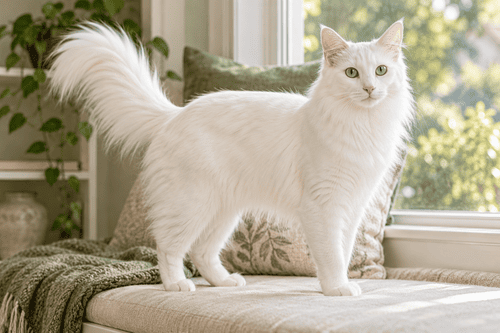
Turkish Angora
Also known as: Angora, Ankara kedisi
A silk-coated athlete from Anatolia — elegant, busy and considerably bossier than it looks.
- Confident
- Intelligent
- Affectionate
- Athletic
- Bossy
The Turkish Angora is one of the oldest natural cat breeds, documented in Ankara for centuries and preserved through a Turkish zoo breeding programme when numbers fell. They are fine-boned, silky-coated and deceptively athletic, with a confident, take-charge personality that surprises owners expecting a decorative lap cat. They are affectionate, intelligent and entirely used to running the household.
At a glance
- Origin
- Turkey
- Size
- Medium
- Weight
- 6–10 lb (2.5–4.5 kg)
- Lifespan
- 12–18 years
- Coat
- Semi-long, silky single coat with minimal undercoat
- Colours
- White most traditional, plus black, blue, cream, tabby and tortie patterns
- Average cost
- $70–$80 / month
Breed ratings
Rated 1–5 on the same scale as every other entry, so scores are comparable between breeds. Amber stars mark things that cost you effort rather than things that benefit you.
Temperament
Angoras attach strongly to their people and often select one favourite. They are confident to the point of dominance with other pets and will comfortably manage a dog several times their size. Expect supervision and commentary rather than quiet decoration.
Care & upkeep
Exercise
30–45 minutes of interactive play daily. Exceptional jumpers who will use the tops of wardrobes and doors — provide proper vertical space rather than fighting the habit.
Grooming
The single silky coat has almost no undercoat and mats far less than most longhairs — twice-weekly combing is usually sufficient, increasing during the seasonal shed.
Training
Bright and quick to learn. Fetch, harness walking and clicker tricks all come readily. They also learn to open doors and cupboards, so latch anything important.
Feeding & diet
- Typical diet
- High-protein wet-led diet
- Daily amount
- 150–210 g wet food, or equivalent
- Meals per day
- 2 meals a day
Fine-boned and lean, with obesity uncommon in an active cat. Angoras can be fussy and distractible eaters, so a quiet feeding spot and consistent routine help more than changing food.
Foods to avoid
- Onion and garlic
- Chocolate
- Grapes and raisins
- Raw dough
- Milk
Who this breed suits
A good match for
- Active households
- Owners wanting an interactive cat
- Homes with vertical space
- Families with older children
Probably not for
- Households wanting a placid decorative cat
- Homes with no climbing space
- Owners who dislike a bossy cat
Common health problems
This section describes conditions the breed is known to be predisposed to, so you know what to ask about. It is not veterinary advice and is not a diagnosis — always speak to a vet about your own animal.
- Congenital deafnessLinked to the white coat and blue eyes. Odd-eyed and blue-eyed white cats have elevated risk and must be kept indoors.
- Hypertrophic cardiomyopathyPresent in the breed. Ask breeders for cardiac screening and rescreen from age two.
- Hereditary ataxiaA fatal kitten condition seen in some lines; responsible breeding avoids it.
- Dental diseaseRoutine in cats. Annual dental checks are worthwhile across a long lifespan.
If you are considering a white, blue-eyed or odd-eyed Angora, ask specifically about hearing testing. Deaf cats live perfectly good lives but must be strictly indoor.
Interesting facts
- Preserved by a deliberate breeding programme at Ankara Zoo when the breed became rare.
- One of the oldest documented natural cat breeds.
- Many Angoras genuinely enjoy water and will play in sinks and dripping taps.
Diet & Feeding
Angoras are fine-boned and lean, needing around 150–210 g of quality wet food daily across two meals. They are active enough that obesity is uncommon, but they can be fussy and distractible eaters, so a quiet feeding spot and a consistent routine help. Fresh water should always be available, ideally from a fountain — this is a breed that will happily play in running water. Weigh monthly, since a silky coat conceals condition.
Exercise & Play
Angoras need 30–45 minutes of interactive play daily and will otherwise organise their own, usually at height. They are exceptional jumpers and climbers who end up on top of wardrobes, fridges and door frames, so provide proper vertical space rather than fighting it. Many enjoy water — dripping taps, sinks and shower trays are all fair game. Puzzle feeders and fetch work well, and they take to harness training readily.
Grooming
Easier than the coat suggests. The single silky coat has almost no undercoat, which is what causes matting in most longhairs, so twice-weekly combing with a wide-tooth comb is usually enough, rising during the seasonal shed. Focus on the ruff and trousers. Bathe rarely. Nails every 2–3 weeks and ears monthly. The coat is genuinely low-maintenance for a semi-longhair, which is part of the breed appeal.
Health & Vet Care
Two things matter. Deafness is linked to the white coat and blue eyes — white Angoras, particularly odd-eyed or blue-eyed ones, have an elevated risk, and deaf cats must be kept strictly indoors. Hypertrophic cardiomyopathy is present in the breed and warrants cardiac screening. Also reported: ataxia in some lines, a fatal kitten condition that DNA-aware breeding avoids. Ask breeders about hearing testing and cardiac screening before committing.
Living with a Turkish Angora
Angoras attach strongly to their household and expect involvement — they supervise, comment and frequently designate one person as theirs. They are confident with visitors and often dominant with other pets, quite happily managing a dog twice their size. They are talkative without the Siamese volume. Given vertical space, daily play and company, they are engaging and long-lived companions, often reaching their late teens.
Read next
 How to Help a Shy or Fearful Cat Gain ConfidenceBuild trust through accessible retreats, quiet company and voluntary play or touch. Includes room checks, response decisions, visitor wording and an example.
 How Lost Pets Actually Get Home — and How to Make Yours Easier to ReturnFollow four reunion routes from finder to owner. Includes contact steps, scanning and service decisions, ownership checks, safe handover and a worked example.
 Pet Chores for Kids by Age: A Family Guide That Actually WorksChoose manageable tasks by ability, supervision and pet comfort. Includes age-band ideas, higher-risk exclusions, a sample family chart and an adult backup plan.