
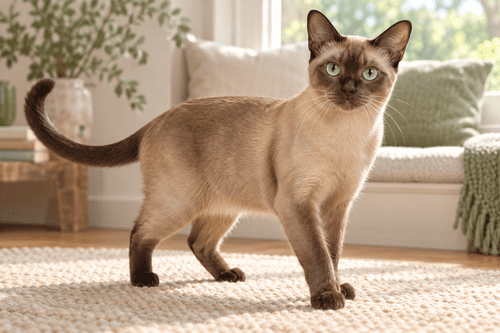
Tonkinese
Also known as: Tonk, Golden Siamese (historical)
Siamese charm without the volume — the deliberate middle ground between two great breeds.
- Sociable
- Playful
- Affectionate
- Curious
- Balanced
The Tonkinese is a deliberate cross between the Siamese and the Burmese, created to combine the best of both: the Siamese intelligence and interactivity with the Burmese warmth and slightly softer voice. The result is one of the most balanced pedigree cats available — sociable, playful, affectionate and considerably easier to live with than either parent breed for most households.
At a glance
- Origin
- Canada / United States
- Size
- Medium
- Weight
- 6–12 lb (2.7–5.4 kg)
- Lifespan
- 14–18 years
- Coat
- Short, fine, close-lying with a soft mink sheen
- Colours
- Natural, Champagne, Blue, Platinum in mink, point and solid patterns
- Average cost
- $75–$85 / month
Breed ratings
Rated 1–5 on the same scale as every other entry, so scores are comparable between breeds. Amber stars mark things that cost you effort rather than things that benefit you.
Temperament
Tonkinese are the compromise breed in the best sense — interactive without the Siamese intensity, affectionate without the Burmese neediness. They greet visitors, tolerate children well and settle with cat-friendly dogs.
Care & upkeep
Exercise
Two or three 15-minute interactive sessions daily. They climb, fetch and harness-train readily, and benefit from vertical space and rotated toys.
Grooming
A weekly rubber mitt keeps the mink coat glossy and shedding is light. Establish tooth brushing in kittenhood — dental disease is the realistic long-term concern.
Training
Trainable and food-motivated. Fetch, recall, harness walking and clicker tricks all come readily, and they learn household routines quickly.
Feeding & diet
- Typical diet
- High-protein wet-led diet
- Daily amount
- 160–230 g wet food, or equivalent
- Meals per day
- 2 meals a day
Tonkinese inherit the Burmese enthusiasm for food but also genuine activity, so most stay in condition on measured portions. Avoid free-feeding dry food and weigh monthly.
Foods to avoid
- Onion and garlic
- Chocolate
- Grapes and raisins
- Raw dough
- Milk
Who this breed suits
A good match for
- Families with children
- Multi-pet households
- First-time cat owners
- People wanting Siamese personality with less volume
Probably not for
- Owners away all day with one cat
- Households wanting a silent cat
- Outdoor access
Common health problems
This section describes conditions the breed is known to be predisposed to, so you know what to ask about. It is not veterinary advice and is not a diagnosis — always speak to a vet about your own animal.
- Progressive retinal atrophyInherited from Siamese lines; DNA testing is available.
- Hypokalaemic polymyopathyInherited from Burmese lines. Ask breeders for DNA results.
- Gingivitis and dental diseaseCommon across Asian breeds. Home brushing and annual checks make a real difference.
- Feline asthmaOccurs at slightly elevated rates in Asian breeds. Coughing warrants investigation.
- ObesityThe Burmese appetite is inherited along with everything else. Measure portions.
Benefits from a broader gene pool than either parent breed and is generally robust, with lifespans frequently reaching 16 to 18 years.
Interesting facts
- Created deliberately in the 1960s to combine Siamese and Burmese traits.
- The mink coat pattern is genetically intermediate between pointed and solid.
- Aqua-coloured eyes in the mink variety are unique to the breed.
Diet & Feeding
Feed a high-protein wet-led diet, around 160–230 g daily across two meals, with any dry food measured rather than left out. Tonkinese inherit the Burmese enthusiasm for food and can gain weight in a quiet indoor home, but they are also genuinely active, so most stay in good condition with sensible portions. A water fountain encourages drinking. Weigh monthly and check that you can feel ribs easily under a thin covering.
Exercise & Play
Two or three 15-minute interactive sessions daily keeps a Tonkinese happy. They are climbers and fetchers, enjoy puzzle feeders and take readily to harness training. Provide vertical space — a tall tree or wall shelving — and rotate toys to keep novelty. They are sociable enough that a second cat is a genuine benefit rather than a complication, particularly in households where nobody is home during the day.
Grooming
Simple: a weekly rubber mitt or grooming glove removes loose hair and keeps the mink coat glossy, and shedding is light. Nails every 2–3 weeks, ears checked monthly. As with both parent breeds, dental disease is the realistic long-term concern — start brushing in kittenhood while it is easy to establish, and book annual dental examinations. Over a 16-year lifespan that habit is worth more than any grooming product.
Health & Vet Care
Tonkinese are relatively robust, benefiting from a broader gene pool than either parent breed. Reported conditions include progressive retinal atrophy, hypokalaemic polymyopathy inherited from Burmese lines, gingivitis and dental disease, and asthma, which occurs at slightly elevated rates in Asian breeds. Ask breeders for DNA test results. Annual vet checks with a dental examination are usually sufficient for a healthy adult.
Living with a Tonkinese
This is the breed to consider if the Siamese appeals but the volume does not. Tonkinese are chatty but noticeably quieter and softer-voiced, sociable with visitors, excellent with children and reliable with cat-friendly dogs. They are affectionate on a lap-and-shoulder basis rather than merely nearby. They do want company — long solitary days do not suit them — but they handle ordinary household life with more flexibility than either parent breed.
Read next
 How to Help a Shy or Fearful Cat Gain ConfidenceBuild trust through accessible retreats, quiet company and voluntary play or touch. Includes room checks, response decisions, visitor wording and an example.
 How Lost Pets Actually Get Home — and How to Make Yours Easier to ReturnFollow four reunion routes from finder to owner. Includes contact steps, scanning and service decisions, ownership checks, safe handover and a worked example.
 Pet Chores for Kids by Age: A Family Guide That Actually WorksChoose manageable tasks by ability, supervision and pet comfort. Includes age-band ideas, higher-risk exclusions, a sample family chart and an adult backup plan.