
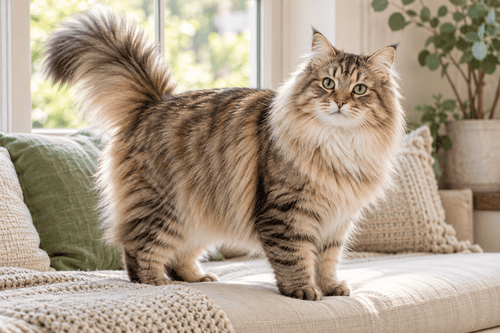
Siberian
Also known as: Siberian Forest Cat, Sibirskaya koshka, Neva Masquerade (colourpoint variety)
A forest cat built for Russian winters — powerful, playful and unusually dog-like.
- Affectionate
- Playful
- Sociable
- Agile
- Quiet
The Siberian is Russia's national cat, a natural forest breed that developed a triple coat to survive severe winters. They are large, muscular and surprisingly agile, with a playful, affectionate temperament and a habit of following their people around the house. They are also the breed most often recommended to allergy-sensitive households, though the picture is more nuanced than the marketing suggests.
At a glance
- Origin
- Russia
- Size
- Large
- Weight
- 10–20 lb (4.5–9 kg)
- Lifespan
- 12–18 years
- Coat
- Semi-long water-resistant triple coat
- Colours
- All colours and patterns, including colourpoint (Neva Masquerade)
- Average cost
- $80–$95 / month
Breed ratings
Rated 1–5 on the same scale as every other entry, so scores are comparable between breeds. Amber stars mark things that cost you effort rather than things that benefit you.
Temperament
Siberians are often described as dog-like — they greet visitors, follow their people from room to room and many will fetch. They are quiet, communicating with chirps and trills rather than a carrying voice.
Care & upkeep
Exercise
Two or three 15-minute sessions daily. Athletic climbers that need a sturdy tall tree rather than a lightweight one. Many enjoy water and harness-train well.
Grooming
Brush 2–3 times weekly, daily during the two annual moults. The water-resistant coat mats less than other longhairs, but neglect still produces felting around the ruff and trousers.
Training
Bright and cooperative. Fetch, harness walking and clicker training all work well, and they accept handling, nail trims and carriers more readily than most large breeds.
Feeding & diet
- Typical diet
- High-protein wet-led diet
- Daily amount
- 220–320 g wet food, or equivalent
- Meals per day
- 2 meals a day
Siberians mature slowly, reaching full size at around five years, and benefit from a growth-supporting high-protein diet through that period. The triple coat hides condition, so assess by hand.
Foods to avoid
- Onion and garlic
- Chocolate
- Grapes and raisins
- Raw dough
- Milk
Who this breed suits
A good match for
- Families with children
- Allergy-sensitive households
- Multi-pet homes
- Owners wanting a large sociable cat
Probably not for
- Households wanting zero grooming
- Owners expecting a guaranteed allergy-free cat
- Small homes with no climbing space
Common health problems
This section describes conditions the breed is known to be predisposed to, so you know what to ask about. It is not veterinary advice and is not a diagnosis — always speak to a vet about your own animal.
- Hypertrophic cardiomyopathyPresent in the breed. Ask for cardiac screening certificates and rescreen from age two.
- Polycystic kidney diseaseDNA-testable. Reputable breeders provide negative results.
- Hip dysplasiaUnusual in cats but occurs in large heavy breeds such as this one.
- Gum diseaseCommon. Home brushing and annual dental checks pay off across a long lifespan.
- Allergen variabilityMany Siberians produce lower Fel d 1 levels, but this varies by individual and no cat is truly hypoallergenic.
The hypoallergenic claim is genuine but partial — lower Fel d 1 levels help some allergic people and not others. Spend time with an adult cat from the specific line before committing.
Interesting facts
- Russia national cat, mentioned in written records going back several hundred years.
- The triple coat is water-resistant, which is unusual among domestic cats.
- The colourpoint variety is known as the Neva Masquerade.
Diet & Feeding
Siberians mature slowly, reaching full size at around five years, and benefit from a high-protein growth-supporting diet through that period. Adults need roughly 220–320 g of quality wet food daily across two meals; males at the top of the weight range need more. They are powerful, active cats and obesity is less common than in placid breeds, but a triple coat hides condition effectively — assess by hand monthly rather than by eye.
Exercise & Play
Two or three 15-minute interactive sessions daily. Siberians are athletic jumpers who genuinely enjoy climbing, and many will fetch and play in water. Provide a sturdy tall cat tree — a large cat needs a structure that will not topple — plus puzzle feeders and rotated toys. They harness-train well and suit a secure catio. They are sociable and do better with company than alone all day.
Grooming
The triple coat needs brushing 2–3 times a week, rising to daily during the two annual moults, which are substantial. Work down to the skin around the ruff, trousers and behind the ears. The coat is water-resistant and mats less than a Persian, but neglect will still produce felting. Bathe rarely and dry thoroughly. Nails every 2–3 weeks, ears monthly, teeth several times a week.
Health & Vet Care
The main concern is hypertrophic cardiomyopathy, which is present in the breed — ask for cardiac screening and rescreen from age two. Also reported: polycystic kidney disease (DNA-testable), hip dysplasia, which is unusual in cats but occurs in large breeds, and gum disease. On allergies: many Siberians produce lower levels of the Fel d 1 protein, and some allergic people tolerate them, but this varies by individual cat and no breed is genuinely hypoallergenic.
Living with a Siberian
Siberians are affectionate without being demanding, sociable with visitors and reliably good with children and cat-friendly dogs. They are quiet — chirps and trills rather than a carrying voice — and often described as dog-like for their habit of following, greeting and fetching. They are a serious long-term commitment, frequently living to their late teens, and their slow maturation means the cat you have at two is not the cat you will have at five.
Read next
 How to Help a Shy or Fearful Cat Gain ConfidenceBuild trust through accessible retreats, quiet company and voluntary play or touch. Includes room checks, response decisions, visitor wording and an example.
 How Lost Pets Actually Get Home — and How to Make Yours Easier to ReturnFollow four reunion routes from finder to owner. Includes contact steps, scanning and service decisions, ownership checks, safe handover and a worked example.
 Pet Chores for Kids by Age: A Family Guide That Actually WorksChoose manageable tasks by ability, supervision and pet comfort. Includes age-band ideas, higher-risk exclusions, a sample family chart and an adult backup plan.