
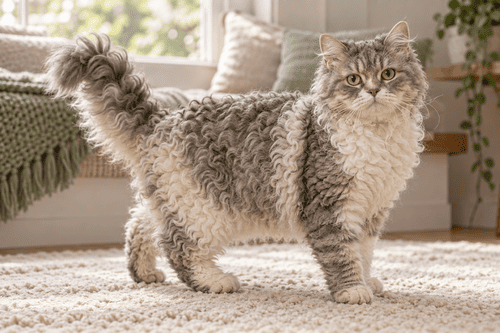
Selkirk Rex
Also known as: Selkirk, Cat in sheep's clothing
The cat in sheep's clothing — a plush curly coat wrapped around a genuinely placid temperament.
- Patient
- Affectionate
- Tolerant
- Calm
- Sociable
The Selkirk Rex traces to a single curly-kittened rescue cat in Montana in 1987. Unlike the Devon and Cornish Rex, the Selkirk is heavy-boned, round and plush, and the curl affects the entire coat including the whiskers. Temperamentally they are the calmest of the rex breeds — patient, affectionate and tolerant — which makes them a rare combination of unusual appearance and easy-going nature.
At a glance
- Origin
- United States
- Size
- Large
- Weight
- 7–15 lb (3.2–7 kg)
- Lifespan
- 13–16 years
- Coat
- Short or long dense curly coat, including curled whiskers
- Colours
- All colours and patterns
- Average cost
- $75–$90 / month
Breed ratings
Rated 1–5 on the same scale as every other entry, so scores are comparable between breeds. Amber stars mark things that cost you effort rather than things that benefit you.
Temperament
Selkirks are the most relaxed of the rex breeds — patient with children, tolerant of handling and content to sit near their people rather than demanding contact. They adapt readily to change and to other pets.
Care & upkeep
Exercise
Two 10–15 minute sessions daily. Playful but unhurried — they will not demand exercise, so the initiative for weight management has to come from you.
Grooming
Comb 2–3 times weekly with a wide-tooth comb rather than brushing hard, which straightens the curl. Avoid over-bathing and let the coat air-dry.
Training
Cooperative and easy to handle rather than eager to perform. They accept grooming, nail trims and carriers well, which makes routine care straightforward.
Feeding & diet
- Typical diet
- High-protein wet-led diet
- Daily amount
- 190–270 g wet food, or equivalent
- Meals per day
- 2 meals a day
A heavy-boned relaxed cat whose curly coat conceals condition unusually well. Measure portions, avoid free-feeding and assess body condition by hand every month.
Foods to avoid
- Onion and garlic
- Chocolate
- Grapes and raisins
- Raw dough
- Free-fed dry food
Who this breed suits
A good match for
- Families with children
- Multi-pet households
- First-time cat owners
- Apartments
Probably not for
- Owners wanting a maintenance-free coat
- Households wanting a highly active cat
Common health problems
This section describes conditions the breed is known to be predisposed to, so you know what to ask about. It is not veterinary advice and is not a diagnosis — always speak to a vet about your own animal.
- Polycystic kidney diseaseInherited from Persian lines and DNA-testable. Insist on a negative certificate.
- Hypertrophic cardiomyopathyInherited from British Shorthair lines. Ask for cardiac screening.
- Hip dysplasiaOccurs in heavier individuals; unusual in cats generally.
- Dental diseaseRoutine in cats. Annual dental checks are worthwhile.
- ObesityA relaxed temperament in a heavy-boned body. The curly coat hides it particularly well.
The curl varies through life — kittens often straighten before curling again by around eight to ten months, which is normal and not a sign of anything wrong.
Interesting facts
- The whole breed descends from a single curly kitten born in a Montana rescue shelter in 1987.
- The curl gene is dominant, unlike the Devon and Cornish Rex mutations.
- Even the whiskers are curly, and they are more brittle than a straight-coated cat as a result.
Diet & Feeding
Selkirks are solid, heavy-boned cats with a relaxed temperament, which is a combination that leads to weight gain. Feed a measured 190–270 g of quality wet food daily across two meals and avoid leaving dry food out. The curly coat conceals condition particularly well, so assess by hand monthly — you should feel ribs easily under a thin covering. A fountain encourages drinking, which supports urinary and kidney health.
Exercise & Play
Two 10–15 minute interactive sessions daily is realistic for a Selkirk. They are playful but unhurried, and they will not demand exercise the way a Devon or Cornish Rex does — which means the initiative has to come from you if weight is to stay under control. Wand toys, puzzle feeders and a moderate-height cat tree suit them well. They are content indoors and adapt easily to apartment life.
Grooming
The curly coat needs a gentle approach: comb 2–3 times a week with a wide-tooth comb rather than brushing vigorously, which straightens and damages the curl. Longhaired Selkirks need more attention around the ruff and trousers. Avoid over-bathing — it can relax the curl for weeks — and let the coat air-dry rather than blow-drying it straight. Nails every 2–3 weeks, ears monthly, teeth several times a week.
Health & Vet Care
Because Persians and British Shorthairs were used in development, the Selkirk inherits their screening list: polycystic kidney disease (DNA-testable — insist on negative results) and hypertrophic cardiomyopathy are the two that matter most. Also reported: hip dysplasia in heavier individuals and ordinary dental disease. Ask breeders for PKD and cardiac certificates. Otherwise this is a robust breed with a good lifespan.
Living with a Selkirk Rex
This is the easy-going rex. Selkirks are patient, tolerant and affectionate without being demanding, which makes them well suited to families with children, multi-pet homes and first-time owners. They are quiet, adapt readily to change and are happy to sit near you rather than on you. The coat is the only real commitment, and it is a modest one compared with a Persian.
Read next
 How to Help a Shy or Fearful Cat Gain ConfidenceBuild trust through accessible retreats, quiet company and voluntary play or touch. Includes room checks, response decisions, visitor wording and an example.
 How Lost Pets Actually Get Home — and How to Make Yours Easier to ReturnFollow four reunion routes from finder to owner. Includes contact steps, scanning and service decisions, ownership checks, safe handover and a worked example.
 Pet Chores for Kids by Age: A Family Guide That Actually WorksChoose manageable tasks by ability, supervision and pet comfort. Includes age-band ideas, higher-risk exclusions, a sample family chart and an adult backup plan.