
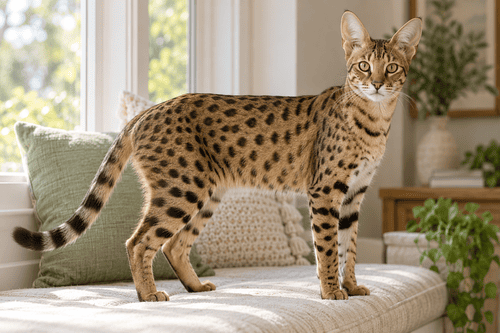
Savannah
Also known as: Serval hybrid, Ashera (marketing name)
A serval hybrid with the height, drive and demands of a genuinely wild ancestor.
- Athletic
- Confident
- Curious
- Demanding
- Loyal
The Savannah is a hybrid of the domestic cat and the African serval, producing a tall, long-legged, spotted cat with extraordinary athleticism. Early generations retain a great deal of wild behaviour and are legally restricted in many jurisdictions. Later generations are more manageable, but every Savannah is a high-energy, high-demand animal that suits very few households.
At a glance
- Origin
- United States
- Size
- Large
- Weight
- 9–24 lb (4–11 kg)
- Lifespan
- 12–20 years
- Coat
- Short, dense, spotted coat
- Colours
- Brown Spotted Tabby, Silver, Black, Black Smoke
- Average cost
- $80–$105 / month
Breed ratings
Rated 1–5 on the same scale as every other entry, so scores are comparable between breeds. Amber stars mark things that cost you effort rather than things that benefit you.
Temperament
Later-generation Savannahs are dog-like, loyal and deeply bonded to their household. Early generations behave far closer to a wild animal — intense, easily bored and frequently unsuitable for homes with children or small pets.
Care & upkeep
Exercise
60 minutes or more of active engagement daily, plus an environment built for a cat that jumps two metres from standing. A secure outdoor enclosure is close to essential.
Grooming
A weekly rubber mitt handles the coat. Enrichment maintenance matters far more — rotate toys and refresh climbing routes, or the cat will find its own entertainment.
Training
Exceptionally trainable — harness walking, recall, fetch and complex tricks are all achievable. That intelligence needs an outlet, or it goes into opening doors, taps and cupboards.
Feeding & diet
- Typical diet
- High-protein meat-led diet
- Daily amount
- 220–350 g wet or raw food, by generation
- Meals per day
- 2 meals a day
A lean, tall, highly active hybrid needing a meat-led high-protein diet. Some early-generation cats have sensitive digestion and do poorly on grain-heavy foods.
Foods to avoid
- Onion and garlic
- Chocolate
- Grapes and raisins
- Raw dough
- Grain-heavy commercial food
Who this breed suits
A good match for
- Experienced hybrid owners
- Homes with secure outdoor enclosures
- People wanting a highly trainable cat
- Households with time and space
Probably not for
- First-time cat owners
- Homes with small pets
- Apartments
- Jurisdictions restricting hybrids
Common health problems
This section describes conditions the breed is known to be predisposed to, so you know what to ask about. It is not veterinary advice and is not a diagnosis — always speak to a vet about your own animal.
- Hypertrophic cardiomyopathyReported in the breed. Ask breeders for cardiac screening.
- Pyruvate kinase deficiencyAn inherited anaemia with a DNA test available.
- Anaesthetic sensitivityReported in early-generation hybrids. Use a vet experienced with hybrid cats.
- Digestive sensitivitySome early-generation cats do poorly on grain-heavy commercial foods.
- Legal restrictionNot a health issue but critical: F1 and F2 generations are restricted or banned in many jurisdictions.
Check the law where you live before doing anything else. Early-generation Savannahs are restricted or prohibited in many countries, states and tenancy agreements.
Interesting facts
- A hybrid of the domestic cat and the African serval, first bred in the 1980s.
- Savannahs can clear two metres vertically from a standing start.
- Generation labels F1 to F5 indicate how many generations removed the cat is from its serval ancestor.
Diet & Feeding
Savannahs are lean, tall and highly active, and need a high-protein, meat-led diet — around 220–350 g of quality wet food daily, more for large early-generation cats. Many owners feed raw or high-meat commercial diets; discuss any raw feeding with your vet, particularly regarding balance and hygiene. Some early-generation cats have sensitive digestion and do poorly on grain-heavy foods. Fresh water always available, and expect enthusiastic interference with taps and bowls.
Exercise & Play
This is not a cat you can under-exercise. Savannahs need 60 minutes or more of active engagement daily, plus an environment built around them: floor-to-ceiling climbing, wide shelves, secure high perches. They jump two metres or more from standing, so nothing is out of reach. Many walk on a harness and enjoy water. A secure outdoor enclosure is close to essential for later generations and genuinely necessary for early ones.
Grooming
The short spotted coat is easy — a weekly rubber mitt removes loose hair and keeps it glossy, and shedding is moderate. Nails every two weeks; they are strong and grow fast. What matters more than coat care is enrichment maintenance: rotating toys, refreshing climbing routes and keeping puzzle feeders novel. A Savannah with an unchanging environment finds its own entertainment, and the results are expensive.
Health & Vet Care
Find a vet experienced with hybrids before you need one. Reported concerns include hypertrophic cardiomyopathy, pyruvate kinase deficiency (DNA-testable) and anaesthetic sensitivity in early generations. Some vets recommend caution with certain vaccines in high-percentage hybrids — discuss protocols specifically. Check your local law: F1 and F2 generations are restricted or banned in many countries, states and rental agreements.
Living with a Savannah
Later-generation Savannahs can be excellent companions — loyal, dog-like, trainable and deeply bonded. Early generations behave far closer to a wild animal: intense, destructive when bored, difficult to contain and often unsuitable for homes with children or small pets. Research the generation carefully, buy only from registered breeders, verify legality where you live, and be honest about whether your home can genuinely accommodate an animal of this drive.
Read next
 How to Help a Shy or Fearful Cat Gain ConfidenceBuild trust through accessible retreats, quiet company and voluntary play or touch. Includes room checks, response decisions, visitor wording and an example.
 How Lost Pets Actually Get Home — and How to Make Yours Easier to ReturnFollow four reunion routes from finder to owner. Includes contact steps, scanning and service decisions, ownership checks, safe handover and a worked example.
 Pet Chores for Kids by Age: A Family Guide That Actually WorksChoose manageable tasks by ability, supervision and pet comfort. Includes age-band ideas, higher-risk exclusions, a sample family chart and an adult backup plan.