
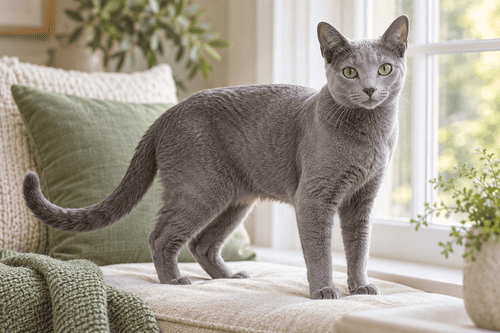
Russian Blue
Also known as: Archangel Blue
Silver-plush, quietly observant and deeply loyal to a chosen few.
- Reserved
- Gentle
- Loyal
- Observant
- Routine-loving
The Russian Blue is a naturally occurring breed with a dense silver-blue coat and vivid green eyes. Reserved with strangers and devoted to their own people, they are quiet, clean and undemanding cats who prefer routine and calm. They are often described as the ideal cat for someone who works from home: attentive company that does not insist on being the centre of attention.
At a glance
- Origin
- Russia
- Size
- Medium
- Weight
- 7–12 lb (3.2–5.4 kg)
- Lifespan
- 15–20 years
- Coat
- Short, dense, plush double coat with silver-tipped guard hairs
- Colours
- Blue-grey with silver tipping
- Average cost
- $75–$85 / month
Breed ratings
Rated 1–5 on the same scale as every other entry, so scores are comparable between breeds. Amber stars mark things that cost you effort rather than things that benefit you.
Temperament
Russian Blues are famously shy with visitors and will often disappear until a stranger leaves — this is normal and not a sign of poor socialisation. With their own household they are affectionate and quietly companionable. They dislike disruption and can be genuinely unsettled by changes in routine.
Care & upkeep
Exercise
Two 10–15 minute interactive play sessions daily keeps them fit. They enjoy fetch and puzzle feeders and are more playful in private than they appear in company.
Grooming
The dense double coat needs only a weekly brush with a soft slicker. Shedding is light. Nails every 2–3 weeks and a monthly ear check.
Training
Intelligent and responsive to clicker training, though motivated more by routine than by novelty. They learn household patterns quickly and will hold you to them.
Feeding & diet
- Typical diet
- High-protein wet-led diet
- Daily amount
- 180–250 g wet food, or equivalent
- Meals per day
- 2 meals a day
Russian Blues are known for enthusiastic appetites and can become overweight in a quiet indoor home. Measure portions and avoid free-feeding dry food.
Foods to avoid
- Onion and garlic
- Chocolate
- Grapes and raisins
- Raw dough
- Dog food as a substitute
Who this breed suits
A good match for
- Quiet households
- People who work from home
- Apartments
- Allergy-sensitive owners
Probably not for
- Busy, noisy homes
- Households with frequent visitors
- Owners wanting an outgoing lap cat immediately
Common health problems
This section describes conditions the breed is known to be predisposed to, so you know what to ask about. It is not veterinary advice and is not a diagnosis — always speak to a vet about your own animal.
- ObesityThe main practical risk. A calm indoor cat with a healthy appetite gains weight quietly.
- Bladder stonesReported in the breed. Encouraging water intake with wet food and a fountain helps.
- Dental diseaseCommon in all cats — annual dental checks are worthwhile.
Russian Blues are among the healthier pedigree cats, with no widespread breed-specific genetic disease, and frequently live into their late teens.
Interesting facts
- Said to have arrived in Western Europe aboard ships from the Russian port of Arkhangelsk.
- Produces relatively low levels of the Fel d 1 allergen, though no cat is truly hypoallergenic.
- The upturned mouth line gives the breed a permanent faint smile.
Diet & Feeding
Feed a high-protein, wet-led diet — around 180–250 g of quality wet food daily, split into two meals, with dry food measured rather than left out. Russian Blues have notably good appetites and, being calm indoor cats, put on weight quietly. Weigh portions and check body condition monthly: you should feel ribs easily and see a waist from above. A water fountain encourages the drinking that supports urinary health in a breed with some reported bladder-stone risk.
Exercise & Play
Two 10–15 minute interactive sessions a day is enough to keep a Russian Blue fit and engaged. They are considerably more playful in private than their reserved public manner suggests — many will fetch reliably. Wand toys, puzzle feeders and a tall perch with a window view suit them well. They are strictly indoor cats by temperament as much as safety; a shy cat outdoors is a vulnerable one.
Grooming
One of the easiest coats in the pedigree cat world. The dense double coat is short and self-maintaining — a weekly brush with a soft slicker or grooming mitt removes loose hair and keeps the silver tipping bright. Shedding is genuinely light compared to most breeds. Trim nails every 2–3 weeks, check ears monthly, and start a tooth-brushing habit early, since dental disease is the most likely thing to trouble an otherwise robust cat.
Health & Vet Care
Russian Blues are one of the healthier pedigree breeds — there is no widespread breed-specific genetic disease, unlike the HCM and PKD burdens carried by several popular cat breeds. The practical concerns are obesity, bladder stones and ordinary dental disease. Annual vet checks with a dental examination cover most of it. They commonly live into their late teens, so plan for a long relationship.
Living with a Russian Blue
Expect a cat that vanishes when the doorbell rings and reappears when the house is quiet — that is breed-normal, not damage. With their own people, Russian Blues are affectionate, quietly attentive and often follow their chosen person from room to room. They strongly prefer routine: changed feeding times, rearranged furniture and house guests all register. They suit calm homes, apartments and people who are around during the day, and they do less well in chaotic households.
Read next
 How to Help a Shy or Fearful Cat Gain ConfidenceBuild trust through accessible retreats, quiet company and voluntary play or touch. Includes room checks, response decisions, visitor wording and an example.
 How Lost Pets Actually Get Home — and How to Make Yours Easier to ReturnFollow four reunion routes from finder to owner. Includes contact steps, scanning and service decisions, ownership checks, safe handover and a worked example.
 Pet Chores for Kids by Age: A Family Guide That Actually WorksChoose manageable tasks by ability, supervision and pet comfort. Includes age-band ideas, higher-risk exclusions, a sample family chart and an adult backup plan.