
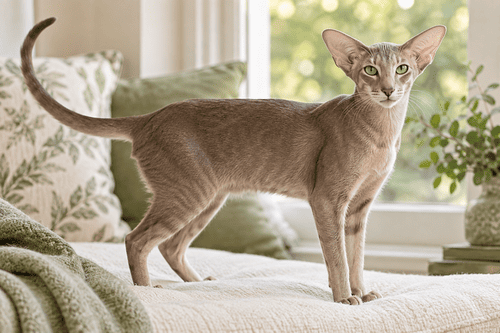
Oriental Shorthair
Also known as: Oriental, Foreign Shorthair
A Siamese in every colour — talkative, athletic and permanently involved in your business.
- Vocal
- Intelligent
- Affectionate
- Athletic
- Demanding
The Oriental Shorthair is a Siamese in all but coat pattern, developed in Britain to bring the Siamese type into hundreds of colours and markings. Everything else came with it: the volume, the intelligence, the athleticism and the absolute refusal to be excluded from anything happening in the house. They are extraordinary companions for people who want a genuinely interactive cat and a poor choice for anyone who does not.
At a glance
- Origin
- United Kingdom
- Size
- Medium
- Weight
- 6–11 lb (2.5–5 kg)
- Lifespan
- 12–15 years
- Coat
- Very short, fine, close-lying
- Colours
- Over 300 recognised colour and pattern combinations
- Average cost
- $70–$85 / month
Breed ratings
Rated 1–5 on the same scale as every other entry, so scores are comparable between breeds. Amber stars mark things that cost you effort rather than things that benefit you.
Temperament
Orientals are relentlessly involved and relentlessly loud. They bond intensely, usually to one person, and take exclusion personally — a closed door will be protested at length. They do not cope well with long days alone.
Care & upkeep
Exercise
40–60 minutes of interactive play daily. Orientals climb, jump and fetch, and will use your shelving if you do not provide a cat tree. Many harness-train successfully.
Grooming
A weekly rubber mitt covers the coat entirely, and shedding is light. Dental care is the routine task that actually matters in this breed.
Training
Highly trainable by cat standards — fetch, recall, harness walking and clicker tricks all come readily. They also learn how to open doors and cupboards, so latch anything that matters.
Feeding & diet
- Typical diet
- High-protein wet-led diet
- Daily amount
- 160–220 g wet food, or equivalent
- Meals per day
- 2 meals a day
Lean, fine-boned and genuinely active, so they burn more than most cats their size. The risk here is being underweight rather than overweight — weigh monthly and adjust upward if the spine becomes prominent.
Foods to avoid
- Onion and garlic
- Chocolate
- Grapes and raisins
- Raw dough
- Dog food as a substitute
Who this breed suits
A good match for
- People home much of the day
- Multi-cat households
- Owners wanting an interactive cat
- Apartments
Probably not for
- Owners out all day
- Households wanting a quiet cat
- People who dislike being followed
- Homes with thin walls
Common health problems
This section describes conditions the breed is known to be predisposed to, so you know what to ask about. It is not veterinary advice and is not a diagnosis — always speak to a vet about your own animal.
- Progressive retinal atrophyA hereditary cause of blindness in Siamese-type lines, with a DNA test available.
- AmyloidosisAbnormal protein deposits affecting the liver, reported in Oriental and Siamese lines.
- Dental diseaseThe breed is predisposed to periodontal disease. Home brushing and annual dental checks matter.
- Dilated cardiomyopathyReported in Oriental-type cats; ask breeders about cardiac screening.
- Being underweightLean by design, so genuine weight loss is easy to miss. Weigh monthly.
Orientals feel bony to the touch even at a healthy weight, which is normal for the type. Learn what your individual cat feels like at a good weight so you can spot genuine loss.
Interesting facts
- Recognised in over 300 colour and pattern combinations, more than any other cat breed.
- Genetically the same breed as the Siamese, differing only in coat colour genetics.
- The large ears are among the biggest, relative to head size, of any cat.
Diet & Feeding
Orientals are lean, fine-boned and genuinely active, and they burn more than most cats their size. Feed a high-protein wet-led diet — around 160–220 g of quality wet food daily across two meals. They rarely become obese but can become too thin, so monitor weight monthly and increase if the spine and hips become prominent. Many are enthusiastic but distractible eaters; a quiet feeding spot away from household traffic helps.
Exercise & Play
Plan on 40–60 minutes of interactive play daily, split into sessions. Orientals are climbers, jumpers and fetchers, and they will invent their own entertainment if you do not supply it — usually involving shelves. Provide the tallest cat tree you can fit, wall shelving and puzzle feeders, and rotate toys weekly. Many walk on a harness. They do genuinely badly alone, and a second cat of similar energy is close to a requirement for a working household.
Grooming
One of the easiest coats in the pedigree cat world: the very short, close-lying coat needs only a weekly rubber mitt or grooming glove, and shedding is light. What needs more attention is dental care — Orientals and Siamese-type cats are predisposed to periodontal disease, so brush teeth several times a week from kittenhood and have annual dental checks. Nails every 2–3 weeks and a monthly ear check completes the routine.
Health & Vet Care
Screened and reported conditions include progressive retinal atrophy (DNA-testable in Siamese-type lines), amyloidosis affecting the liver, dilated cardiomyopathy and dental disease. Orientals are also lean by design, which means weight loss is easier to miss under a thin coat — weigh monthly. Ask breeders about PRA testing and about amyloidosis in the line. Annual vet checks with a dental examination cover most eventualities.
Living with an Oriental Shorthair
Expect commentary. Orientals are among the most vocal cats in existence, with a loud, carrying voice they use constantly and with apparent purpose. They follow their person from room to room, sit on keyboards, supervise cooking and take personally any door closed against them. They bond intensely, often to one person, and can become genuinely distressed when left alone all day. In the right home they are one of the most rewarding cats you can live with.
Read next
 How to Help a Shy or Fearful Cat Gain ConfidenceBuild trust through accessible retreats, quiet company and voluntary play or touch. Includes room checks, response decisions, visitor wording and an example.
 How Lost Pets Actually Get Home — and How to Make Yours Easier to ReturnFollow four reunion routes from finder to owner. Includes contact steps, scanning and service decisions, ownership checks, safe handover and a worked example.
 Pet Chores for Kids by Age: A Family Guide That Actually WorksChoose manageable tasks by ability, supervision and pet comfort. Includes age-band ideas, higher-risk exclusions, a sample family chart and an adult backup plan.