Ocicat
Also known as: Oci
A wild-looking spotted cat with an entirely domestic, dog-like personality.
- Outgoing
- Social
- Confident
- Playful
- Intelligent
The Ocicat looks like a small wild cat but contains no wild ancestry — it was created from Siamese, Abyssinian and American Shorthair cats. Ocicats are outgoing, confident and highly social, often following their people and learning tricks like a dog. They need company, play and mental stimulation.
At a glance
- Origin
- United States
- Size
- Medium
- Weight
- 7–15 lb (3–7 kg)
- Lifespan
- 12–18 years
- Coat
- Short, smooth, satiny spotted coat
- Colours
- Tawny, Chocolate, Cinnamon, Blue, Lavender, Fawn, Silver
- Average cost
- $60–$110 / month
Breed ratings
Rated 1–5 on the same scale as every other entry, so scores are comparable between breeds. Amber stars mark things that cost you effort rather than things that benefit you.
Temperament
Ocicats are friendly with everyone and want to be involved. They do poorly when left alone often.
Care & upkeep
Exercise
30–45 minutes of play daily. Many enjoy harness walks.
Grooming
Weekly brushing.
Training
Highly trainable — fetch, tricks and harness walking come easily.
Feeding & diet
- Typical diet
- High-protein wet-led diet
- Daily amount
- 180–260 g wet food, or equivalent
- Meals per day
- 2 meals a day
Muscular and active; adjust portions to body condition.
Foods to avoid
- Onion and garlic
- Chocolate
- Grapes and raisins
- Raw dough
- Milk
Who this breed suits
A good match for
- Families with children
- Multi-pet homes
- Owners home much of the day
Probably not for
- Owners away all day
Common health problems
This section describes conditions the breed is known to be predisposed to, so you know what to ask about. It is not veterinary advice and is not a diagnosis — always speak to a vet about your own animal.
- Hypertrophic cardiomyopathyAsk breeders for cardiac screening.
- Pyruvate kinase deficiencyAn inherited anaemia with a DNA test available.
- Progressive retinal atrophyInherited from Abyssinian lines.
- Dental diseaseBrush teeth regularly.
Ask breeders for PK deficiency and PRA DNA results.
Interesting facts
- Named after the ocelot, though it has no wild blood.
- The first Ocicat was an accidental result of a Siamese–Abyssinian breeding.
- Often trained to walk on a lead.
Diet & Feeding
Feed around 180–260 g of quality wet food daily across two meals. Ocicats are muscular and active; monitor weight monthly and adjust portions.
Exercise & Play
Ocicats need 30–45 minutes of play daily. They enjoy fetch, puzzle feeders and harness walks. Provide climbing space.
Grooming
The short coat needs only weekly brushing. Trim nails every two to three weeks and brush teeth regularly.
Health & Vet Care
Watch for hypertrophic cardiomyopathy, pyruvate kinase deficiency, progressive retinal atrophy and dental disease. Ask breeders for DNA results and cardiac screening.
Living with a Ocicat
Ocicats are social and dislike being alone for long periods. They are good with children and dogs, and a second cat helps in busy homes.
Read next
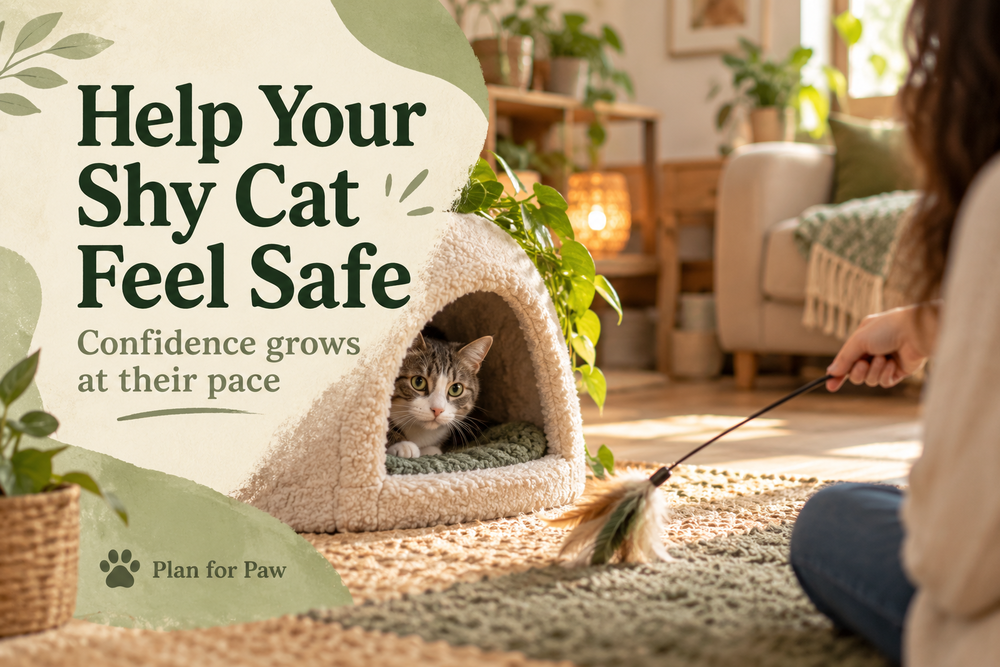 How to Help a Shy or Fearful Cat Gain ConfidenceA cat that hides when anyone comes in is not unfriendly — it is frightened. Here is how to build a shy cat's confidence with safe spaces, predictable routines and letting the cat set the pace.
 How Lost Pets Actually Get Home — and How to Make Yours Easier to ReturnMost lost pets are found close to home by an ordinary person with a phone. What happens in the next few minutes decides how fast they get back. Here is how reunions really happen, and how to prepare.
 Pet Chores for Kids by Age: A Family Guide That Actually WorksChildren can genuinely help look after a family pet — with the right jobs for their age and adult supervision. Here are age-appropriate pet chores, safety rules and a simple chart to keep it on track.