
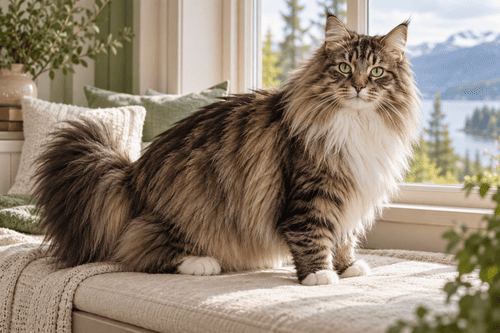
Norwegian Forest Cat
A Viking in a fur coat — rugged, independent and breathtakingly beautiful.
The Norwegian Forest Cat (Wegie) evolved over centuries in the Scandinavian wilderness, developing a thick, water-resistant double coat to survive harsh Nordic winters. Large, athletic and self-sufficient, Wegies are affectionate without being clingy. They are excellent climbers, patient with children and utterly stunning — like something that stepped out of a Norse myth.
At a glance
- Origin
- Norway
- Size
- Large
- Weight
- 9–20 lb (4–9 kg)
- Lifespan
- 14–16 years
- Coat
- Semi-long, dense, water-resistant double coat with a woolly undercoat
- Colours
- Almost all colours and patterns, tabby most common
Breed ratings
Rated 1–5 on the same scale as every other entry, so scores are comparable between breeds. Amber stars mark things that cost you effort rather than things that benefit you.
Diet & Feeding
Norwegian Forest Cats mature slowly (3–4 years) and benefit from a high-protein, large-breed formula during development. Adults need 2 measured meals daily — around 280–380 g wet food or equivalent dry kibble. Males are larger and eat more. Omega-3s (fish oil) complement their seafood-adapted heritage and support coat condition. Joint supplements from middle age are beneficial.
Exercise & Play
Wegies are active and athletic, particularly enjoying climbing and hunting-style play. Provide the tallest cat tree you can find — they love height. Interactive wand sessions twice daily (15 minutes each) channel their hunting instincts. They can be harness-trained for outdoor exploration. In summer, a catio or secure garden gives them the outdoor contact they instinctively seek.
Grooming
The double coat needs brushing 2–3 times a week to prevent matting, with daily attention during spring and autumn when the woolly undercoat sheds heavily. The coat is naturally water-resistant and surprisingly tangle-resistant compared to other long-haired breeds. Bathe only when necessary (every 2–3 months). Clean ears monthly and trim nails every 3 weeks.
Health & Vet Care
Norwegian Forest Cats can be prone to hypertrophic cardiomyopathy (HCM), glycogen storage disease type IV (a rare but serious metabolic condition — ask breeders for GSD IV-negative certificates) and hip dysplasia. Annual cardiac screening from age 2 and regular vet check-ups are recommended. They are generally robust and long-lived.
Living with a Norwegian Forest Cat
Wegies are calm, adaptable and good-natured — they get along well with children, other cats and cat-friendly dogs. They are affectionate but respect personal space; they will come to you on their terms rather than demand attention. They are quieter than many breeds. Their independent streak means they handle a working owner's schedule better than more needy breeds, though they appreciate feline company.
Read next
 How to Help a Shy or Fearful Cat Gain ConfidenceA cat that hides when anyone comes in is not unfriendly — it is frightened. Here is how to build a shy cat's confidence with safe spaces, predictable routines and letting the cat set the pace.
 How Lost Pets Actually Get Home — and How to Make Yours Easier to ReturnMost lost pets are found close to home by an ordinary person with a phone. What happens in the next few minutes decides how fast they get back. Here is how reunions really happen, and how to prepare.
 Pet Chores for Kids by Age: A Family Guide That Actually WorksChildren can genuinely help look after a family pet — with the right jobs for their age and adult supervision. Here are age-appropriate pet chores, safety rules and a simple chart to keep it on track.