
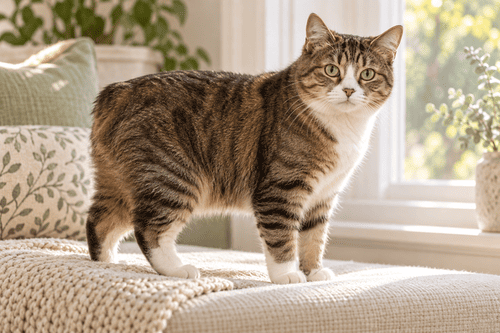
Manx
Also known as: Cymric (longhaired variety), Rumpy, Stubbin
The tailless cat of the Isle of Man — sturdy, playful and unusually attached to its people.
- Loyal
- Playful
- Affectionate
- Adaptable
- Dog-like
The Manx is a natural breed from the Isle of Man, defined by a spinal mutation that shortens or removes the tail entirely. They are round, powerfully built cats with strong hind legs and a distinctive hopping gait, and they are notably dog-like in temperament — loyal, playful and inclined to follow their person from room to room. The tailless gene brings a genuine health complication that responsible ownership has to acknowledge.
At a glance
- Origin
- Isle of Man
- Size
- Medium
- Weight
- 8–12 lb (3.5–5.5 kg)
- Lifespan
- 12–16 years
- Coat
- Short or long dense double coat
- Colours
- All colours and patterns
- Average cost
- $75–$85 / month
Breed ratings
Rated 1–5 on the same scale as every other entry, so scores are comparable between breeds. Amber stars mark things that cost you effort rather than things that benefit you.
Temperament
Manx are notably dog-like — they follow their person, greet arrivals, fetch and often attach strongly to one household member while staying friendly with everyone. They adapt well to change and to other pets.
Care & upkeep
Exercise
Two 10–15 minute sessions daily. Powerful jumpers with strong hind legs; many fetch enthusiastically. Any reluctance to jump is a clinical sign in this breed rather than laziness.
Grooming
Shorthairs need a weekly brush; longhaired Cymrics need combing 2–3 times weekly. Pay attention to the rear end, which some Manx struggle to keep clean.
Training
Bright and cooperative. Fetch and clicker training work well, and they take to harness walking. They learn household routines quickly and are easy to handle for grooming and vet visits.
Feeding & diet
- Typical diet
- High-protein wet-led diet
- Daily amount
- 180–250 g wet food, or equivalent
- Meals per day
- 2 meals a day
A solid muscular cat that hides excess weight well. Weight control matters more here than in most breeds because additional load on a shortened spine has real consequences.
Foods to avoid
- Onion and garlic
- Chocolate
- Grapes and raisins
- Raw dough
- Free-fed dry food
Who this breed suits
A good match for
- Families with children
- Multi-pet households
- First-time cat owners
- Apartments
Probably not for
- Buyers unwilling to research breeder practice
- Homes wanting an aloof cat
Common health problems
This section describes conditions the breed is known to be predisposed to, so you know what to ask about. It is not veterinary advice and is not a diagnosis — always speak to a vet about your own animal.
- Manx syndromeThe tailless gene can shorten the spine excessively, causing spina bifida and incontinence. Signs usually appear by four months.
- Arthritis at the tail basePartially tailed cats can develop painful arthritis where the tail ends.
- MegacolonReduced nerve function in the rear can impair bowel movement in affected cats.
- Corneal dystrophyReported in the breed; usually mild but worth an eye check.
- ObesityExcess weight on a compromised spine is a genuine clinical problem, not a cosmetic one.
Buy only from breeders who are candid about Manx syndrome, who breed tailless to tailed cats, and who do not rehome kittens before four months when signs would appear.
Interesting facts
- A natural breed from the Isle of Man, where the tailless mutation became fixed in an island population.
- The longhaired variety is recognised separately as the Cymric in some registries.
- Tail lengths are formally categorised as rumpy, rumpy riser, stumpy and longy.
Diet & Feeding
Feed a high-protein wet-led diet, around 180–250 g daily across two meals, with dry food measured rather than free-fed. The Manx is a solid, muscular cat that can carry excess weight without looking obviously round, and weight matters more here than in most breeds because extra load on a compromised spine is not a cosmetic issue. Weigh monthly and check you can feel ribs easily under a thin covering.
Exercise & Play
Two 10–15 minute interactive sessions daily suits most Manx. They are powerful jumpers thanks to strong hind legs and enjoy fetch, which many will play enthusiastically. Provide stable climbing structures at moderate height and puzzle feeders. Watch for any reluctance to jump or changes in gait — in a breed with spinal variation, that is a clinical sign rather than laziness and deserves a vet visit.
Grooming
Shorthaired Manx need a weekly brush; the longhaired variety, sometimes called the Cymric, needs combing 2–3 times a week, more during seasonal shedding. Both have a dense double coat that sheds noticeably. Pay attention to the rear end: some Manx have reduced sensation or mobility there and need help keeping it clean. Nails every 2–3 weeks, ears monthly and teeth several times a week.
Health & Vet Care
Manx syndrome is the defining concern — the tailless gene can shorten the spine excessively, causing spina bifida, bladder and bowel incontinence, and hind-limb problems. Signs usually appear by four months, which is why reputable breeders do not rehome kittens earlier. Also reported: arthritis at the tail base in partially tailed cats and corneal dystrophy. Buy only from breeders who are open about the condition and who breed tailless to tailed cats.
Living with a Manx
Manx are affectionate, playful and often described as the most dog-like cat after the Burmese — they follow, greet, fetch and frequently attach to one person while remaining friendly with everyone. They are good with children and other pets and adapt easily to household changes. Given a healthy individual from a responsible breeder, they are robust, long-lived and genuinely easy companions.
Read next
 How to Help a Shy or Fearful Cat Gain ConfidenceBuild trust through accessible retreats, quiet company and voluntary play or touch. Includes room checks, response decisions, visitor wording and an example.
 How Lost Pets Actually Get Home — and How to Make Yours Easier to ReturnFollow four reunion routes from finder to owner. Includes contact steps, scanning and service decisions, ownership checks, safe handover and a worked example.
 Pet Chores for Kids by Age: A Family Guide That Actually WorksChoose manageable tasks by ability, supervision and pet comfort. Includes age-band ideas, higher-risk exclusions, a sample family chart and an adult backup plan.