
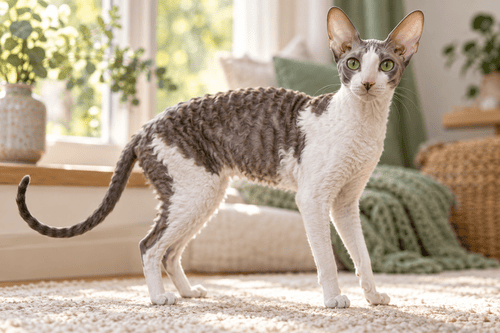
Cornish Rex
Also known as: Rex, Cornish
Marcel-waved, whippet-thin and permanently in motion — a cat that never really grows up.
- Acrobatic
- Affectionate
- Mischievous
- Sociable
- Persistent
The Cornish Rex traces to a single curly-coated kitten born on a Cornish farm in 1950. The mutation removed the guard hairs entirely, leaving a soft, rippled undercoat and a fine-boned, greyhound-like body. They are among the most active and people-obsessed cats in existence — acrobatic, endlessly curious and famously kitten-like well into old age.
At a glance
- Origin
- Cornwall, England
- Size
- Small
- Weight
- 5–10 lb (2.3–4.5 kg)
- Lifespan
- 12–16 years
- Coat
- Very short, soft, wavy undercoat only — no guard hairs
- Colours
- All colours and patterns
- Average cost
- $70–$80 / month
Breed ratings
Rated 1–5 on the same scale as every other entry, so scores are comparable between breeds. Amber stars mark things that cost you effort rather than things that benefit you.
Temperament
Cornish Rex are relentlessly people-focused with essentially no concept of personal space. They stay kitten-like for years and do genuinely badly when left alone, which makes a second pet close to a requirement for working households.
Care & upkeep
Exercise
They exercise themselves relentlessly. Provide vertical space — tall trees, shelving, walkways — plus 30–40 minutes of interactive play daily to channel it productively.
Grooming
Handle the coat gently — brushing breaks the fragile wavy hairs. A weekly soft-cloth wipe is enough. Ears produce wax quickly and need weekly cleaning.
Training
Highly trainable by cat standards — fetch, recall and clicker tricks come readily. They also learn how to open doors, drawers and cupboards, so latch anything that matters.
Feeding & diet
- Typical diet
- Calorie-dense high-protein diet
- Daily amount
- 140–200 g wet food, or equivalent
- Meals per day
- 2–3 meals a day
A high metabolic rate and a coat that provides little insulation mean Cornish Rex often eat more than their size suggests. They are also agile food thieves — secure worktops and bins.
Foods to avoid
- Onion and garlic
- Chocolate
- Grapes and raisins
- Raw dough
- Anything left on a worktop
Who this breed suits
A good match for
- Families with children
- Multi-pet households
- Apartments
- People home much of the day
Probably not for
- Cold homes
- Owners out all day
- People wanting a calm independent cat
- Anyone who values undisturbed worktops
Common health problems
This section describes conditions the breed is known to be predisposed to, so you know what to ask about. It is not veterinary advice and is not a diagnosis — always speak to a vet about your own animal.
- Hypertrophic cardiomyopathyThe most important concern. Ask breeders for cardiac screening and rescreen through life.
- Patellar luxationSlipping kneecaps are seen more often in Rex breeds than in most cats.
- Hereditary hypotrichosisA baldness variant seen in some lines.
- Umbilical herniaReported in the breed; usually minor and surgically correctable.
- Cold sensitivityWith no guard hairs there is little insulation. A cold house is a genuine welfare issue for this breed.
Cornish Rex feel warm to the touch because there is so little coat between you and the skin. That is normal, not a fever — but it also means a cold room genuinely affects them.
Interesting facts
- The entire breed traces to a single kitten named Kallibunker, born in Cornwall in 1950.
- The rex mutation is different from the Devon Rex — crossing the two produces straight-coated kittens.
- With no guard hairs, the coat feels closer to crushed velvet than fur.
Diet & Feeding
Cornish Rex have high metabolic rates — the thin coat provides little insulation and they are constantly in motion — so they often eat more than their small frame suggests. Feed a calorie-dense high-protein diet, around 140–200 g of quality wet food daily across two or three meals. They are enthusiastic food thieves with the agility to reach worktops, bread bins and open cupboards, so secure food rather than relying on training.
Exercise & Play
Cornish Rex do not need encouragement to exercise, only somewhere safe to do it. They leap, climb and sprint constantly, and vertical space is essential — tall trees, shelving and walkways — because they will otherwise use your bookcases. Around 30–40 minutes of interactive play daily takes the edge off. They fetch, chase and learn games quickly, and a bored Rex will redecorate. A second cat of similar energy helps considerably.
Grooming
Handle the coat gently. With no guard hairs, the fine wavy undercoat is fragile and brushing can break it — a weekly wipe with a soft cloth or a very gentle rubber mitt is all it needs. The real jobs are elsewhere: ears produce wax quickly and need weekly cleaning, and skin can become greasy, so occasional bathing is sometimes necessary. Nails every two weeks, and check the skin regularly since it is largely unprotected.
Health & Vet Care
The main concern is hypertrophic cardiomyopathy — ask breeders for cardiac screening and continue rescreening. Also reported: patellar luxation, hereditary hypotrichosis and umbilical hernia. One welfare point that matters daily: Cornish Rex are genuinely sensitive to cold. A chilly house is not a minor discomfort but a real problem, and heated beds, warm spots and sometimes a jumper in winter are practical rather than indulgent.
Living with a Cornish Rex
This is a cat that wants to be involved in everything — on your desk, in your bag, under the duvet, on your shoulder while you cook. They are excellent with children, dogs and other cats, and they are genuinely poor at being alone; if the house is empty all day, a second pet is close to a requirement. They stay kitten-like for years. Anyone wanting a cat that sits decoratively in a window should choose a different breed.
Read next
 How to Help a Shy or Fearful Cat Gain ConfidenceBuild trust through accessible retreats, quiet company and voluntary play or touch. Includes room checks, response decisions, visitor wording and an example.
 How Lost Pets Actually Get Home — and How to Make Yours Easier to ReturnFollow four reunion routes from finder to owner. Includes contact steps, scanning and service decisions, ownership checks, safe handover and a worked example.
 Pet Chores for Kids by Age: A Family Guide That Actually WorksChoose manageable tasks by ability, supervision and pet comfort. Includes age-band ideas, higher-risk exclusions, a sample family chart and an adult backup plan.