
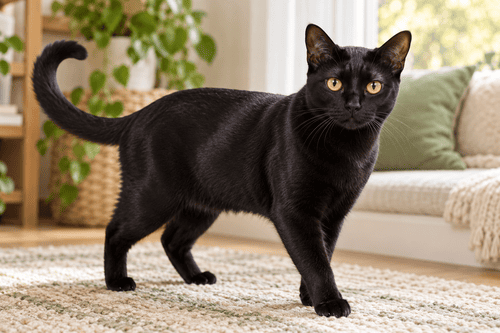
Bombay
Also known as: Miniature panther
A patent-leather panther in miniature — warm, heavy and relentlessly sociable.
- Sociable
- Affectionate
- Playful
- Confident
- People-focused
The Bombay was created in the United States by crossing sable Burmese with black American Shorthairs to produce a cat resembling a miniature black panther. The result is a solid, muscular cat with a jet-black coat, copper eyes and a temperament inherited largely from the Burmese: outgoing, people-focused and entirely convinced it belongs on your lap.
At a glance
- Origin
- United States
- Size
- Medium
- Weight
- 7–12 lb (3.2–5.4 kg)
- Lifespan
- 12–18 years
- Coat
- Very short, close-lying, patent-leather black
- Colours
- Black only, with copper or gold eyes
- Average cost
- $75–$85 / month
Breed ratings
Rated 1–5 on the same scale as every other entry, so scores are comparable between breeds. Amber stars mark things that cost you effort rather than things that benefit you.
Temperament
Bombays are outgoing and thoroughly people-focused — they greet arrivals, follow their person and sleep under the covers. They adapt well to children, dogs and household change, and they are trusting to a degree that makes outdoor access unsafe.
Care & upkeep
Exercise
Two or three 15-minute sessions daily. Playful into adulthood, many fetch reliably, and most harness-train readily. They dislike solitude and benefit from company.
Grooming
A weekly rubber mitt or chamois keeps the coat gleaming and shedding is light. Dental care from kittenhood is the routine job worth doing properly.
Training
Trainable and food-motivated. Fetch, recall and harness walking come readily, and they take to clicker work well. They learn routines quickly and expect them kept.
Feeding & diet
- Typical diet
- High-protein measured wet diet
- Daily amount
- 170–240 g wet food, or equivalent
- Meals per day
- 2 meals a day
The Burmese appetite in a dense muscular body produces quiet weight gain. Measure portions, avoid free-feeding and weigh monthly rather than judging by the sleek silhouette.
Foods to avoid
- Onion and garlic
- Chocolate
- Grapes and raisins
- Raw dough
- Free-fed dry food
Who this breed suits
A good match for
- Families with children
- Multi-pet households
- First-time cat owners
- Apartments
Probably not for
- Owners away all day with one cat
- Outdoor access
- Households wanting an aloof cat
Common health problems
This section describes conditions the breed is known to be predisposed to, so you know what to ask about. It is not veterinary advice and is not a diagnosis — always speak to a vet about your own animal.
- Hypokalaemic polymyopathyInherited from Burmese lines. DNA testing is available — ask breeders for results.
- Hypertrophic cardiomyopathyReported in the breed; ask about cardiac screening.
- Diabetes mellitusBurmese-derived breeds are predisposed. Increased thirst warrants prompt testing.
- Craniofacial defectsSeen in some Contemporary Burmese-type lines. Buy from breeders who avoid extreme head type.
- Excessive tearingCommon in the breed and usually managed with routine eye cleaning.
Long-lived, frequently reaching 16 to 18 years. Weight and dental management across that span are what determine the quality of the senior years.
Interesting facts
- Created deliberately to resemble a miniature black panther, named after the Indian city.
- Every Bombay is black — no other colour is recognised in the breed.
- They are frequently described as feeling warmer to the touch than other cats.
Diet & Feeding
Bombays inherit the Burmese appetite and the Burmese density, which is a combination that produces weight gain quietly. Feed a measured 170–240 g of quality wet food daily across two meals, and do not free-feed dry food. They are convincing beggars and will lobby persistently. Weigh monthly rather than judging by appearance — a compact muscular cat carries excess weight without looking obviously round under a sleek black coat.
Exercise & Play
Two or three 15-minute interactive sessions daily. Bombays are playful well into adulthood and many fetch reliably. They enjoy climbing and puzzle feeders, and they harness-train readily. They are strongly people-oriented and dislike solitude — in a household that is out all day, a second cat or a cat-friendly dog makes a substantial difference to their wellbeing.
Grooming
About as simple as cat grooming gets. A weekly rubber mitt or chamois buffing keeps the patent-leather coat gleaming, and shedding is light. Nails every 2–3 weeks and a monthly ear check. As with the Burmese, dental care is the routine job that matters — brush several times a week from kittenhood and book annual dental examinations, because this is a long-lived breed and teeth are what tend to fail first.
Health & Vet Care
Inherited from Burmese lines: hypokalaemic polymyopathy (DNA-testable), craniofacial defects in some Contemporary-type lines and excessive tearing. Also reported: hypertrophic cardiomyopathy and diabetes, to which Burmese-derived breeds are predisposed. Ask breeders for DNA results and cardiac screening. Increased thirst and urination in a Bombay warrants prompt testing rather than watchful waiting.
Living with a Bombay
Bombays are among the warmest, most sociable cats available — they greet visitors, follow their person, sleep under the covers and are frequently described as running hot to the touch. They are excellent with children and cat-friendly dogs and adapt readily to household change. They are moderately vocal, softer than a Siamese, and they are strictly indoor cats: an entirely black, entirely trusting cat outdoors is at real risk.
Read next
 How to Help a Shy or Fearful Cat Gain ConfidenceBuild trust through accessible retreats, quiet company and voluntary play or touch. Includes room checks, response decisions, visitor wording and an example.
 How Lost Pets Actually Get Home — and How to Make Yours Easier to ReturnFollow four reunion routes from finder to owner. Includes contact steps, scanning and service decisions, ownership checks, safe handover and a worked example.
 Pet Chores for Kids by Age: A Family Guide That Actually WorksChoose manageable tasks by ability, supervision and pet comfort. Includes age-band ideas, higher-risk exclusions, a sample family chart and an adult backup plan.