
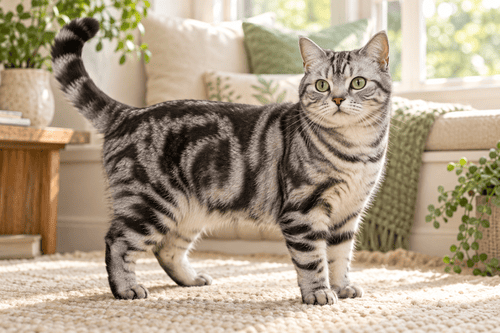
American Shorthair
Also known as: ASH, Domestic Shorthair (historically)
The working cat that became a family favourite — hardy, easy and built to last.
- Even-tempered
- Adaptable
- Friendly
- Independent
- Undemanding
The American Shorthair descends from the working cats that arrived on ships with early European settlers, selectively bred into a robust, even-tempered pedigree. They are moderate in every direction: moderately active, moderately affectionate, moderately sized. That balance, combined with genuine hardiness and a long lifespan, makes them one of the most practical family cats available.
At a glance
- Origin
- United States
- Size
- Large
- Weight
- 8–15 lb (3.6–6.8 kg)
- Lifespan
- 15–20 years
- Coat
- Short, thick, hard-textured coat
- Colours
- Silver Tabby most iconic, plus over 80 recognised colours and patterns
- Average cost
- $75–$90 / month
Breed ratings
Rated 1–5 on the same scale as every other entry, so scores are comparable between breeds. Amber stars mark things that cost you effort rather than things that benefit you.
Temperament
American Shorthairs are notably tolerant — of children, dogs, noise and change. They enjoy company but are comfortable alone, which makes them one of the better breeds for owners who work outside the home.
Care & upkeep
Exercise
Two 10–15 minute sessions daily. Their hunting heritage means they respond strongly to prey-simulation toys — wand toys with feathers outperform balls.
Grooming
About as easy as a cat gets: a weekly brush with a rubber mitt, increased during the spring and autumn shed. No mats, no professional grooming.
Training
Bright and food-motivated, they take to clicker training, harness walking and puzzle feeders readily. Their independence means they train on their own terms rather than to please.
Feeding & diet
- Typical diet
- High-protein measured diet
- Daily amount
- 200–280 g wet food, or equivalent
- Meals per day
- 2 meals a day
Hearty eaters with a working-cat appetite. Free-feeding leads to obesity quickly in an indoor home — portion the food and use the ration for play-based feeding where possible.
Foods to avoid
- Onion and garlic
- Chocolate
- Grapes and raisins
- Raw dough
- Free-fed dry food
Who this breed suits
A good match for
- Families with children
- Multi-pet households
- Owners who work outside the home
- First-time cat owners
Probably not for
- Owners wanting a constantly cuddly lap cat
- People wanting an unusual-looking breed
Common health problems
This section describes conditions the breed is known to be predisposed to, so you know what to ask about. It is not veterinary advice and is not a diagnosis — always speak to a vet about your own animal.
- Hypertrophic cardiomyopathy (HCM)The main inherited concern. Ask breeders for cardiac screening.
- ObesityThe most common practical problem — a hearty appetite in a sedentary indoor life.
- Dental diseaseRoutine for all cats; annual dental checks and home brushing help.
One of the more genetically robust pedigree cats, with a working-cat ancestry that kept the gene pool broad. Lifespans of 15–20 years are common.
Interesting facts
- Descended from cats brought on European ships to control rodents — some likely arrived on the Mayflower.
- The silver tabby pattern is the breed's signature and one of the most recognisable cat coats in the world.
- Recognised as a distinct breed in 1906, making it one of America's oldest.
Diet & Feeding
American Shorthairs eat like the working cats they descend from, and in a modern indoor home that becomes a weight problem quickly. Feed a measured 200–280 g of quality wet food across two meals and do not leave dry food out. Because they are hunting-driven, feeding part of the ration through puzzle feeders or scattered foraging games works particularly well — it slows eating and gives them something to do. Check body condition monthly.
Exercise & Play
Two 10–15 minute interactive sessions daily is the right target. Their heritage shows in what they enjoy: prey-simulation beats novelty — a feather wand moved like a bird will hold an American Shorthair's attention far longer than a ball. Provide a scratching post and a window perch. They are one of the few pedigree cats genuinely suited to harness training if you want to give them safe outdoor time.
Grooming
This is close to the easiest coat in the pedigree cat world. A weekly brush with a rubber mitt or soft slicker removes loose hair; step it up during the spring and autumn sheds. The coat is hard-textured and does not mat, so professional grooming is never needed. Trim nails every 2–3 weeks, check ears monthly and brush teeth a few times a week — dental care is the one routine task that genuinely pays off over a 20-year lifespan.
Health & Vet Care
American Shorthairs are among the more genetically robust pedigree cats — the broad working-cat ancestry kept the gene pool healthy. The main inherited concern is hypertrophic cardiomyopathy (HCM), so ask breeders for cardiac screening. Beyond that, the realistic risks are obesity and ordinary dental disease, both of which are owner-managed rather than genetic. Annual vet checks are usually enough. Lifespans of 15–20 years are common.
Living with an American Shorthair
The defining quality is tolerance. They cope with children, dogs, visitors, moves and noise better than most breeds, and they are comfortable being left alone during a working day — a genuine advantage over the Devon Rex or Siamese. They are affectionate on their own terms: nearby and companionable rather than permanently on your lap. If you want a straightforward, hardy, long-lived family cat without special requirements, this is close to the default answer.
Read next
 How to Help a Shy or Fearful Cat Gain ConfidenceBuild trust through accessible retreats, quiet company and voluntary play or touch. Includes room checks, response decisions, visitor wording and an example.
 How Lost Pets Actually Get Home — and How to Make Yours Easier to ReturnFollow four reunion routes from finder to owner. Includes contact steps, scanning and service decisions, ownership checks, safe handover and a worked example.
 Pet Chores for Kids by Age: A Family Guide That Actually WorksChoose manageable tasks by ability, supervision and pet comfort. Includes age-band ideas, higher-risk exclusions, a sample family chart and an adult backup plan.