
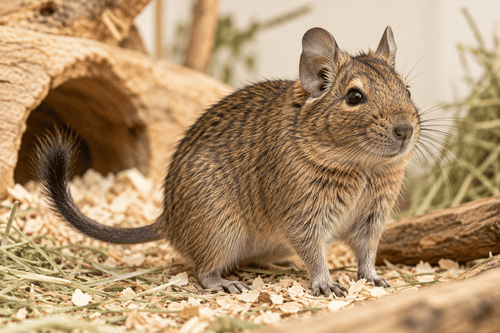
Degu
Also known as: Brush-tailed rat, Octodon degus
A diurnal, highly social Chilean rodent that must never eat sugar.
- Social
- Vocal
- Active
- Curious
- Intelligent
The degu is a small Chilean rodent, more closely related to chinchillas and guinea pigs than to rats. They are diurnal, intensely social, vocal and genuinely intelligent — and they carry one absolute dietary rule that no other common pet shares: they cannot process sugar and will develop diabetes if fed fruit or sweetened food. Kept correctly they are engaging, long-lived companions.
At a glance
- Origin
- Chile
- Size
- Small
- Weight
- 6–10.6 oz (170–300 g)
- Lifespan
- 6–9 years
- Coat
- Short, coarse, agouti-brown with a tufted tail
- Colours
- Agouti (wild type), Blue, Sand, Cream, Pied
- Average cost
- $40–$80 / month
Breed ratings
Rated 1–5 on the same scale as every other entry, so scores are comparable between breeds. Amber stars mark things that cost you effort rather than things that benefit you.
Temperament
Degus are among the most social small mammals kept as pets and must live in same-sex pairs or groups. They are vocal with a genuine communicative repertoire, diurnal, and tame well with patient daily handling.
Care & upkeep
Exercise
A tall multi-level enclosure of around 120 x 60 x 100 cm minimum for a pair, plus supervised out-of-cage time. A solid-surface wheel of at least 30 cm is essential.
Grooming
No brushing needed and never bathe in water. Provide a chinchilla sand bath several times a week. Never lift by the tail — the skin strips away and the tail may be lost.
Training
Intelligent and capable of learning names, recall and simple tasks with food reward. Their sugar restriction means training treats must be hay-based or seed-based rather than fruit.
Feeding & diet
- Typical diet
- Hay-based sugar-free herbivore diet
- Daily amount
- Unlimited grass hay plus measured degu pellets
- Meals per day
- Hay always available; pellets once daily
The absolute rule is no sugar in any form — no fruit, dried fruit, carrot, honey or sweetened treats. Degus develop diabetes and cataracts on diets that would be fine for any other small pet.
Foods to avoid
- All fruit and dried fruit
- Carrot
- Honey and molasses
- Sugary treats
- Rabbit or hamster mixes containing fruit
Who this breed suits
A good match for
- Adults and older teenagers
- Daytime households
- Owners wanting a long-lived social rodent
- Experienced small pet keepers
Probably not for
- Owners keeping a single animal
- Homes feeding fruit as treats
- Small cages
- Anyone unable to find a degu-experienced vet
Common health problems
This section describes conditions the breed is known to be predisposed to, so you know what to ask about. It is not veterinary advice and is not a diagnosis — always speak to a vet about your own animal.
- DiabetesDegus cannot metabolise sugar. Fruit, dried fruit, carrot and sweetened treats cause diabetes and cataracts.
- CataractsOften the first visible sign of diabetes in a young degu.
- Dental malocclusionCommon. Constant grass hay is the main prevention. Healthy adult teeth should be orange, not white.
- Tail deglovingThe tail skin strips away if handled by it, and the tail may be lost entirely. Never lift a degu by the tail.
- BumblefootPressure sores from wire flooring. Use solid shelves throughout.
Healthy adult degu teeth are orange. Pale or white teeth indicate a dietary deficiency and warrant a review of the hay and pellet intake with a vet.
Interesting facts
- More closely related to chinchillas and guinea pigs than to rats or mice.
- Used in diabetes research precisely because they develop the condition so readily on sugar.
- They have one of the most complex vocal repertoires of any rodent, with distinct calls for different situations.
Diet & Feeding
This is the rule that defines degu ownership: degus cannot metabolise sugar and develop diabetes and cataracts if fed fruit, honey, dried fruit, carrot or sweetened treats. Feed unlimited grass hay as the foundation, plus a measured amount of degu or chinchilla pellets without molasses and small quantities of leafy greens and dried herbs. Never use rabbit or hamster mixes containing dried fruit. Water in a bottle, changed daily.
Exercise & Enrichment
Degus are extremely active and need a tall multi-level enclosure, at minimum around 120 x 60 x 100 cm for a pair, with solid shelves rather than wire. They also need out-of-cage time daily in a degu-proofed room, though they chew everything, so supervision must be constant. A solid-surface wheel of at least 30 cm is essential. Provide deep substrate for digging, wooden chews, cork tunnels and a permanent sand bath.
Grooming
No brushing needed, and never bathe a degu in water. Provide a chinchilla sand bath several times a week or permanently; they roll in it and it maintains coat condition. Never handle a degu by the tail — like gerbils, the tail skin can strip away, and unlike a gerbil the degu can lose the tail entirely. Scoop with cupped hands. Check the continuously growing teeth, which should be orange in a healthy adult; pale white teeth indicate dietary deficiency.
Health & Vet Care
Diabetes is the headline risk and is almost entirely dietary — cataracts in a young degu are frequently the first visible sign. Also watch for dental malocclusion, which is common and needs constant hay to prevent, tail degloving from incorrect handling, bumblefoot on wire flooring and liver disease. Find an exotics vet familiar with degus specifically; many small-mammal vets have limited experience with the species.
Living with Degus
Degus are highly social and must be kept in same-sex pairs or groups — a lone degu suffers genuinely. They are diurnal, which suits family routines, and they are among the most vocal small mammals, with a documented repertoire of calls used to communicate with each other and with owners. They tame well with patient daily handling and live 6 to 9 years, which is considerably longer than most small rodents and a real commitment.