
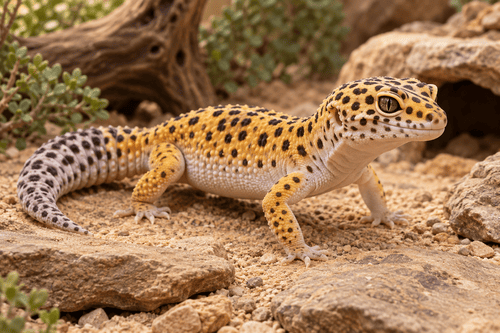
Leopard Gecko
Docile, manageable and nocturnal — the ideal first reptile.
The leopard gecko is one of the most recommended first reptiles, and for good reason. They are small, handleable, quiet, do not require UVB lighting (though it is now recommended), and are forgiving of minor care variations in a way that many reptiles are not. With a 15–20 year lifespan, they are a long-term commitment — but one of the most rewarding reptile companions available.
At a glance
- Origin
- Pakistan, Afghanistan, India
- Size
- Small
- Weight
- 1.4–2.8 oz (40–80 g)
- Lifespan
- 15–20 years
- Coat
- Scales — spotted patterning (wild type and many morphs)
- Colours
- Yellow, orange with black spots (wild type), Albino, Blizzard, Tangerine, Black Night and many more morphs
Breed ratings
Rated 1–5 on the same scale as every other entry, so scores are comparable between breeds. Amber stars mark things that cost you effort rather than things that benefit you.
Diet & Feeding
Leopard geckos are insectivores — they eat only live insects. Staple feeders: dubia roaches, mealworms, crickets. Waxworms and superworms are treats only (high fat). Gut-load insects (feed them nutritious food for 24 hours before offering to your gecko) and dust with calcium powder at every feeding. Dust with multivitamin once a week. Adults can be fed every other day; juveniles daily. Never leave live crickets unattended in the enclosure — they will bite a sleeping gecko.
Heating
Leopard geckos thermoregulate from the ground up, not from a basking light. They need: an under-tank heater (UTH) or heat mat covering one third of the floor, regulated by a thermostat to 28–32°C warm side surface temperature. Cool side: 22–25°C. Never use heat rocks (burn risk) and avoid very deep loose substrate that insulates against the heat mat. A digital thermometer with a probe is essential — guessing temperatures costs your gecko its health.
Enclosure & Hides
Minimum enclosure for one adult: 60 x 40 x 40 cm (larger is better). Leopard geckos need three hides: warm hide (over or near the heat mat), cool hide, and a moist hide (filled with damp sphagnum moss) for shedding support. Without a moist hide, shed can stick to toes and constrict blood supply — a common cause of toe loss. Clean the enclosure weekly, removing waste daily. Paper towel substrate is safest and easiest to clean; bioactive setups are increasingly popular.
Health & Vet Care
Find a reptile-experienced vet. Common conditions include cryptosporidiosis (Crypto) — a serious, often fatal parasitic infection with no cure; annual faecal screening is worthwhile. Other concerns: dysecdysis (incomplete shed), metabolic bone disease, impaction, mouth rot (stomatitis) and parasites. Signs of illness: weight loss (weigh monthly — sudden drops are significant), tail thinning, reluctance to eat, retained shed. Keep a weight log — leopard geckos store fat in their tails and tail thinning is an early illness indicator.
Living with a Leopard Gecko
Leopard geckos are nocturnal, becoming active at dusk. They are calm, do not bite without provocation and tolerate handling well once acclimatised. Allow 2 weeks of settling time before attempting to handle a new gecko. House alone — males will fight; females can sometimes be cohabited but it requires careful monitoring. They are quiet, relatively odourless and suitable for smaller spaces. Their 15–20 year lifespan means they are a serious long-term commitment — not an impulse purchase.