
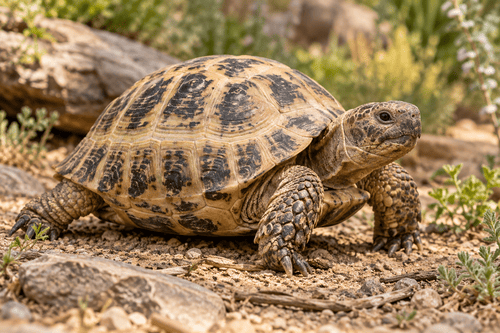
Russian Tortoise
Also known as: Horsfield's tortoise, Testudo horsfieldii, Steppe tortoise
A small, hardy, personable tortoise that will outlive most of your other plans.
- Active
- Curious
- Determined
- Solitary
- Diurnal
The Russian tortoise is a small Central Asian species and one of the most commonly kept pet tortoises, largely because of its manageable size and hardiness. They are active, curious and surprisingly personable, and they are frequently sold to owners with no idea that the animal in the box may live for fifty years or more and needs substantially more space than any commercially sold tortoise table provides.
At a glance
- Origin
- Central Asia
- Size
- Small
- Weight
- 1–3 lb (0.4–1.5 kg)
- Lifespan
- 40–50 years
- Coat
- Scutes and scales
- Colours
- Olive, tan and brown with dark markings
- Average cost
- $25–$60 / month
Breed ratings
Rated 1–5 on the same scale as every other entry, so scores are comparable between breeds. Amber stars mark things that cost you effort rather than things that benefit you.
Temperament
Russian tortoises are more personable than most tortoise species — active, inquisitive and often approaching their keeper for food. They tolerate brief handling but are ground animals that should not be carried about.
Care & upkeep
Exercise
A minimum indoor enclosure of 1.2 x 0.6 m and considerably more if possible, with a secure outdoor pen in warm weather. Determined burrowers and climbers — plan the walls accordingly.
Grooming
No grooming as such. Soak young tortoises regularly to support hydration, and check the shell for soft spots or pyramiding during routine handling.
Training
They learn feeding routines and recognise their keeper, and some will follow a hand for food. Beyond that they are not trainable in any meaningful sense.
Feeding & diet
- Typical diet
- High-fibre weed and green diet
- Daily amount
- A pile of weeds and leafy greens roughly the size of the shell, daily
- Meals per day
- Once daily
A grazing species needing high fibre and low protein. Feed broadleaf weeds and safe greens, avoid fruit almost entirely, and never feed animal protein — it causes permanent shell deformity.
Foods to avoid
- Fruit
- Animal protein of any kind
- Lettuce as a staple
- Dog or cat food
- Glass tanks with poor airflow
Who this breed suits
A good match for
- Owners with outdoor space
- People able to commit for decades
- Experienced reptile keepers
- Warm sunny climates
Probably not for
- Owners wanting a short-term pet
- Glass tank setups
- Homes without UVB provision
- Anyone unable to plan for 40+ years
Common health problems
This section describes conditions the breed is known to be predisposed to, so you know what to ask about. It is not veterinary advice and is not a diagnosis — always speak to a vet about your own animal.
- Metabolic bone diseaseCaused by inadequate UVB or calcium. Signs include a soft shell, deformity and weakness. Largely preventable.
- Shell pyramidingRaised, lumpy scutes caused by excess protein and inappropriate humidity during growth. Permanent once formed.
- Respiratory infectionNasal discharge, wheezing and open-mouth breathing. Usually linked to cold or damp conditions.
- ParasitesVery common in wild-caught imports. Annual faecal screening is worthwhile.
- Bladder stonesLinked to dehydration and inappropriate diet. Regular soaking helps prevent them.
Buy captive-bred rather than wild-caught. Imports frequently arrive dehydrated and heavily parasitised, and the difference in long-term health outcomes is substantial.
Interesting facts
- Also known as Horsfield tortoise, and native to the steppes of Central Asia.
- They spend much of the year underground in the wild, hibernating and aestivating.
- Regularly live past 40 years in captivity, with some records exceeding 50.
Diet & Feeding
Russian tortoises are grazers on high-fibre, low-protein weeds, and the most common feeding error is treating them like omnivores. Feed a diet built on dandelion, plantain, clover, hibiscus, sow thistle and other broadleaf weeds, plus safe leafy greens. Avoid fruit almost entirely, avoid all animal protein, and avoid lettuce as a staple. Dust with calcium powder several times a week and a reptile multivitamin weekly. Provide a shallow water dish and soak young tortoises regularly.
Heating & Lighting
Two non-negotiables. A basking spot of 32–35°C at one end, with a cool end of 20–24°C, and UVB lighting across the enclosure — without UVB a tortoise cannot metabolise calcium and will develop metabolic bone disease. Replace UVB bulbs every 6–12 months even while they still emit visible light, because UVB output degrades first. Provide a 12–14 hour light cycle. Night temperatures can drop to around 18°C safely for this species.
Enclosure & Setup
Space is where most owners fall short. An adult needs a minimum of 1.2 x 0.6 m indoors, and considerably more is better — a secure outdoor enclosure in warm weather is ideal. Russian tortoises are determined burrowers and climbers, so provide 10–15 cm of substrate for digging and walls they cannot scale or undermine. Include hides at both ends, flat basking stone and edible planting. Avoid glass tanks, which restrict airflow and confuse the animal.
Health & Vet Care
Register with a reptile vet. The main problems are metabolic bone disease from inadequate UVB or calcium, shell pyramiding from excess protein and low humidity, respiratory infection, parasites — annual faecal screening is worthwhile — and bladder stones. Wild-caught imports frequently arrive dehydrated and parasitised, so buy captive-bred wherever possible and quarantine any new animal.
Living with a Russian Tortoise
They are diurnal and genuinely active, patrolling their enclosure, digging and investigating, and many learn to recognise their keeper and approach for food. They tolerate brief handling but are ground animals and should not be carried around. Many keepers brumate them over winter, which requires proper preparation and veterinary guidance rather than simply letting the animal go cold. Plan for 40 to 50 years — this is an animal that outlives most household arrangements.