
Bearded Dragon vs Leopard Gecko
Two of the most popular pet reptiles, and both are good for beginners. The bearded dragon is larger, active during the day and needs strong UVB lighting and a basking spot plus a big enclosure; the leopard gecko is smaller, active at dusk and night, and its set-up is simpler and cheaper.
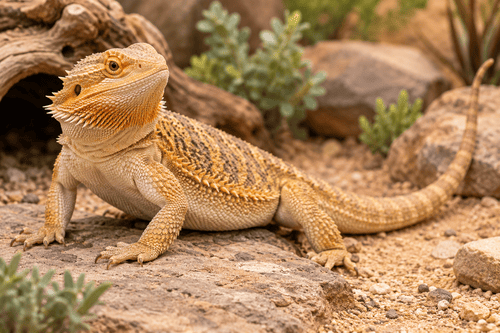
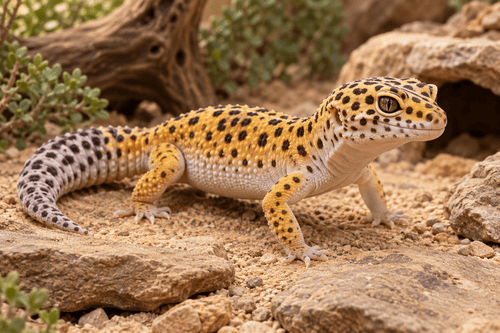
At a glance
| Bearded Dragon | Leopard Gecko | |
|---|---|---|
| Size | Medium | Small |
| Weight | 1 lb (0.3–0.6 kg) | 1.4–2.8 oz (40–80 g) |
| Lifespan | 10–15 years | 15–20 years |
| Coat | Scales | Scales — spotted patterning (wild type and many morphs) |
| Origin | Australia | Pakistan, Afghanistan, India |
Temperament & care, rated 1–5
| Bearded Dragon | Leopard Gecko | |
|---|---|---|
| Energy levelNeeds a lot of activity every day | 2 | 2 |
| IntelligenceLearns quickly and solves problems | 3 | 2 |
| TrainabilityTakes to training readily | 3 | 2 |
| AffectionWants close contact with people | 5 | 4 |
| IndependenceCopes well with time alone | 4 | 4 |
| Good with childrenPatient and tolerant with kids | 5 | 4 |
| Good with other petsUsually settles with other animals | 5 | 4 |
| Apartment friendlyComfortable in a smaller home | 3 | 4 |
| Beginner friendlyForgiving for a first-time owner | 3 | 4 |
| SheddingSheds heavily | 3 | 3 |
| Grooming needsFrequent brushing or professional grooming | 1 | 1 |
| Noise levelVocal — barks, meows or calls often | 3 | 3 |
Highlighted = the easier choice for most owners on that trait (higher, except shedding, grooming and noise, where lower is easier).
The key differences
- Size: bearded dragons reach about 16–24 inches; leopard geckos about 8–10 inches.
- Lighting: bearded dragons need strong UVB; leopard geckos benefit from low-level UVB.
- Diet: bearded dragons eat insects and vegetables; leopard geckos eat only insects.
- Lifespan: leopard geckos often live longer (15–20 years).
Choose the Bearded Dragon if…
- You want an interactive reptile that is active while you are awake.
- You have room for a large enclosure (about 4 × 2 × 2 ft for an adult).
- You can provide UVB and greens as well as insects.
Choose the Leopard Gecko if…
- You want a small, calm reptile with simpler needs.
- You are often home in the evening.
- You have less space.