
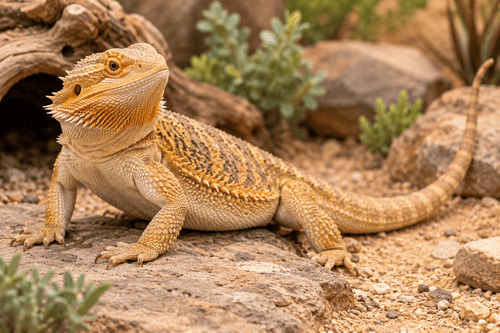
Bearded Dragon
The friendliest lizard you can keep — calm, curious and surprisingly sociable.
The bearded dragon is consistently ranked as one of the best reptiles for new owners — and for good reason. They are handleable, do not bite without significant provocation, show genuine recognition of their owners and have expressive personalities that make them fascinating to observe. They are not, however, low-maintenance animals. Their lighting, heating and dietary requirements are precise and non-negotiable.
At a glance
- Origin
- Australia
- Size
- Medium
- Weight
- 1 lb (0.3–0.6 kg)
- Lifespan
- 10–15 years
- Coat
- Scales
- Colours
- Tan, Yellow, Orange, Red, White — many morphs available
Breed ratings
Rated 1–5 on the same scale as every other entry, so scores are comparable between breeds. Amber stars mark things that cost you effort rather than things that benefit you.
Diet & Feeding
Bearded dragons are omnivores with dietary needs that change with age. Juveniles (under 12 months) need approximately 70% insects, 30% vegetation. Adults reverse this: 70% vegetation, 30% insects. Staple insects: dubia roaches, black soldier fly larvae, crickets. Staple plants: collard greens, mustard greens, butternut squash, bell pepper. Dust all insects with calcium powder at every feeding and a multivitamin twice weekly. Avoid spinach, kale in excess and iceberg lettuce. Fresh water daily (many beardies prefer drinking from a dropper or bath).
Lighting & Heating
This is the most critical aspect of bearded dragon care. They require: a UVB lamp (T5 HO 10.0 or 12%) for calcium metabolism — without this they develop metabolic bone disease and die; a basking spot of 38–42°C; a cool side of 26–30°C; a temperature drop at night to 18–22°C. All lighting should be on a 12–14 hour cycle mimicking natural daylight. Replace UVB bulbs every 6 months even if they still emit visible light — UVB output degrades before visible light.
Grooming & Hygiene
Bathe your bearded dragon in lukewarm shallow water 2–3 times a week — this aids hydration, helps with shedding and stimulates defecation. During shedding, never pull shed skin — if it is stuck, soak more frequently and allow it to come away naturally. Clean the enclosure weekly, removing waste daily. Reptile carpet or tile substrates are easier to clean than loose substrates, which carry impaction risk if ingested.
Health & Vet Care
Find a reptile-specialist vet. Common health problems include metabolic bone disease (MBD — caused by insufficient UVB or calcium; often fatal if untreated), yellow fungus disease, adenovirus (Atadenovirus), parasites and impaction (blockage from ingesting substrate). Signs of illness: lethargy, glass surfing, open-mouth breathing, loss of appetite, swollen limbs. Annual vet checks with a faecal screen are recommended. Keep receipts for all equipment — insurance for reptiles is available and worth considering.
Living with a Bearded Dragon
Bearded dragons are diurnal (active by day), making them more compatible with human routines than most reptiles. They tolerate and often enjoy regular handling — many will sit on their owner's shoulder or chest for warmth. They communicate through colour changes, beard darkening, head bobbing and arm waving. A beardie that waves one arm slowly at you is submitting — a normal and charming behaviour. They are solitary and must be housed alone.