
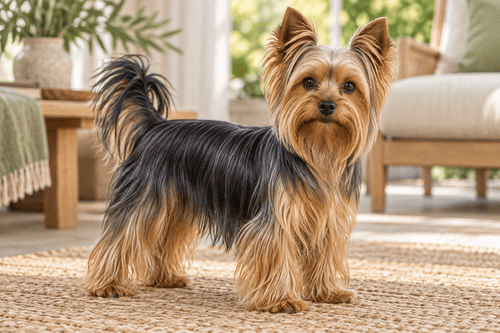
Yorkshire Terrier
Also known as: Yorkie
A terrier in an evening gown — tiny, glamorous and completely fearless.
- Feisty
- Affectionate
- Curious
- Confident
- Vocal
The Yorkshire Terrier began as a working ratter in Victorian mills and mines, and despite a century of refinement into a companion breed, the terrier is entirely intact. Yorkies are bold, busy, opinionated and deeply attached to their people. The famous floor-length silk coat is a show clip that most pet owners sensibly trade for a short, practical trim.
At a glance
- Origin
- England, UK
- Breed group
- Toy
- Size
- Toy
- Weight
- 4–7 lb (2–3.2 kg)
- Height
- 7.1–9.1 in (18–23 cm)
- Lifespan
- 13–16 years
- Coat
- Long, fine, silky single coat — hair rather than fur
- Colours
- Blue & Tan, Blue & Gold, Black & Tan, Black & Gold
- Average cost
- $105–$185 / month
Breed ratings
Rated 1–5 on the same scale as every other entry, so scores are comparable between breeds. Amber stars mark things that cost you effort rather than things that benefit you.
Temperament
Yorkies are terriers first and lapdogs second. Expect prey drive, digging instincts and a readiness to challenge much larger dogs. They are devoted to their owners and can develop separation anxiety if never taught to be alone.
Care & upkeep
Exercise
Two 20-minute walks plus indoor play. Yorkies enjoy far more if offered and do well at mini agility and trick training. Walk on a harness to protect a delicate trachea.
Grooming
A full show coat needs daily combing and wrapping. Almost all pet Yorkies are kept in a short "puppy clip" trimmed every 6–8 weeks, which needs only a brush every couple of days.
Training
Bright but stubborn, and famously hard to house-train — a strict schedule, indoor toilet options for bad weather, and patience are essential. Teach settling and alone-time early to prevent separation anxiety and nuisance barking.
Feeding & diet
- Typical diet
- Calorie-dense toy-breed diet
- Daily amount
- 55–110 g of dry food
- Meals per day
- 2–3 small meals a day
Yorkies can be fussy eaters and are prone to hypoglycaemia as puppies. Small, frequent, palatable meals work best. Their fine coat benefits from a diet with good omega-3 content.
Foods to avoid
- Chocolate
- Grapes and raisins
- Xylitol
- Onion and garlic
- Very fatty foods — pancreatitis risk
Who this breed suits
A good match for
- Apartment living
- Allergy-sensitive households
- Adults and older children
- Owners who enjoy grooming or will pay for it
Probably not for
- Homes with toddlers
- Owners away all day
- People unwilling to budget for regular grooming
Common health problems
This section describes conditions the breed is known to be predisposed to, so you know what to ask about. It is not veterinary advice and is not a diagnosis — always speak to a vet about your own animal.
- Patellar luxationSlipping kneecaps, common across toy breeds.
- Tracheal collapseA characteristic honking cough. Use a harness, never a collar.
- Portosystemic shuntA liver blood-vessel abnormality seen more often in Yorkies than most breeds. Signs include poor growth and disorientation after meals.
- Dental diseaseSevere crowding in a tiny jaw makes home brushing essential.
- HypoglycaemiaLow blood sugar in puppies — an emergency if the dog becomes wobbly or unresponsive.
The coat is hair, not fur, and grows continuously without a seasonal shed. That makes Yorkies a common choice for allergy-sensitive homes, though no dog is truly hypoallergenic.
Interesting facts
- Developed by Scottish weavers who moved to Yorkshire, originally to hunt rats in textile mills.
- The coat grows continuously and barely sheds, like human hair.
- A Yorkie named Smoky served as an unofficial therapy dog in World War II.
Diet & Feeding
Yorkies need very little food — 55–110 g of quality dry food a day — but they can be genuinely fussy, and toy-breed puppies risk hypoglycaemia if they skip meals. Feed two to three small meals of a palatable, calorie-dense small-breed formula. Their fine coat responds visibly to diet: look for food with good omega-3 content. Avoid fatty scraps, which this breed tolerates poorly and which can trigger pancreatitis.
Exercise Needs
Two walks of around 20 minutes plus indoor play covers the basics, though a Yorkie will happily take much more. The terrier brain wants a job — mini agility, trick training, flirt poles and scent games all suit them. Use a harness rather than a collar; tracheal collapse is common in the breed and lead pressure on the throat aggravates it. Take the prey drive seriously: a Yorkie will chase a squirrel across a road without hesitation.
Grooming
The show coat — floor-length, parted down the spine — requires daily combing and wrapping and is a serious commitment. Almost all pet owners choose a short "puppy clip", trimmed by a groomer every 6–8 weeks, which needs only a thorough brush every two or three days. Either way, the hair around the eyes needs regular trimming, and the topknot keeps it out of the way. Bathe every 2–3 weeks and brush teeth several times a week.
Health & Vet Care
Main concerns are patellar luxation, tracheal collapse, portosystemic shunt (a liver blood-vessel abnormality the breed is predisposed to), dental disease and puppy hypoglycaemia. Ask breeders about liver screening. Because the coat is hair rather than fur and sheds minimally, Yorkies are often chosen by allergy-sensitive households — though no dog is genuinely hypoallergenic, and the dander is still there.
Training Tips
Yorkies are clever and quick, but house-training has a reputation for being difficult and it is deserved. A strict schedule, a reliable indoor toilet option for bad weather and consistent reward-based reinforcement are the way through. Teach alone-time deliberately from puppyhood — Yorkies bond hard and are prone to separation anxiety and the barking that comes with it. Socialise early with larger dogs, because a Yorkie has no idea it is small.
Read next
 How to Set Up a Dog-Friendly GardenCheck fences, gates, plants and products before adding water, shade and activities. Includes inspection lists, layout choices and a worked small-garden plan.
 Resource Guarding in Dogs: Signs, Safety and What HelpsRecognise guarding and manage bowls, chews, beds and visitors without provoking the dog. Includes barriers, collection steps and questions for professional help.
 How Lost Pets Actually Get Home — and How to Make Yours Easier to ReturnFollow four reunion routes from finder to owner. Includes contact steps, scanning and service decisions, ownership checks, safe handover and a worked example.