
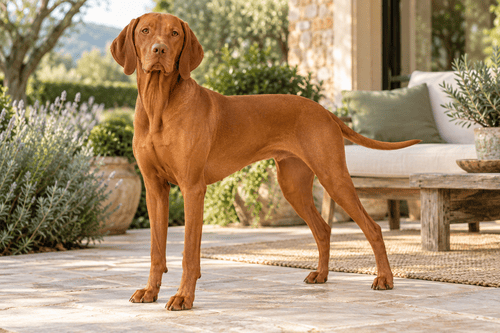
Vizsla
Also known as: Hungarian Vizsla, Magyar Vizsla, Hungarian Pointer
A russet gundog with limitless stamina and no concept of personal space.
- Affectionate
- Energetic
- Sensitive
- Gentle
- Clingy
The Vizsla is a Hungarian pointer-retriever bred to work closely with a single handler, and that closeness defines the breed. They are affectionate to the point of clinginess, endlessly athletic and highly sensitive. For a running or hiking household with someone at home, a Vizsla is a superb companion. For a household that is out all day, it is close to the wrong choice.
At a glance
- Origin
- Hungary
- Breed group
- Gundog
- Size
- Large
- Weight
- 44–66 lb (20–30 kg)
- Height
- 20.9–25.2 in (53–64 cm)
- Lifespan
- 12–15 years
- Coat
- Short, smooth, dense, self-cleaning
- Colours
- Golden Rust, Russet Gold, Red Gold
- Average cost
- $90–$105 / month
Breed ratings
Rated 1–5 on the same scale as every other entry, so scores are comparable between breeds. Amber stars mark things that cost you effort rather than things that benefit you.
Temperament
Vizslas are sometimes called velcro dogs and the label is accurate — they follow their person constantly, lean on them and sleep touching them. They are gentle with children and other dogs and rarely show aggression, but they do not cope with solitude.
Care & upkeep
Exercise
Two hours daily, most of it off-lead running in safe space, plus mental work. Physical exercise alone does not produce a settled Vizsla.
Grooming
A weekly rubber mitt. Check the pendulous ears weekly, particularly after swimming, and inspect the thin skin after work in rough cover.
Training
Fast learners that want to be right, and exceptionally sensitive to tone. Light, upbeat, reward-based sessions work. Build alone-time and impulse control deliberately from puppyhood.
Feeding & diet
- Typical diet
- High-protein working-dog diet
- Daily amount
- 500–800 g of dry food
- Meals per day
- 2 meals a day
Feed to body condition rather than to the bag — a competing Vizsla needs far more than the same dog in a quiet week. Visible rib outline in movement is correct for the breed.
Foods to avoid
- Chocolate
- Grapes and raisins
- Onion and garlic
- Xylitol
- Large meals around exercise
Who this breed suits
A good match for
- Runners and hikers
- Homes with someone present
- Active families
- Gundog and dog sport enthusiasts
Probably not for
- Households out all day
- Apartments without serious exercise
- Owners wanting an independent dog
- Harsh training environments
Common health problems
This section describes conditions the breed is known to be predisposed to, so you know what to ask about. It is not veterinary advice and is not a diagnosis — always speak to a vet about your own animal.
- Hip dysplasiaScreened by responsible breeders.
- EpilepsyOccurs in some lines. Ask breeders directly about seizure history.
- HypothyroidismSigns include weight gain, lethargy and coat change; easily managed once diagnosed.
- Sebaceous adenitisAn inflammatory skin condition seen in the breed.
- Separation anxietySevere cases are a genuine welfare problem in this breed and may warrant veterinary as well as behavioural input.
This is a sensitive breed in every sense — emotionally, and physically to cold and to rough handling. Both facts shape how a Vizsla should be trained and housed.
Interesting facts
- One of the oldest pointing breeds, depicted in Hungarian art from the Middle Ages.
- The coat is self-cleaning — mud largely falls off once dry.
- Nearly extinct after the Second World War, rebuilt from around a dozen dogs.
Diet & Feeding
Vizslas need 500–800 g of quality high-protein food daily across two meals, with rest either side of exercise given the deep chest and bloat risk. They are lean by design — visible rib outline in movement is correct, not underweight. Working and competing dogs need noticeably more than the same dog in a quiet week, so feed to body condition rather than to the bag. Fresh water must always be available; they run hot and hard.
Exercise Needs
Two hours daily minimum, most of it off-lead running in safe space. Vizslas were bred to quarter ground ahead of a walking hunter for hours, and that stamina has not diminished. They excel at canicross, agility, gundog work and long hikes. Mental work counts: a Vizsla that runs for two hours and thinks for none is fitter and no calmer. The thin coat means they feel the cold and need a coat in winter.
Grooming
About as low-maintenance as dogs get: the short, self-cleaning coat needs a weekly rubber mitt and almost nothing else, and Vizslas have very little doggy odour. Bathe rarely. The care that matters is checking the pendulous ears weekly, especially after swimming, and inspecting the thin skin for cuts and thorns after work in cover. Nails every three weeks, and sun protection on the nose in strong summer light.
Health & Vet Care
Vizslas are among the healthier gundog breeds. Watch for hip dysplasia, epilepsy, hypothyroidism, sebaceous adenitis and bloat. They are also a breed where anxiety-related conditions are genuinely medical, and severe separation distress deserves veterinary input rather than being treated purely as a training failure. Ask breeders for hip scores and eye certification and about epilepsy in the line.
Training Tips
Vizslas are among the most trainable gundogs — fast, willing and desperate to be right — but they are exceptionally sensitive. A raised voice does more damage here than in almost any other breed and will produce a shut-down dog. Use light, upbeat, reward-based work. The two real projects are alone-time, built deliberately from puppyhood, and impulse control, because an excited adolescent Vizsla is a 28 kg dog with no brakes.
Read next
 How to Set Up a Dog-Friendly GardenCheck fences, gates, plants and products before adding water, shade and activities. Includes inspection lists, layout choices and a worked small-garden plan.
 Resource Guarding in Dogs: Signs, Safety and What HelpsRecognise guarding and manage bowls, chews, beds and visitors without provoking the dog. Includes barriers, collection steps and questions for professional help.
 How Lost Pets Actually Get Home — and How to Make Yours Easier to ReturnFollow four reunion routes from finder to owner. Includes contact steps, scanning and service decisions, ownership checks, safe handover and a worked example.