
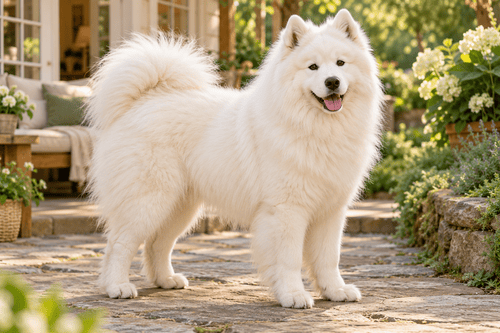
Samoyed
Also known as: Sammy, Samoyedskaya Sobaka, Bjelkier
The smiling sled dog — sociable, vocal and covered in more coat than seems reasonable.
- Friendly
- Cheerful
- Vocal
- Independent
- Sociable
The Samoyed was bred by the Samoyedic peoples of Siberia to herd reindeer, pull sledges and sleep among the family for warmth — which is why, uniquely among spitz breeds, they are relentlessly people-oriented. They are cheerful, talkative and beautiful, and they shed a volume of white undercoat that genuinely changes how a household is run.
At a glance
- Origin
- Siberia, Russia
- Breed group
- Working
- Size
- Large
- Weight
- 35–66 lb (16–30 kg)
- Height
- 18.9–23.6 in (48–60 cm)
- Lifespan
- 12–14 years
- Coat
- Thick weather-resistant double coat with a woolly undercoat
- Colours
- White, Cream, Biscuit, White & Biscuit
- Average cost
- $120–$220 / month
Breed ratings
Rated 1–5 on the same scale as every other entry, so scores are comparable between breeds. Amber stars mark things that cost you effort rather than things that benefit you.
Temperament
Samoyeds are unusually people-oriented for a spitz breed and make poor guard dogs precisely because they like everyone. They are talkative — howling, singing and grumbling are all part of the package — and they do badly when left alone.
Care & upkeep
Exercise
90 minutes to two hours daily. Samoyeds are sled dogs and out-walk most owners. Recall is unreliable and fencing must be tall with a dig-proof base.
Grooming
Brush 3–4 times a week year-round and daily for weeks during each blowout. Use an undercoat rake down to the skin. Never shave the coat.
Training
Cheerful but independent. Short upbeat food-led sessions work; repetition does not. Address vocalisation and digging early, giving a permitted digging area rather than fighting the instinct.
Feeding & diet
- Typical diet
- High-quality active-dog diet
- Daily amount
- 400–650 g of dry food
- Meals per day
- 2 meals a day
Working Samoyeds in cold conditions need far more than suburban pets. The coat hides weight gain, so assess condition by hand monthly rather than by eye.
Foods to avoid
- Chocolate
- Grapes and raisins
- Onion and garlic
- Xylitol
- Large meals around exercise
Who this breed suits
A good match for
- Active owners
- Cool climates
- Families with children
- Homes with secure gardens
Probably not for
- Hot climates
- Apartments
- House-proud households
- Owners away all day
Common health problems
This section describes conditions the breed is known to be predisposed to, so you know what to ask about. It is not veterinary advice and is not a diagnosis — always speak to a vet about your own animal.
- X-linked hereditary nephritisA serious kidney disease specific to the breed. Ask breeders directly about screening and family history.
- Hip dysplasiaScreened by responsible breeders.
- Diabetes mellitusSamoyeds are among the more predisposed breeds. Increased thirst and urination warrants prompt testing.
- Progressive retinal atrophyA hereditary cause of blindness; eye certification of parents matters.
- Subvalvular aortic stenosisA heart defect detectable by murmur on examination.
A Samoyed sheds enough white undercoat twice a year to change how you run a household. Anyone who is not genuinely prepared for that should choose another breed.
Interesting facts
- Traditionally slept among their people for shared warmth, which is why they are unusually people-focused for a spitz.
- The upturned mouth corners that prevent drool freezing give the breed its famous smile.
- Samoyed fur is spun into yarn in some countries and knitted into garments.
Diet & Feeding
Samoyeds need 400–650 g of quality food daily across two meals, adjusted to activity — working dogs in cold conditions need considerably more than a suburban pet. They are efficient converters and can gain weight under the coat without it showing, so assess condition by hand monthly. Omega-3 supports the coat, which is a substantial part of what you are feeding. Rest around exercise and keep water available; the coat drives real fluid needs in warm weather.
Exercise Needs
Plan on 90 minutes to two hours daily. Samoyeds are working sled dogs and will out-walk most owners — they enjoy hiking, canicross, skijoring and long structured outings. Recall is unreliable: the breed retains a strong roaming and prey instinct, so secure fencing at height with a dig-proof base is a requirement, not a precaution. They overheat easily, so shift exercise to the cool parts of the day in summer.
Grooming
This is the defining commitment. The dense double coat needs brushing 3–4 times a week year-round, and daily for several weeks during each of the two annual blowouts, when the woolly undercoat comes away in enormous quantities. Use an undercoat rake and a slicker, working down to the skin. Bathe every 6–8 weeks and dry thoroughly to the skin. Never shave a Samoyed — the coat insulates against heat and regrowth can be permanently ruined.
Health & Vet Care
The breed-specific concern is X-linked hereditary nephritis, a serious kidney disease that reputable breeders screen for. Also present: hip dysplasia, progressive retinal atrophy, diabetes mellitus (Samoyeds are among the more predisposed breeds) and subvalvular aortic stenosis. Ask for hip scores, eye certification and honest discussion of kidney history. Increased thirst and urination in a Samoyed deserves prompt investigation rather than a wait-and-see approach.
Training Tips
Samoyeds are clever, cheerful and quite willing to ignore you — a sled dog was bred to keep going, not to check in. Training works with short, upbeat, food-led sessions; repetition and heavy-handedness both fail. Two things to address early: vocalisation, because Samoyeds talk, howl and sing, and neighbours notice, and digging, which is instinctive. Give a permitted digging area rather than trying to eliminate the behaviour entirely.
Read next
 How to Set Up a Dog-Friendly GardenCheck fences, gates, plants and products before adding water, shade and activities. Includes inspection lists, layout choices and a worked small-garden plan.
 Resource Guarding in Dogs: Signs, Safety and What HelpsRecognise guarding and manage bowls, chews, beds and visitors without provoking the dog. Includes barriers, collection steps and questions for professional help.
 How Lost Pets Actually Get Home — and How to Make Yours Easier to ReturnFollow four reunion routes from finder to owner. Includes contact steps, scanning and service decisions, ownership checks, safe handover and a worked example.