
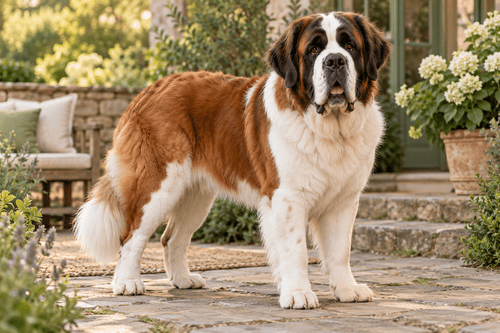
Saint Bernard
Also known as: St Bernard, Bernhardiner, Alpine Mastiff
An Alpine rescue dog the size of a sofa — placid, drooling and deeply devoted.
- Gentle
- Patient
- Calm
- Friendly
- Steady
The Saint Bernard was bred by monks at the Great St Bernard Pass to locate travellers lost in Alpine snow, and the temperament that made them good at it — calm, patient, tolerant — is still the defining feature. They are gentle giants in the fullest sense, wonderful with children and famously placid indoors. What they need is space, a cool house, a large budget and an owner who is genuinely relaxed about drool.
At a glance
- Origin
- Switzerland
- Breed group
- Working
- Size
- Giant
- Weight
- 121–198 lb (55–90 kg)
- Height
- 27.6–35.4 in (70–90 cm)
- Lifespan
- 8–10 years
- Coat
- Short (smooth) or long (rough) dense double coat
- Colours
- Red & White, Brindle & White, Mahogany & White
- Average cost
- $165–$255 / month
Breed ratings
Rated 1–5 on the same scale as every other entry, so scores are comparable between breeds. Amber stars mark things that cost you effort rather than things that benefit you.
Temperament
Saints are famously tolerant and are often excellent with children, though sheer size and drool make supervision sensible. They are placid indoors to the point of near-immobility and become deeply attached to their household.
Care & upkeep
Exercise
45–60 minutes of steady walking daily. Heat is the limiting factor — a dense double coat bred for Alpine snow makes summer walks genuinely risky above about 20°C.
Grooming
Both coat types shed heavily — brush 2–3 times weekly, daily during the blowout. Wipe the muzzle folds daily, and keep towels handy: the drool is not exaggerated.
Training
Slow, deliberate learners that mature late. Lead manners are the priority and must be established while the puppy still weighs less than you do. Patience and repetition work; force does not.
Feeding & diet
- Typical diet
- Giant-breed formula
- Daily amount
- 1,300–2,000 g of dry food
- Meals per day
- 2–3 meals a day
Giant-breed puppy formula until 18–24 months protects a skeleton that will carry 80 kg. Split the daily ration into two or three meals with rest either side of exercise to reduce bloat risk.
Foods to avoid
- Chocolate
- Grapes and raisins
- Onion and garlic
- Xylitol
- Large single meals
Who this breed suits
A good match for
- Homes with space
- Cool climates
- Families with children
- Owners wanting a calm indoor dog
Probably not for
- Small homes
- Hot climates
- Anyone bothered by drool
- Tight budgets
Common health problems
This section describes conditions the breed is known to be predisposed to, so you know what to ask about. It is not veterinary advice and is not a diagnosis — always speak to a vet about your own animal.
- Bloat (GDV)The most urgent risk. Feed multiple smaller meals, rest around exercise and learn the signs.
- Hip and elbow dysplasiaCommon in giant breeds. Controlled growth and lean body condition reduce severity.
- Dilated cardiomyopathySeen in the breed. Annual cardiac checks from middle age are worthwhile.
- OsteosarcomaBone cancer at elevated rates. Persistent limping needs prompt imaging.
- Entropion and ectropionEyelid abnormalities causing irritation, often needing surgical correction.
Check that your veterinary practice is equipped to handle a 90 kg patient — not every clinic has the tables, hoists or anaesthetic setup for a giant breed.
Interesting facts
- Bred at the Great St Bernard Pass hospice to find travellers lost in snow.
- The famous brandy barrel is a Victorian painter invention, not a historical practice.
- The most celebrated individual, Barry, is credited with dozens of rescues in the early 1800s.
Diet & Feeding
An adult eats 1,300–2,000 g of quality food daily across two or three meals, never one. Puppies must be on a giant-breed formula until 18–24 months — controlled calcium and calories are what protect a skeleton that will carry 80 kg. Rest for an hour either side of exercise and learn the signs of bloat, which is the most urgent risk this breed faces. Feed at a height your vet recommends and use a slow feeder if your dog gulps.
Exercise Needs
Modest by giant-breed standards — 45 to 60 minutes of steady walking daily, split into two. Saints are not endurance dogs and are content to sleep for most of the day. Heat is the limiting factor: a dog bred for Alpine snow, wearing a dense double coat, is at genuine risk above about 20°C. Walk early and late in summer, provide shade and cool flooring, and skip walks entirely on hot days rather than shortening them.
Grooming
Both coat types shed heavily and need brushing 2–3 times a week, daily during the twice-yearly blowout. The long-coated variety mats behind the ears and on the trousers. Beyond the coat: the drool is real — keep a towel by the door, wipe the muzzle folds daily to prevent skin irritation, and accept that walls and clothing will occasionally be redecorated. Nails are thick and need trimming every three weeks.
Health & Vet Care
Saints face the giant-breed list in full: bloat (GDV), hip and elbow dysplasia, dilated cardiomyopathy, osteosarcoma and entropion or ectropion of the eyelids. Lifespan averages 8–10 years. Costs scale with mass — medication, anaesthesia and surgery are all more expensive, and not every practice has the equipment to handle a 90 kg patient comfortably. Check that yours does before you need to know.
Training Tips
Saints are gentle and willing but slow, deliberate learners rather than quick ones, and they mature late. The non-negotiable is lead manners, taught while the puppy still weighs less than you: an adult Saint that pulls cannot be held by most people. Socialise thoroughly and early. They are sensitive despite the size and respond poorly to harsh handling — patience and repetition, not force, is what works with this breed.
Read next
 How to Set Up a Dog-Friendly GardenCheck fences, gates, plants and products before adding water, shade and activities. Includes inspection lists, layout choices and a worked small-garden plan.
 Resource Guarding in Dogs: Signs, Safety and What HelpsRecognise guarding and manage bowls, chews, beds and visitors without provoking the dog. Includes barriers, collection steps and questions for professional help.
 How Lost Pets Actually Get Home — and How to Make Yours Easier to ReturnFollow four reunion routes from finder to owner. Includes contact steps, scanning and service decisions, ownership checks, safe handover and a worked example.