
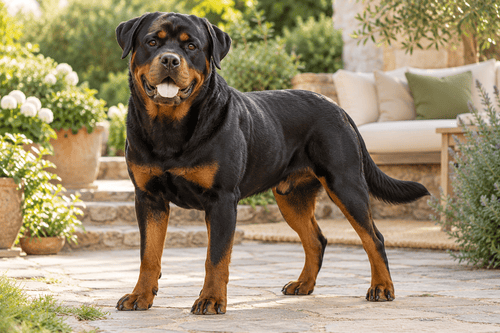
Rottweiler
Also known as: Rottie, Rottweil Metzgerhund
Powerful, steady and deeply loyal — a guardian that needs a job and a leader.
- Confident
- Loyal
- Calm
- Protective
- Territorial
The Rottweiler is a confident, physically imposing working breed descended from Roman drover dogs. Properly raised, a Rottweiler is calm, self-assured and profoundly devoted to its family — but the combination of size, strength and natural guarding instinct means training and socialisation are not optional extras. This is a breed that rewards experienced, committed owners and overwhelms unprepared ones.
At a glance
- Origin
- Germany
- Breed group
- Working
- Size
- Large
- Weight
- 77–132 lb (35–60 kg)
- Height
- 22–27.2 in (56–69 cm)
- Lifespan
- 8–10 years
- Coat
- Short, dense, coarse double coat
- Colours
- Black & Tan, Black & Mahogany, Black & Rust
- Average cost
- $110–$135 / month
Breed ratings
Rated 1–5 on the same scale as every other entry, so scores are comparable between breeds. Amber stars mark things that cost you effort rather than things that benefit you.
Temperament
A well-bred Rottweiler is calm and aloof rather than aggressive — watchful with strangers, affectionate with family. Nervousness or reactivity in the breed almost always traces back to poor breeding or missed socialisation, not to the breed itself.
Care & upkeep
Exercise
Two hours a day of real work, not just walking. Rottweilers were bred to pull carts and drive cattle, and they settle best when given a task — weight pull, tracking, obedience or long structured hikes.
Grooming
Brush weekly with a rubber curry; twice weekly in spring and autumn when the undercoat drops. Bathe every 6–8 weeks. Nails are thick and grow fast — trim every 3 weeks.
Training
Start before 12 weeks and never stop. Rottweilers test boundaries through adolescence (roughly 8–18 months) and need calm, consistent handling rather than confrontation. Harsh corrections on a dog this powerful create the exact problem you are trying to prevent.
Feeding & diet
- Typical diet
- High-protein large-breed diet
- Daily amount
- 900–1,400 g of dry food, by activity level
- Meals per day
- 2 meals a day
Feed a large-breed formula through the first 18 months to slow growth and protect developing joints. Split the daily amount across two meals and avoid vigorous exercise within an hour either side — deep-chested breeds carry a real bloat (GDV) risk.
Foods to avoid
- Chocolate
- Grapes and raisins
- Onion and garlic
- Xylitol
- Cooked bones
Who this breed suits
A good match for
- Experienced owners
- Homes with secure fencing
- People who want a working partner
- Active households
Probably not for
- First-time dog owners
- Apartments without serious exercise commitment
- Households away from home all day
Common health problems
This section describes conditions the breed is known to be predisposed to, so you know what to ask about. It is not veterinary advice and is not a diagnosis — always speak to a vet about your own animal.
- Hip and elbow dysplasiaCommon in the breed. Buy only from breeders who hip and elbow score their stock.
- OsteosarcomaBone cancer occurs at a higher rate than in most breeds. Persistent limping in a middle-aged Rottweiler warrants prompt imaging.
- Subaortic stenosisA heart defect detectable by murmur — ask about cardiac clearance in breeding stock.
- Bloat (GDV)A surgical emergency. Learn the signs: unproductive retching, a hard distended abdomen, restlessness.
Rottweilers have high pain tolerance and hide discomfort well. Subtle changes — reluctance on stairs, slowing on walks — deserve a vet visit rather than a wait-and-see.
Interesting facts
- Descended from Roman cattle dogs left behind in southern Germany.
- Named after the town of Rottweil, where butchers used them to pull meat carts.
- Among the first breeds used as police and guide dogs.
Diet & Feeding
Rottweilers grow fast and heavy, and how they are fed in the first 18 months shapes their joints for life. Use a large-breed puppy formula — the lower calcium and calorie density deliberately slows growth. Adults typically need 900–1,400 g of quality dry food daily, split into two meals. Never free-feed: this breed gains weight easily and every excess kilo loads already vulnerable hips and elbows. Leave an hour either side of meals before hard exercise to reduce bloat risk.
Exercise Needs
Plan for two hours daily, and make some of it purposeful. Rottweilers were bred to drive cattle and haul carts, and a Rottie with nothing to do becomes a Rottie who invents something — usually involving your furniture. Structured hikes, weight pull, tracking, obedience and scent work all suit them. Keep impact low until the growth plates close at around 18 months: no long runs on hard surfaces, no repetitive jumping.
Grooming
The short double coat is deceptively low-effort — Rottweilers shed more than people expect. A weekly going-over with a rubber curry brush removes most of it; step up to twice weekly during the spring and autumn coat drop. Bathe every 6–8 weeks. Check ears weekly and trim the thick, fast-growing nails every three weeks — overgrown nails change how a heavy dog stands and loads its joints.
Health & Vet Care
The breed's main concerns are hip and elbow dysplasia, osteosarcoma (bone cancer, at a notably higher rate than most breeds), subaortic stenosis and bloat (GDV). Buy only from breeders who hip/elbow score and provide cardiac clearances. Keep your Rottweiler lean — it is the single most effective thing an owner controls. Learn the signs of bloat, because it is a surgical emergency measured in hours, not days.
Training Tips
Rottweilers are highly trainable and want to work with you — but they are also strong-willed, and adolescence (roughly 8–18 months) brings genuine boundary testing. Start socialisation before 12 weeks and keep it going for life: strangers, children, traffic, other dogs, handling by vets. Use calm, consistent, reward-based methods. Confrontational handling of a 50 kg dog with guarding instincts is how serious problems are made, not solved.
Read next
 How to Set Up a Dog-Friendly GardenCheck fences, gates, plants and products before adding water, shade and activities. Includes inspection lists, layout choices and a worked small-garden plan.
 Resource Guarding in Dogs: Signs, Safety and What HelpsRecognise guarding and manage bowls, chews, beds and visitors without provoking the dog. Includes barriers, collection steps and questions for professional help.
 How Lost Pets Actually Get Home — and How to Make Yours Easier to ReturnFollow four reunion routes from finder to owner. Includes contact steps, scanning and service decisions, ownership checks, safe handover and a worked example.