
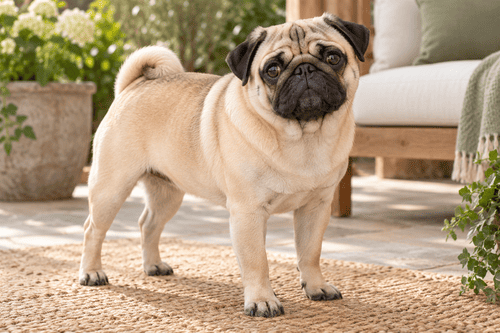
Pug
Also known as: Mops, Carlin, Chinese Pug
Comic, affectionate and utterly people-focused — with a face that demands honest care.
- Charming
- Mischievous
- Affectionate
- Stubborn
- Sociable
The Pug is an ancient Chinese companion breed, bred for centuries purely to sit with people and entertain them. They are funny, loyal, low-energy and among the most consistently friendly dogs alive. They are also brachycephalic, which shapes everything about responsible ownership: heat management, weight control, exercise limits and, above all, choosing a breeder who values open nostrils over an extreme face.
At a glance
- Origin
- China
- Breed group
- Toy
- Size
- Small
- Weight
- 14–18 lb (6.3–8.1 kg)
- Height
- 9.8–13 in (25–33 cm)
- Lifespan
- 12–15 years
- Coat
- Short, smooth, glossy double coat
- Colours
- Fawn, Black, Apricot, Silver
- Average cost
- $70–$110 / month
Breed ratings
Rated 1–5 on the same scale as every other entry, so scores are comparable between breeds. Amber stars mark things that cost you effort rather than things that benefit you.
Temperament
Pugs were bred for companionship and behave accordingly — they want to be in the room, on the sofa and involved in everything. They are excellent with children and other pets, and they cope poorly with being left alone.
Care & upkeep
Exercise
Two 20-minute walks in the cool parts of the day. Pugs overheat within minutes in warm weather and cannot pant effectively. They are also poor swimmers.
Grooming
Short but heavy-shedding coat — a weekly rubber mitt. The facial folds must be wiped daily and dried thoroughly, and the tail pocket needs the same attention.
Training
Clever but not biddable — Pugs were never bred to take direction. Short, cheerful, food-based sessions work. House-training is often slow and needs a strict routine.
Feeding & diet
- Typical diet
- Measured small-breed diet
- Daily amount
- 130–200 g of dry food
- Meals per day
- 2 meals a day
Weight control in a Pug is airway management. Use a shallow wide bowl, weigh portions, count treats and consider a slow feeder — Pugs gulp and swallow air, which is uncomfortable in a compromised airway.
Foods to avoid
- Chocolate
- Grapes and raisins
- Xylitol
- Onion and garlic
- Fatty scraps
Who this breed suits
A good match for
- Apartments
- Families with children
- Older owners
- People home much of the day
Probably not for
- Hot climates
- Owners wanting a jogging companion
- Households unwilling to manage daily face care
- Air travel
Common health problems
This section describes conditions the breed is known to be predisposed to, so you know what to ask about. It is not veterinary advice and is not a diagnosis — always speak to a vet about your own animal.
- Brachycephalic obstructive airway syndromeNoisy breathing at rest is not normal. Surgical widening of the nostrils and soft palate helps many dogs substantially.
- Eye ulcers and proptosisProminent eyes are vulnerable to injury. Squinting or pawing at an eye is a same-day emergency.
- HemivertebraeMalformed vertebrae associated with the screw tail, occasionally causing neurological signs.
- Pug dog encephalitisA breed-specific inflammatory brain disease. Rare but serious and usually fatal.
- Skin fold dermatitisTrapped moisture in the facial folds causes painful infection. Daily cleaning prevents most cases.
Conformation determines quality of life in this breed. Choose breeders who produce Pugs with a visible muzzle and open nostrils, and treat noisy breathing as a veterinary issue rather than a breed trait.
Interesting facts
- Kept by Chinese emperors for centuries and later adopted by the Dutch royal family.
- A group of Pugs is called a grumble.
- The wrinkles on the forehead were traditionally prized for resembling Chinese characters.
Diet & Feeding
Pugs need only 130–200 g of quality small-breed food daily, split into two meals, and they will convincingly argue for more. Weight control is medical care in this breed, not vanity: excess weight directly worsens breathing in a dog whose airway is already compromised. Use a shallow, wide bowl for a flat face, weigh portions rather than scooping, and count every treat. A slow feeder helps, since Pugs gulp and swallow air.
Exercise Needs
Two short walks of 20 minutes is right for most Pugs, taken in the cool parts of the day. They cannot cool themselves efficiently — panting is far less effective through a shortened airway — and heatstroke can develop within minutes on a warm day. Never exercise a Pug in the midday sun, never leave one in a car and stop at the first sign of laboured breathing. They are also poor swimmers; the head is heavy and the body is not built for it.
Grooming
The coat is short but Pugs shed heavily year-round — considerably more than owners expect from such a small dog. A weekly rubber mitt keeps it under control. The task that must not be skipped is the facial folds: wipe them daily with a damp pad and dry thoroughly, because trapped moisture causes painful skin fold dermatitis. Check the tail curl pocket too, keep nails short and clean the ears weekly.
Health & Vet Care
Brachycephalic obstructive airway syndrome is the defining issue — snorting, snoring and noisy breathing at rest are signs of restricted airflow, not breed charm, and surgery to widen nostrils or shorten the soft palate transforms some dogs. Also present: eye ulcers and proptosis (prominent eyes are vulnerable and any squinting is a same-day emergency), hemivertebrae, pug dog encephalitis and skin fold infections. Choose breeders producing dogs with visible muzzles and open nostrils.
Training Tips
Pugs are clever but stubborn, and they were never bred to take direction — they were bred to be companions. Keep sessions short, food-based and cheerful; repetition bores them and harsh handling upsets them. House-training is often slow and needs a strict schedule. The most valuable thing you can teach is calm tolerance of handling, because a Pug will need its face, folds, eyes and ears examined regularly for its entire life.
Read next
 How to Set Up a Dog-Friendly GardenCheck fences, gates, plants and products before adding water, shade and activities. Includes inspection lists, layout choices and a worked small-garden plan.
 Resource Guarding in Dogs: Signs, Safety and What HelpsRecognise guarding and manage bowls, chews, beds and visitors without provoking the dog. Includes barriers, collection steps and questions for professional help.
 How Lost Pets Actually Get Home — and How to Make Yours Easier to ReturnFollow four reunion routes from finder to owner. Includes contact steps, scanning and service decisions, ownership checks, safe handover and a worked example.