
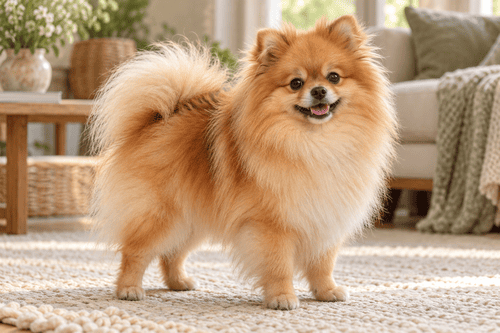
Pomeranian
Also known as: Pom, Zwergspitz, Dwarf Spitz
A spitz in miniature — enormous coat, enormous voice, enormous self-belief.
- Bold
- Alert
- Lively
- Vocal
- Confident
The Pomeranian is the smallest of the spitz breeds, bred down from large German sled dogs into a toy companion largely at the urging of Queen Victoria. Behind the fluff is a genuine spitz temperament: alert, bold, opinionated and extremely vocal. They are excellent apartment dogs for owners who take the training and grooming seriously, and a nuisance for those who do not.
At a glance
- Origin
- Germany / Poland
- Breed group
- Toy
- Size
- Toy
- Weight
- 4–8 lb (1.9–3.5 kg)
- Height
- 7.1–11 in (18–28 cm)
- Lifespan
- 12–16 years
- Coat
- Dense double coat with a profuse standoff outer coat
- Colours
- Orange, Cream, Black, Sable, Blue, Chocolate, Parti
- Average cost
- $105–$185 / month
Breed ratings
Rated 1–5 on the same scale as every other entry, so scores are comparable between breeds. Amber stars mark things that cost you effort rather than things that benefit you.
Temperament
Poms have a full spitz temperament in a two-kilogram body — alert, opinionated and entirely willing to challenge a Rottweiler. They bond closely with their people and can become possessive without socialisation.
Care & upkeep
Exercise
Two 20-minute walks plus indoor play. Use a harness, not a collar, and avoid the heat — a dense double coat on a tiny dog overheats quickly.
Grooming
Brush 3–4 times weekly down to the skin — the standoff coat mats invisibly underneath. Never shave: post-clipping alopecia can leave the coat permanently patchy.
Training
Bright and quick to learn, including bad habits. Barking is the priority: teach a quiet cue early, avoid rewarding demand barking, and socialise thoroughly with larger dogs and strangers.
Feeding & diet
- Typical diet
- Calorie-dense toy-breed diet
- Daily amount
- 50–110 g of dry food
- Meals per day
- 3 small meals a day
Toy breeds carry very small energy reserves and puppies can crash if a meal is missed. Feed three small meals rather than two, and account for treats — a single biscuit is a large share of a 2.5 kg dog daily intake.
Foods to avoid
- Chocolate
- Grapes and raisins
- Xylitol
- Onion and garlic
- Bones that splinter
Who this breed suits
A good match for
- Apartments
- Adults and older children
- Owners home much of the day
- People wanting a long-lived companion
Probably not for
- Homes with toddlers
- Noise-sensitive neighbours
- Owners unwilling to groom
- Households wanting a quiet dog
Common health problems
This section describes conditions the breed is known to be predisposed to, so you know what to ask about. It is not veterinary advice and is not a diagnosis — always speak to a vet about your own animal.
- Patellar luxationSlipping kneecaps are common. A skipping gait on one hind leg is the classic sign.
- Tracheal collapseA honking cough aggravated by collar pressure. Always walk on a harness.
- Dental diseaseCrowded teeth in a tiny jaw. Home brushing meaningfully changes the outcome.
- Alopecia XA coat-loss condition seen particularly in this breed. Never shave a Pomeranian.
- HypoglycaemiaLow blood sugar in puppies. Wobbliness or collapse is an emergency.
Physically fragile despite the confidence. Falls from sofas and out of arms account for a large share of Pomeranian injuries, and a dropped toy dog is a serious event.
Interesting facts
- Bred down from large German spitz sled dogs — Queen Victoria popularised the smaller size.
- Two Pomeranians survived the sinking of the Titanic.
- The coat stands away from the body rather than lying flat, which is what creates the ball-of-fluff silhouette.
Diet & Feeding
Poms eat very little — around 50–110 g of quality toy-breed food daily — but frequency matters more than volume. Toy breeds have minimal energy reserves and puppies can develop hypoglycaemia if meals are skipped, so three small meals suits them better than two. Use small kibble their jaws can manage. Because a single biscuit can represent a meaningful share of daily calories in a 2.5 kg dog, treats need genuine accounting.
Exercise Needs
Two walks of 20 minutes plus indoor play covers a Pom comfortably, and they are perfectly happy with more. Always walk on a harness rather than a collar — the breed is prone to tracheal collapse and throat pressure aggravates it. Watch the heat: a dense double coat on a tiny dog overheats quickly. They enjoy trick training and mini agility, and mental work reduces the barking more effectively than extra walking does.
Grooming
The standoff double coat needs brushing 3–4 times a week down to the skin, or it mats invisibly under the fluff. Bathe every 3–4 weeks and dry thoroughly to the roots. Never shave a Pomeranian: post-clipping alopecia, sometimes called black skin disease, can leave the coat permanently patchy. Trim around the feet and sanitary areas only. Dental care is essential — brush several times a week, because tooth loss is common in the breed.
Health & Vet Care
The main issues are patellar luxation, tracheal collapse, dental disease, hypoglycaemia in puppies and alopecia X, a coat-loss condition seen particularly in the breed. Poms are also physically fragile — falls from sofas and arms account for a large share of injuries. On the positive side, this is a long-lived breed that regularly reaches 15 or 16 with good dental and weight management.
Training Tips
Pomeranians are bright and learn quickly, which is exactly why the barking becomes established so fast. Address vocalisation from day one: teach a quiet cue, avoid rewarding demand barking with attention and manage window access to triggers. Socialise seriously with larger dogs and strangers, because an under-socialised Pom is a snappy one. Treat them as real dogs — the behaviours people tolerate because a dog is small are the behaviours that make it difficult to live with.
Read next
 How to Set Up a Dog-Friendly GardenCheck fences, gates, plants and products before adding water, shade and activities. Includes inspection lists, layout choices and a worked small-garden plan.
 Resource Guarding in Dogs: Signs, Safety and What HelpsRecognise guarding and manage bowls, chews, beds and visitors without provoking the dog. Includes barriers, collection steps and questions for professional help.
 How Lost Pets Actually Get Home — and How to Make Yours Easier to ReturnFollow four reunion routes from finder to owner. Includes contact steps, scanning and service decisions, ownership checks, safe handover and a worked example.