
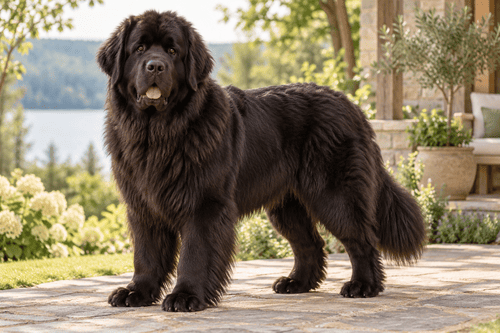
Newfoundland
Also known as: Newfie, Newf
A swimming giant with a famously sweet nature — and a great deal of hair and drool.
- Gentle
- Patient
- Sweet-natured
- Calm
- Devoted
The Newfoundland was bred by fishermen on Canada's Atlantic coast to haul nets, pull carts and rescue people from the water, and the webbed feet, oily water-resistant coat and enormous lung capacity all reflect that work. They are among the gentlest of the giant breeds, superb with children, and demanding in every practical sense: grooming, feeding, space, heat management and veterinary cost.
At a glance
- Origin
- Newfoundland, Canada
- Breed group
- Working
- Size
- Giant
- Weight
- 99–154 lb (45–70 kg)
- Height
- 26–29.1 in (66–74 cm)
- Lifespan
- 8–10 years
- Coat
- Thick, oily, water-resistant double coat
- Colours
- Black, Brown, Grey, Landseer (black and white)
- Average cost
- $155–$255 / month
Breed ratings
Rated 1–5 on the same scale as every other entry, so scores are comparable between breeds. Amber stars mark things that cost you effort rather than things that benefit you.
Temperament
Newfoundlands are famous for a temperament the breed standard actually specifies as sweetness. They are exceptional with children, calm with strangers and rarely reactive. They are also deeply attached and dislike being left alone.
Care & upkeep
Exercise
45–60 minutes of steady walking plus swimming wherever possible — low-impact, whole-body and instinctive for the breed. Avoid heat entirely in summer.
Grooming
Brush 3–4 times weekly minimum and daily during the blowout, down to the skin. Mats behind the ears and on the trousers need professional attention once formed. Never shave.
Training
Biddable and eager to please, but sensitive and slow to mature. Lead manners must be solid while the puppy is still liftable. Water rescue and draft work are excellent outlets for a working brain.
Feeding & diet
- Typical diet
- Giant-breed formula
- Daily amount
- 1,100–1,700 g of dry food
- Meals per day
- 2–3 meals a day
Giant-breed formula with controlled calcium until 18–24 months. Rapid growth in a heavy-boned puppy is the origin of much later joint disease, and keeping the adult lean matters for the same reason.
Foods to avoid
- Chocolate
- Grapes and raisins
- Onion and garlic
- Xylitol
- Large single meals
Who this breed suits
A good match for
- Families with children
- Cool climates
- Homes with space and water access
- Owners wanting a calm giant
Probably not for
- Hot climates
- Small homes
- House-proud households
- Tight budgets
Common health problems
This section describes conditions the breed is known to be predisposed to, so you know what to ask about. It is not veterinary advice and is not a diagnosis — always speak to a vet about your own animal.
- Subvalvular aortic stenosisA heart defect the breed is notably predisposed to. Ask breeders for cardiac clearance.
- Hip and elbow dysplasiaCommon in giant breeds. Controlled growth and lean condition reduce severity.
- CystinuriaA DNA-testable condition causing bladder stones. Ask for parental test results.
- Bloat (GDV)A surgical emergency. Feed multiple meals and rest around exercise.
- Cruciate ligament ruptureFrequent in heavy breeds and often requiring surgery.
Between the coat and the drool, this breed changes how a house is kept. Anyone not genuinely relaxed about both should look at a different giant breed.
Interesting facts
- Webbed feet and a water-resistant coat make them exceptional swimmers — they are still used in water rescue.
- A Newfoundland is credited with saving Napoleon from drowning during his escape from Elba.
- The Landseer colour is named after the painter Edwin Landseer, who frequently depicted the breed.
Diet & Feeding
An adult eats 1,100–1,700 g of quality food daily across two or three meals. Puppies must be on a giant-breed formula with controlled calcium until 18–24 months — this breed grows fast and heavy, and rapid growth is the origin of a great deal of later joint disease. Rest for an hour either side of exercise given real bloat risk, and keep the dog lean throughout life. Water intake is high; a large, stable bowl in a wipeable area is sensible.
Exercise Needs
Modest — 45 to 60 minutes of steady daily walking, plus swimming wherever possible, which is the ideal exercise for the breed: low-impact, uses the whole body and taps a genuine instinct. Newfoundlands overheat badly, so summer walks belong at dawn and dusk. Restraint during growth is essential: no jogging, no repetitive stairs and no jumping until the skeleton has finished, which takes around two years in a dog this size.
Grooming
This is the heaviest grooming commitment of any breed on this list. The thick double coat needs brushing 3–4 times a week minimum, daily during the twice-yearly blowout, working right down to the skin — mats form behind the ears, on the trousers and around the ruff, and a matted Newfoundland coat needs professional stripping. Add the drool, which is substantial and constant. Never shave the coat: it insulates and protects the skin from sun.
Health & Vet Care
Giant-breed issues in full: hip and elbow dysplasia, subvalvular aortic stenosis (a heart defect the breed is notably predisposed to — ask for cardiac clearance), bloat (GDV), cystinuria (a DNA-testable stone-forming condition) and cruciate ligament rupture. Lifespan averages 8–10 years. Everything scales with weight: drug doses, anaesthesia, surgery and insurance. Confirm your practice is set up for a 65 kg patient.
Training Tips
Newfoundlands are gentle, biddable and want to please, which makes them easier to train than most giants — but they are sensitive and slow to mature, and harsh handling produces withdrawal rather than compliance. Lead manners are the priority and must be established while the puppy is still liftable. Water rescue and draft work are excellent outlets. Socialise widely so that natural friendliness is paired with the manners a dog this size needs in public.
Read next
 How to Set Up a Dog-Friendly GardenCheck fences, gates, plants and products before adding water, shade and activities. Includes inspection lists, layout choices and a worked small-garden plan.
 Resource Guarding in Dogs: Signs, Safety and What HelpsRecognise guarding and manage bowls, chews, beds and visitors without provoking the dog. Includes barriers, collection steps and questions for professional help.
 How Lost Pets Actually Get Home — and How to Make Yours Easier to ReturnFollow four reunion routes from finder to owner. Includes contact steps, scanning and service decisions, ownership checks, safe handover and a worked example.