
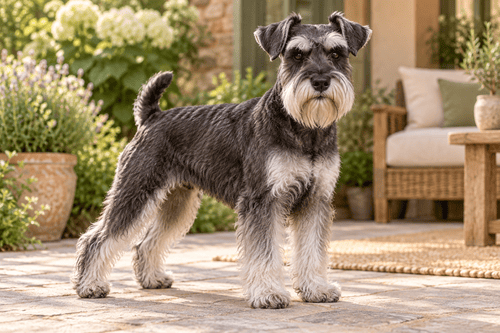
Miniature Schnauzer
Also known as: Zwergschnauzer, Mini Schnauzer
Bearded, bold and endlessly busy — a proper terrier temperament in a manageable package.
- Bold
- Alert
- Clever
- Vocal
- Spirited
The Miniature Schnauzer was developed in Germany by crossing Standard Schnauzers with smaller breeds to produce a compact farm ratter. The result is a robust, clever, confident little dog with a distinctive beard and eyebrows, a strong voice and a genuine working drive. They are among the most practical small dogs to live with — hardy, low-shedding and adaptable — provided the barking is addressed early.
At a glance
- Origin
- Germany
- Breed group
- Terrier
- Size
- Small
- Weight
- 11–20 lb (5–9 kg)
- Height
- 11.8–14.2 in (30–36 cm)
- Lifespan
- 12–15 years
- Coat
- Wiry double coat with a soft undercoat
- Colours
- Salt & Pepper, Black & Silver, Solid Black, White
- Average cost
- $105–$195 / month
Breed ratings
Rated 1–5 on the same scale as every other entry, so scores are comparable between breeds. Amber stars mark things that cost you effort rather than things that benefit you.
Temperament
Schnauzers are confident well beyond their size and will challenge much larger dogs. They are affectionate with family, watchful with strangers and famously vocal — the barking is the trait most often underestimated by new owners.
Care & upkeep
Exercise
An hour a day with some secure off-lead time. Prey drive is strong and will override recall, so fencing matters more than training in open areas.
Grooming
Brush 2–3 times weekly plus a professional groom every 6–8 weeks. The beard collects food and water and needs cleaning daily or it will smell.
Training
Quick learners who will negotiate. Reward-based methods work well. Address barking deliberately from puppyhood with a quiet cue and management of window triggers, because it does not improve on its own.
Feeding & diet
- Typical diet
- Low-fat small-breed diet
- Daily amount
- 150–250 g of dry food
- Meals per day
- 2 meals a day
A low-fat diet is protective in a breed predisposed to hyperlipidaemia and pancreatitis. Fatty table scraps are not a minor indulgence here — they are a genuine trigger.
Foods to avoid
- Fatty foods and table scraps
- Chocolate
- Grapes and raisins
- Onion and garlic
- Xylitol
Who this breed suits
A good match for
- Apartments
- Allergy-sensitive households
- Active families
- First-time owners willing to train
Probably not for
- Owners wanting a quiet dog
- Homes with small pets running loose
- People unwilling to budget for grooming
Common health problems
This section describes conditions the breed is known to be predisposed to, so you know what to ask about. It is not veterinary advice and is not a diagnosis — always speak to a vet about your own animal.
- PancreatitisThe breed is predisposed. A low-fat diet is genuinely protective and fatty scraps are a real risk.
- HyperlipidaemiaElevated blood fats, common in the breed and linked to pancreatitis risk.
- Bladder stonesSeen more often than in most breeds. Encourage water intake and discuss diet if there is a history.
- Progressive retinal atrophyA hereditary cause of blindness with a DNA test available.
- Myotonia congenitaAn inherited muscle condition; reputable breeders DNA test.
Long-lived for their size, frequently reaching 14 or 15. Consistent dental care across that span makes a substantial difference to the quality of the senior years.
Interesting facts
- Bred down from the Standard Schnauzer to work as a farm ratter.
- The name comes from Schnauze, the German word for muzzle, referring to the distinctive beard.
- The wiry coat sheds very little, which is why the breed is popular with allergy-sensitive owners.
Diet & Feeding
Feed 150–250 g of quality small-breed food daily across two meals. One breed-specific point matters more than the quantity: Miniature Schnauzers are predisposed to hyperlipidaemia and pancreatitis, so a low-fat diet is genuinely protective and fatty table scraps are a real risk rather than a minor indulgence. Some also form bladder stones, so encourage water intake and discuss diet with your vet if your dog has a history.
Exercise Needs
About an hour daily, split into two walks with some off-lead time in a secure area. Schnauzers are terriers with genuine stamina and a strong prey drive — a squirrel will override recall in an instant, so secure fencing matters. They enjoy earthdog trials, agility and scent work, and a Schnauzer given a job is markedly easier to live with than one left to invent its own, which usually involves barking at the window.
Grooming
The wiry coat needs brushing 2–3 times a week plus a professional groom every 6–8 weeks. Show dogs are hand-stripped, which preserves the harsh coat texture; most pet owners have theirs clipped, which softens the coat over time but is entirely practical. The beard needs daily attention — it collects food and water and will smell if neglected. Trim the hair around the eyes, keep ears clean and clip nails every three weeks.
Health & Vet Care
The breed-defining risks are pancreatitis and hyperlipidaemia, both diet-influenced and both manageable with low-fat feeding. Also present: bladder stones, progressive retinal atrophy (DNA-testable), myotonia congenita and Cushing's disease. Ask breeders for eye and DNA certification. Because they are long-lived, budget for the senior years — most Schnauzers reach 14 or 15 and dental care over that span makes a real difference.
Training Tips
Schnauzers are quick, confident and slightly opinionated — they learn fast but will negotiate. Reward-based training works well; nagging does not. The single most important thing to address early is barking: this breed is genuinely vocal, was bred to alert, and will happily appoint itself household announcer. Teach a quiet cue from puppyhood, manage window access to triggers and reward silence. Socialise with larger dogs too, since Schnauzer confidence outstrips Schnauzer size.
Read next
 How to Set Up a Dog-Friendly GardenCheck fences, gates, plants and products before adding water, shade and activities. Includes inspection lists, layout choices and a worked small-garden plan.
 Resource Guarding in Dogs: Signs, Safety and What HelpsRecognise guarding and manage bowls, chews, beds and visitors without provoking the dog. Includes barriers, collection steps and questions for professional help.
 How Lost Pets Actually Get Home — and How to Make Yours Easier to ReturnFollow four reunion routes from finder to owner. Includes contact steps, scanning and service decisions, ownership checks, safe handover and a worked example.