
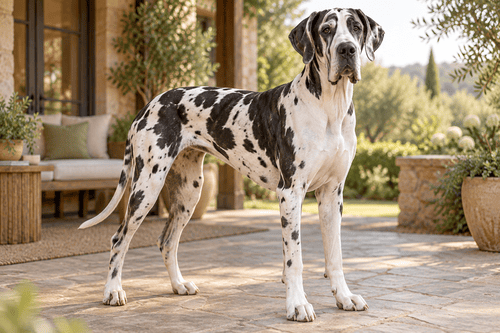
Great Dane
Also known as: German Mastiff, Deutsche Dogge, Apollo of Dogs
An enormous dog with a gentle temperament and a heartbreakingly short life.
- Gentle
- Affectionate
- Calm
- Patient
- Devoted
The Great Dane is one of the tallest dog breeds in the world, originally bred in Germany to hunt wild boar and later refined into an estate guardian and companion. Modern Danes are calm, affectionate and famously convinced they are lapdogs. They need less exercise than their size suggests but far more of everything else — food, space, veterinary budget — and their lifespan is among the shortest of any breed.
At a glance
- Origin
- Germany
- Breed group
- Working
- Size
- Giant
- Weight
- 99–198 lb (45–90 kg)
- Height
- 28–35.4 in (71–90 cm)
- Lifespan
- 7–10 years
- Coat
- Short, smooth, dense
- Colours
- Fawn, Brindle, Blue, Black, Harlequin, Mantle, Merle
- Average cost
- $120–$140 / month
Breed ratings
Rated 1–5 on the same scale as every other entry, so scores are comparable between breeds. Amber stars mark things that cost you effort rather than things that benefit you.
Temperament
Danes are famously gentle and are usually excellent with children, though sheer size makes supervision sensible with toddlers. They are deeply attached to their people and lean bodily against them as a form of affection — a habit that needs managing rather than encouraging at 70 kg.
Care & upkeep
Exercise
An hour a day of calm walking is enough for an adult. Restraint during growth matters far more than distance — no jogging or repetitive jumping until 18–24 months.
Grooming
Weekly rubber-mitt grooming is all the coat needs. The real jobs are thick nails and preventing elbow calluses with proper orthopaedic bedding.
Training
Sensitive and willing but they outgrow you within months, so lead manners and an off cue must be solid early. Harsh handling backfires badly with this breed.
Feeding & diet
- Typical diet
- Giant-breed formula
- Daily amount
- 1,200–1,800 g of dry food
- Meals per day
- 2–3 meals a day
Giant-breed puppy food with controlled calcium is essential until around 18 months — overfeeding a growing Dane causes lasting joint damage. Split the daily ration across two or three meals and rest for an hour either side to reduce bloat risk.
Foods to avoid
- Chocolate
- Grapes and raisins
- Onion and garlic
- Xylitol
- Large meals immediately before or after exercise
Who this breed suits
A good match for
- Owners with space
- Calm households
- People wanting a gentle giant
- Experienced large-breed owners
Probably not for
- Small homes
- Tight budgets
- Owners wanting a long-lived dog
- Households needing a jogging partner
Common health problems
This section describes conditions the breed is known to be predisposed to, so you know what to ask about. It is not veterinary advice and is not a diagnosis — always speak to a vet about your own animal.
- Bloat (GDV)The most urgent risk in the breed. Many owners elect a preventive gastropexy at neutering — discuss it with your vet.
- Dilated cardiomyopathyA common cause of death in Danes. Annual cardiac checks from middle age are worthwhile.
- Wobbler syndromeA cervical spine condition causing an unsteady, wobbling gait, particularly in the hindquarters.
- Hip and elbow dysplasiaScreened by responsible breeders. Controlled growth in puppyhood reduces severity.
- OsteosarcomaBone cancer occurs at elevated rates in giant breeds. Persistent limping warrants prompt imaging.
Everything costs more with a giant breed — food, medication doses, anaesthesia, insurance. Budget honestly before committing, and expect a shorter life than most dogs give you.
Interesting facts
- The tallest dog ever recorded was a Great Dane named Zeus, measuring 111 cm at the shoulder.
- Despite the name, the breed was developed in Germany, not Denmark.
- Scooby-Doo is a Great Dane, which is the reason many people recognise the silhouette.
Diet & Feeding
An adult Dane eats 1,200–1,800 g of quality food daily, split across two or three meals — never one large one. Puppies must be on a giant-breed formula with controlled calcium and calories until around 18 months: overfeeding a growing Dane produces rapid growth and lasting joint damage, and this is the most common expensive mistake owners make. Use a raised feeder if your vet advises it, rest for an hour either side of meals, and learn the signs of bloat before you need them.
Exercise Needs
Less than people expect — 60 minutes daily for an adult, split into two calm walks. Danes are sprinters rather than endurance dogs and are content to sleep for most of the day. What matters far more is restraint during growth: no jogging, no repetitive jumping and no stairs where avoidable until the growth plates close at 18–24 months. Adults should stay off hard surfaces for long distances, because 70 kg of dog on concrete accumulates joint wear quickly.
Grooming
Genuinely simple — a weekly going-over with a rubber mitt removes the loose hair, and Danes shed moderately year-round rather than in dramatic seasonal blowouts. Bathing is an event rather than a routine; every 6–8 weeks is plenty and a walk-in shower is easier than a bath. The tasks that matter are nails, which are thick and grow fast, and elbow and hock calluses, which develop from lying on hard floors — thick orthopaedic bedding prevents them.
Health & Vet Care
Danes carry a heavy burden. Bloat (GDV) is the most urgent — a deep-chested giant breed is at high risk, and many owners elect a prophylactic gastropexy at neutering, which is worth discussing with your vet. Also common: dilated cardiomyopathy, hip and elbow dysplasia, wobbler syndrome and osteosarcoma. Budget realistically: drug doses, anaesthesia and surgery all scale with weight, and insurance premiums for giant breeds reflect that.
Training Tips
Train early, because a poorly mannered Dane is unmanageable through sheer mass rather than temperament. Lead manners and a reliable off cue should be solid before the dog reaches 30 kg, which happens fast. They are sensitive and shut down under harsh handling — reward-based methods work far better. Socialise thoroughly: a nervous giant dog is a genuine problem, while a confident one is one of the easiest large breeds to take anywhere.
Read next
 How to Set Up a Dog-Friendly GardenCheck fences, gates, plants and products before adding water, shade and activities. Includes inspection lists, layout choices and a worked small-garden plan.
 Resource Guarding in Dogs: Signs, Safety and What HelpsRecognise guarding and manage bowls, chews, beds and visitors without provoking the dog. Includes barriers, collection steps and questions for professional help.
 How Lost Pets Actually Get Home — and How to Make Yours Easier to ReturnFollow four reunion routes from finder to owner. Includes contact steps, scanning and service decisions, ownership checks, safe handover and a worked example.