
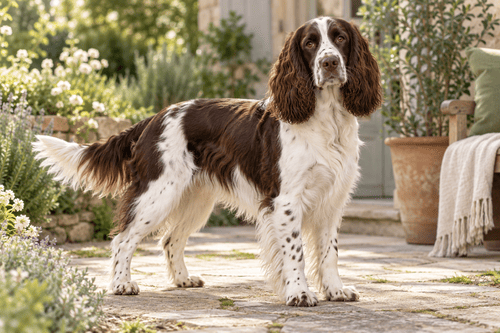
English Springer Spaniel
Also known as: Springer, English Springer
A tireless working gundog with a wagging tail and a nose that runs the show.
- Cheerful
- Energetic
- Biddable
- Affectionate
- Enthusiastic
The English Springer Spaniel is a flushing gundog bred to work dense cover for hours, springing game for the guns. They are cheerful, biddable and exceptionally hardworking, and they split sharply into working and show lines with very different energy levels. A Springer is a superb family dog for an active household and a genuinely difficult one for a sedentary home.
At a glance
- Origin
- England, UK
- Breed group
- Gundog
- Size
- Medium
- Weight
- 40–55 lb (18–25 kg)
- Height
- 18.1–20.1 in (46–51 cm)
- Lifespan
- 12–14 years
- Coat
- Medium-length weatherproof double coat with feathering
- Colours
- Liver & White, Black & White, with or without tan markings
- Average cost
- $125–$215 / month
Breed ratings
Rated 1–5 on the same scale as every other entry, so scores are comparable between breeds. Amber stars mark things that cost you effort rather than things that benefit you.
Temperament
Springers are friendly with everyone and rarely show aggression, but their enthusiasm is physical — jumping, spinning and mouthing in excitement are common in young dogs and need calm management rather than punishment.
Care & upkeep
Exercise
90 minutes to two hours daily with real off-lead work. Working-line dogs need substantially more than show lines — establish which you are buying before you commit.
Grooming
Brush 2–3 times weekly plus a trim every 8–12 weeks. Ears need weekly checking and drying, especially in dogs that swim. Check for grass seeds after work in cover.
Training
Among the most trainable gundogs. The challenge is impulse control rather than learning ability. Prioritise recall, and give the dog a job — a working Springer is far easier to live with than a bored one.
Feeding & diet
- Typical diet
- Quality active-dog diet
- Daily amount
- 350–550 g of dry food
- Meals per day
- 2 meals a day
Requirements vary enormously between a working dog in shooting season and a retired pet. Feed to body condition and check by hand — the feathering hides weight gain effectively.
Foods to avoid
- Chocolate
- Grapes and raisins
- Onion and garlic
- Xylitol
- Cooked bones
Who this breed suits
A good match for
- Active families
- Gundog and scent work enthusiasts
- Rural homes
- Owners who walk daily in all weather
Probably not for
- Sedentary households
- Owners out all day
- Apartments
- People wanting a calm dog
Common health problems
This section describes conditions the breed is known to be predisposed to, so you know what to ask about. It is not veterinary advice and is not a diagnosis — always speak to a vet about your own animal.
- Hip dysplasiaScreened by responsible breeders.
- Progressive retinal atrophyA hereditary cause of blindness. Ask for eye certification of the parents.
- FucosidosisA fatal inherited storage disease specific to the breed, with a DNA test available.
- Phosphofructokinase deficiencyA DNA-testable metabolic condition causing exercise intolerance and anaemia.
- Ear infectionsLong, hair-covered ears trap moisture, particularly in dogs that swim. Weekly checks prevent most cases.
The working and show line split is the single most important thing to research before buying. The energy difference is substantial and mismatches are the main reason Springers are rehomed.
Interesting facts
- The name comes from the dog springing game birds from cover for the guns.
- Working and show lines have diverged so far that they look like different breeds.
- Springers are widely used as detection dogs by police and military services.
Diet & Feeding
Springers need 350–550 g of quality food daily across two meals, adjusted heavily for line and workload — a working Springer in shooting season may need half again as much as the same dog in summer. Feed to body condition, not to the bag. They are food-motivated and gain weight readily once neutered or retired, and the feathering hides it, so run your hands over the ribs monthly rather than trusting your eyes.
Exercise Needs
90 minutes to two hours daily, with real off-lead work in safe space. Springers were bred to quarter cover continuously and they do not switch off easily. Working-line dogs need substantially more than show lines, so establish which you are buying. Scent work, gundog training and retrieving games satisfy them far better than pavement walking. An under-exercised Springer becomes hyperactive and difficult rather than merely bored.
Grooming
Brush 2–3 times a week and expect a trim every 8–12 weeks to keep the feathering practical, particularly on the legs, chest and ears. The ears need weekly attention — long, heavy and hair-covered, they trap moisture and are the most common site of trouble in the breed, particularly in dogs that swim. Trim the hair between the pads for grip, bathe every 6–8 weeks and check the coat for grass seeds after work in cover.
Health & Vet Care
Screened conditions include hip dysplasia, progressive retinal atrophy, fucosidosis and phosphofructokinase deficiency, the latter two both DNA-testable and specific to the breed. Add chronic ear disease and, in a small number of show-line dogs, a temperament issue historically called rage syndrome — rare but worth asking breeders about directly. Ask for hip scores, eye certification and DNA results before buying.
Training Tips
Springers are among the most trainable gundogs — quick, willing and genuinely enthusiastic about work. That same enthusiasm is the challenge: an excited Springer is a whirlwind, and impulse control needs teaching deliberately rather than assumed. Prioritise recall, because a Springer in cover is a Springer following its nose. They are sensitive to tone and switch off under harsh handling. Give them a job and they become one of the easiest dogs to live with.
Read next
 How to Set Up a Dog-Friendly GardenCheck fences, gates, plants and products before adding water, shade and activities. Includes inspection lists, layout choices and a worked small-garden plan.
 Resource Guarding in Dogs: Signs, Safety and What HelpsRecognise guarding and manage bowls, chews, beds and visitors without provoking the dog. Includes barriers, collection steps and questions for professional help.
 How Lost Pets Actually Get Home — and How to Make Yours Easier to ReturnFollow four reunion routes from finder to owner. Includes contact steps, scanning and service decisions, ownership checks, safe handover and a worked example.